
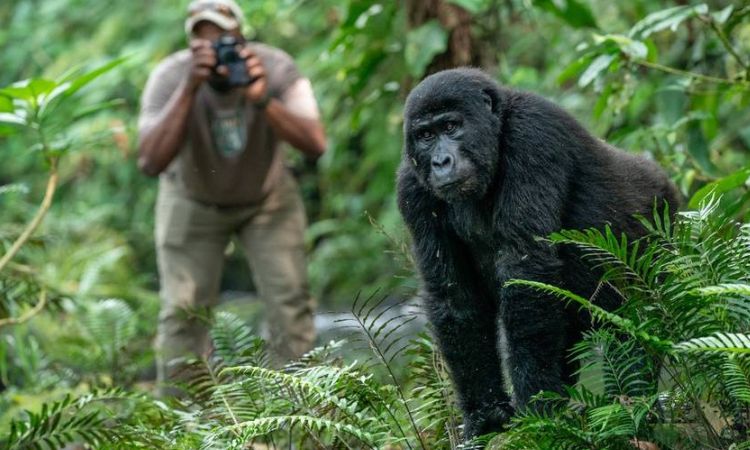
Mountain Gorillas in Their Natural Habitats: Discover Africa’s Gentle Giants
Introduction: Discovering Mountain Gorillas in the Wild
Mountain gorillas are among the most fascinating wildlife species in Africa. Living in the mist-covered mountains and dense tropical forests of East and Central Africa, these magnificent great apes offer one of the continent’s most extraordinary wildlife encounters.
Unlike lions, elephants, giraffes and other animals commonly associated with Africa’s open savannahs, mountain gorillas spend their lives in mountainous forests characterised by thick vegetation, bamboo forests, wild plants and cool climatic conditions.
Their natural habitats provide everything they need to survive, including food, shelter, breeding grounds and protection. These forests also support other wildlife species and play an important role in maintaining the ecological balance of the surrounding landscapes.
For travellers interested in discovering Africa beyond traditional wildlife safaris, visiting mountain gorillas in their natural habitats is an unforgettable experience.
Through carefully organised mountain gorilla trekking safaris in Uganda and Rwanda, visitors have an opportunity to enter protected tropical forests and observe these endangered animals as they feed, interact, rest and care for their young.
Where Do Mountain Gorillas Live in Their Natural Habitats?
Mountain gorillas are found naturally in only two isolated populations in the wild. These populations occupy protected forest landscapes within the Virunga Massif and the Bwindi-Sarambwe ecosystem.
Their natural habitats are distributed across three African countries: Uganda, Rwanda and the Democratic Republic of Congo.
1. Bwindi Impenetrable National Park, Uganda
Bwindi Impenetrable National Park is one of Africa’s most important mountain gorilla habitats. Located in southwestern Uganda, this ancient rainforest is internationally recognised for its biodiversity and remarkable population of mountain gorillas.
The park contains steep hills, deep valleys, dense vegetation, streams and thick tropical rainforest. Its challenging terrain provides an ideal environment for mountain gorillas to feed, reproduce and establish family territories.
Bwindi is divided into four main gorilla trekking sectors: Buhoma, Ruhija, Rushaga and Nkuringo. Each sector offers access to different habituated gorilla families.
Visitors can experience gorilla trekking in Bwindi Impenetrable National Park throughout the year, subject to permit availability and park regulations.
The forest is also home to numerous bird species, butterflies, forest elephants and other wildlife, making it an exceptional destination for nature enthusiasts.
2. Mgahinga Gorilla National Park, Uganda
Mgahinga Gorilla National Park is another important mountain gorilla habitat in southwestern Uganda.
Situated within the Virunga Mountains, the park protects forested volcanic slopes, bamboo vegetation and montane ecosystems.
Although smaller than Bwindi, Mgahinga offers a unique opportunity to experience mountain gorillas in a spectacular volcanic landscape.
The park is home to the habituated Nyakagezi gorilla family, which visitors can encounter during guided trekking experiences.
Combining Mgahinga gorilla trekking with golden monkey tracking and volcano hiking creates an exciting Ugandan wildlife adventure.
3. Volcanoes National Park, Rwanda
Volcanoes National Park is one of Africa’s most celebrated mountain gorilla destinations.
Located in northwestern Rwanda, the park protects part of the Virunga volcanic mountain range, including forested slopes, bamboo vegetation and montane habitats.
It is particularly famous for its mountain gorilla population and its historical connection to the conservation work of Dian Fossey.
The park offers guided gorilla trekking experiences that allow visitors to observe habituated gorilla families in their natural environment.
Travellers planning gorilla trekking in Rwanda can also combine their experience with golden monkey tracking, cultural visits and hiking adventures around the Virunga Mountains.
4. Virunga National Park, Democratic Republic of Congo
Virunga National Park is one of Africa’s oldest national parks and an important protected area for mountain gorilla conservation.
Located in eastern Democratic Republic of Congo, the park encompasses diverse ecosystems, including volcanic mountains, tropical forests, savannahs and wetlands.
Its mountain gorillas inhabit forested areas within the Virunga landscape.
However, security conditions and tourism operations in eastern Congo can change. Travellers should verify current park access and official travel advisories before planning a visit.
Understanding the Natural Habitat of Mountain Gorillas
Mountain gorillas survive in high-altitude tropical forests where vegetation remains abundant throughout much of the year.
Their habitats generally consist of several vegetation types, each providing different food resources and shelter.
Tropical Rainforests
Dense tropical rainforests provide mountain gorillas with leaves, stems, fruits, roots and other vegetation.
The thick forest canopy helps regulate temperatures and maintain the moist conditions associated with these mountainous ecosystems.
Bwindi Impenetrable Forest is an excellent example of this type of habitat.
Bamboo Forests
Bamboo vegetation is another important component of mountain gorilla habitats.
Mountain gorillas feed on bamboo shoots and other edible parts of bamboo plants when available.
These forests also provide suitable feeding grounds and contribute to the diversity of vegetation within their habitats.
Montane Forests
Montane forests are found on mountainous landscapes at higher elevations.
They contain different vegetation communities influenced by altitude, rainfall and temperature.
Mountain gorillas move through these environments searching for food and suitable places to rest.
What Do Mountain Gorillas Eat in Their Natural Habitats?
Mountain gorillas are predominantly herbivorous animals. Their diet consists mainly of naturally available vegetation.
Depending on the season and habitat, they consume:
- Leaves and young shoots.
- Bamboo shoots.
- Wild fruits.
- Roots and tubers.
- Stems and flowers.
- Tree bark and pith.
Unlike many other primates, mountain gorillas spend considerable time feeding on vegetation found close to the forest floor.
Their feeding habits influence their daily movements and the areas they occupy within the forest.
Visitors observing mountain gorillas during trekking may find them feeding peacefully on leaves, breaking vegetation with their hands or chewing bamboo shoots.
How Mountain Gorillas Live in Their Natural Habitats
Mountain gorillas are highly social animals that live in family groups.
A typical family consists of a dominant silverback, adult females, juveniles, infants and sometimes younger males.
The Role of the Silverback
The silverback is generally the dominant adult male responsible for leading and protecting the family.
He is easily recognised by the silver-grey hair that develops across his back as he matures.
The silverback determines the family’s movements, helps maintain social order and responds to potential threats.
Mothers and Their Babies
Female mountain gorillas play an important role in raising their young.
Baby gorillas depend on their mothers for feeding, protection and care during their early development.
Visitors are often fascinated by the close relationship between mothers and infants, particularly when young gorillas cling to their mothers or play around the family group.
Young Gorillas and Play Behaviour
Young gorillas are naturally curious and playful.
They can frequently be seen climbing over vegetation, chasing each other, wrestling and exploring their surroundings.
These activities help them develop physical strength and social skills.
Daily Activities
Mountain gorillas spend much of their day feeding, resting and moving through the forest.
At night, they construct temporary sleeping nests from leaves and vegetation.
Each evening, individual family members usually build new nests, either on the ground or occasionally in trees.
Why Are Mountain Gorillas Endangered?
Mountain gorillas are classified as endangered, although their population has increased significantly through decades of conservation efforts.
Their survival continues to depend on the protection of their natural habitats and cooperation between conservation organisations, governments and surrounding communities.
Some of the major threats include:
Habitat pressure: Expanding human settlements and agricultural activities can increase pressure on forest ecosystems.
Human-wildlife conflict: Communities living near protected forests may experience conflicts involving wildlife and agricultural land.
Disease transmission: Mountain gorillas are vulnerable to certain human respiratory diseases and other infections.
Illegal activities: Poaching and illegal activities within protected landscapes can threaten wildlife and their habitats.
Climate and environmental changes: Changes in rainfall patterns and forest conditions may affect food availability and ecosystem stability.
Conservation programmes, veterinary monitoring, anti-poaching patrols and responsible tourism remain important in protecting mountain gorillas.
Mountain Gorilla Trekking: The Best Way to Experience Them in the Wild
One of the most rewarding ways to discover mountain gorillas is through a guided trekking experience.
Unlike traditional game drives, where visitors observe animals from safari vehicles, gorilla trekking involves walking through natural forests accompanied by experienced guides and trackers.
The trekking experience begins at the park headquarters, where visitors receive a briefing before being assigned to a gorilla family.
The guides then lead visitors through the forest using information from trackers who monitor the movements of habituated gorilla families.
Trekking duration varies depending on the location of the gorillas, terrain and weather conditions.
Once the family is located, visitors are generally allowed a maximum of one hour to observe the gorillas under the applicable park regulations.
This experience offers opportunities to photograph and observe gorillas as they feed, rest, groom one another and interact naturally.
For travellers seeking an authentic African wildlife adventure, Uganda and Rwanda gorilla trekking safaris provide some of the world’s most remarkable primate encounters.
Uganda vs Rwanda: Where Should You See Mountain Gorillas?
Both Uganda and Rwanda offer exceptional opportunities to observe mountain gorillas in their natural habitats.
However, each destination provides a different trekking environment.
Gorilla Trekking in Uganda
Uganda offers two mountain gorilla trekking destinations: Bwindi Impenetrable National Park and Mgahinga Gorilla National Park.
Bwindi is particularly attractive to visitors interested in exploring an ancient rainforest with several trekking sectors.
Uganda also offers opportunities to combine gorilla trekking with chimpanzee tracking, wildlife safaris, boat excursions and cultural experiences.
Popular combinations include:
- Bwindi and Queen Elizabeth National Park.
- Bwindi and Kibale Forest National Park.
- Mgahinga and Lake Bunyonyi.
- Bwindi and Murchison Falls National Park.
Gorilla Trekking in Rwanda
Rwanda offers mountain gorilla trekking in Volcanoes National Park.
Its location in the northern part of the country makes it convenient for visitors travelling from Kigali.
Rwanda also offers opportunities to combine gorilla trekking with golden monkey tracking, Lake Kivu excursions, Nyungwe Forest adventures and Akagera wildlife safaris.
Popular combinations include:
- Volcanoes National Park and Akagera National Park.
- Volcanoes National Park and Nyungwe Forest.
- Gorilla trekking and Lake Kivu.
- Rwanda and Uganda cross-border gorilla trekking.
Best Time to Visit Mountain Gorillas in Their Natural Habitats
Mountain gorilla trekking is available throughout the year in Uganda and Rwanda.
However, the drier periods are often preferred because forest trails can be easier to navigate.
The main dry seasons generally occur around June to September and December to February.
The rainy seasons usually occur around March to May and October to November.
Nevertheless, mountain gorillas live in tropical mountain forests where rainfall can occur at any time of the year.
Visitors should therefore prepare for muddy trails, changing temperatures and occasional rain regardless of their travel dates.
Responsible Mountain Gorilla Trekking
Mountain gorilla conservation depends partly on responsible tourism.
Visitors are required to follow strict trekking regulations designed to protect gorillas and minimise disturbance.
Important guidelines include:
- Maintain the required minimum distance from gorillas, generally 10 metres under current guidelines.
- Avoid touching or feeding gorillas.
- Do not trek when experiencing an infectious illness.
- Avoid flash photography.
- Follow the instructions of park guides and trackers.
- Speak quietly and avoid sudden movements.
- Do not leave rubbish in the forest.
- Respect the maximum permitted viewing time.
Responsible tourism helps ensure that future generations can continue enjoying mountain gorillas in their natural habitats.
Plan Your Mountain Gorilla Trekking Safari with Graceland Adventurous
At Graceland Adventurous, we believe that experiencing mountain gorillas in their natural habitats is one of the most meaningful wildlife adventures Africa has to offer.
We help travellers plan memorable gorilla trekking experiences in Uganda and Rwanda, with opportunities to explore additional destinations across East Africa.
Whether you are interested in a short gorilla trekking excursion or a longer wildlife adventure, our team can help organise an itinerary that matches your travel interests, schedule and budget.
Our safari experiences can include:
- Uganda mountain gorilla trekking.
- Rwanda mountain gorilla trekking.
- Uganda and Rwanda combined gorilla safaris.
- Golden monkey tracking.
- Chimpanzee tracking.
- African wildlife safaris.
- Cultural and community experiences.
- Private and tailor-made East African adventures.
Explore our Uganda Gorilla Trekking Safaris, discover our Rwanda Gorilla Trekking Packages, or combine both destinations through our Uganda and Rwanda Combined Safari Experiences.
Book your mountain gorilla trekking adventure with Graceland Adventurous today.
Contact our team to start planning your journey into Africa’s beautiful mountain forests.
Frequently Asked Questions About Mountain Gorillas in Their Natural Habitats
1. Where do mountain gorillas live naturally?
Mountain gorillas live in the mountainous tropical forests of Uganda, Rwanda and the Democratic Republic of Congo. Their natural habitats are found within the Virunga Massif and Bwindi-Sarambwe landscape.
2. Can mountain gorillas survive outside forests?
Mountain gorillas are adapted to specific high-altitude forest ecosystems. Their survival depends on suitable vegetation, food availability, shelter and protection from human-related threats.
3. Are mountain gorillas found in zoos?
Mountain gorillas are not maintained in established captive zoo populations. Conservation efforts focus on protecting them in their natural forest habitats.
4. What is the difference between mountain gorillas and lowland gorillas?
Mountain gorillas generally have longer, thicker fur and are adapted to colder high-altitude forests. Eastern and western lowland gorillas inhabit different forest environments and have different physical characteristics.
5. How many mountain gorillas are left in the wild?
The last widely reported combined census estimate was more than 1,000 mountain gorillas, based on surveys conducted in the Virunga Massif and Bwindi-Sarambwe landscape. Population estimates are periodically updated through conservation surveys.
6. What is the best country for mountain gorilla trekking?
Uganda and Rwanda are both excellent destinations. Uganda offers trekking in Bwindi and Mgahinga, while Rwanda offers trekking in Volcanoes National Park. The best choice depends on your budget, preferred trekking environment and travel itinerary.
7. How close can visitors get to mountain gorillas?
Visitors are generally required to maintain a minimum distance of 10 metres from mountain gorillas, although guides may apply additional precautions depending on the circumstances.
8. How long does mountain gorilla trekking take?
The trekking experience can take several hours depending on the location of the gorilla family, terrain and weather. Visitors generally spend a maximum of one hour observing the gorillas once they are located.
9. What should I pack for mountain gorilla trekking?
Essential items include hiking boots, long trousers, long-sleeved shirts, gardening gloves, a waterproof jacket, drinking water, snacks, insect repellent and a camera.
10. Can I combine gorilla trekking with a wildlife safari?
Yes. Uganda and Rwanda offer excellent opportunities to combine gorilla trekking with traditional wildlife safaris, chimpanzee tracking, golden monkey tracking, boat safaris and cultural experiences.
Start Planning Your Mountain Gorilla Adventure
Mountain gorillas represent one of Africa’s greatest natural treasures. Protecting their habitats ensures that these remarkable animals continue thriving in the forests where they belong.
Visit Uganda or Rwanda with Graceland Adventurous and experience the extraordinary beauty of mountain gorillas in their natural environment.
Your African adventure begins here!