
Wildebeest Calving Season 2027 Guide: Best Time, Where to Stay, Costs, Safari Routes & Self-Drive
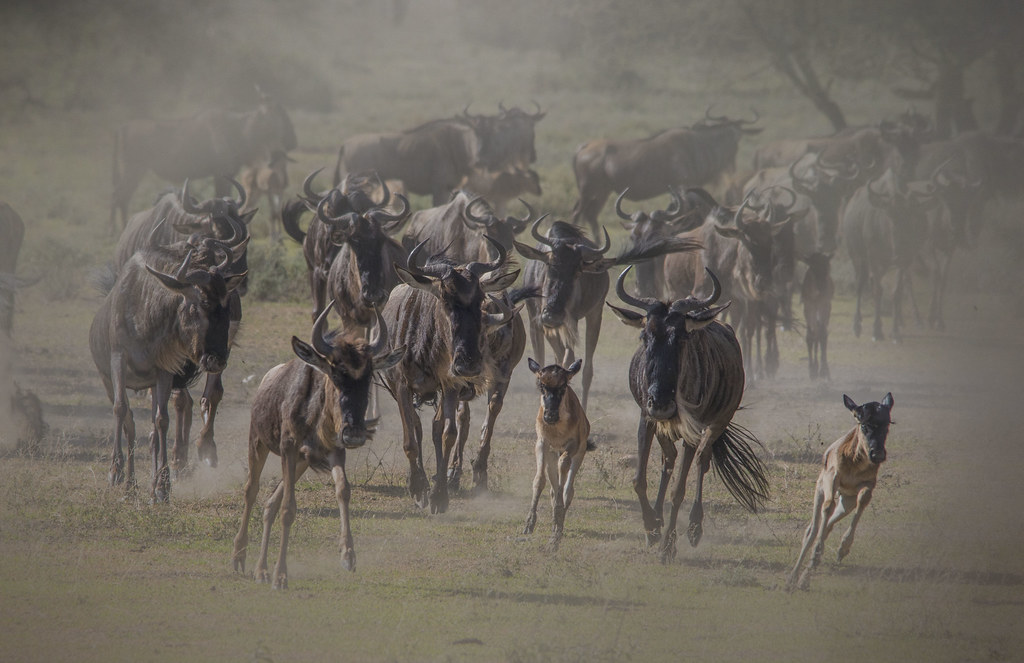
The wildebeest calving season is one of the most remarkable wildlife experiences in East Africa. Every year, hundreds of thousands of wildebeest gather across the short-grass plains of the southern Serengeti and the Ndutu area to give birth.
Unlike the famous Mara River crossings, calving season is not about dramatic river crossings. Instead, it is a season of new life, huge concentrations of wildlife, spectacular predator activity and some of the most rewarding safari experiences in Tanzania.
For travellers planning a 2027 wildebeest calving safari, the southern Serengeti and Ndutu region should be at the centre of the itinerary.
The exact timing of births depends on rainfall and grazing conditions, but the main calving period is generally associated with January to March, with activity often concentrated around February.
What Is the Wildebeest Calving Season?
The Great Wildebeest Migration involves approximately 1.5 million wildebeest moving through the Serengeti–Mara ecosystem in search of fresh grazing and water.
After spending part of the year moving through the northern and central Serengeti, the herds gradually travel south toward the short-grass plains.
These plains provide nutrient-rich grazing that supports pregnant wildebeest before and during the calving period.
During the calving season, enormous herds can spread across the open grasslands, with mothers giving birth to calves throughout the day.
The result is one of the greatest concentrations of newborn wildlife anywhere in Africa.
When Is the Wildebeest Calving Season in 2027?
The main calving season is generally:
January – March 2027
The most concentrated period is commonly:
February 2027
However, there is no fixed annual calendar.
The migration responds to rainfall, soil moisture, grass growth and other environmental conditions. Consequently, the location and timing of the herds can change from one year to another.
Calving Season Month-by-Month
| Month | Migration activity | Calving experience |
|---|---|---|
| December | Herds move south | Early preparation |
| January | Large herds gather | Calving begins |
| February | Peak calving activity | Excellent |
| March | Herds begin moving north | Calving continues |
| April | Migration moves toward central Serengeti | Calving decreases |
February 2027
For travellers specifically interested in newborn wildebeest, February is traditionally one of the key months to consider.
Large concentrations of wildebeest can occupy the southern Serengeti and Ndutu plains.
This is also an important period for predators.
Lions, cheetahs, hyenas and other predators take advantage of the abundance of vulnerable young animals.
Where Does the Wildebeest Calving Season Take Place?
The main calving areas are in the southern Serengeti ecosystem, particularly around:
- Ndutu;
- southern Serengeti;
- Lake Ndutu;
- Lake Masek;
- Gol;
- Naabi;
- and surrounding short-grass plains.
The precise location of the herds changes according to rainfall and grazing conditions.
For a 2027 calving safari, choosing accommodation around the Ndutu and southern Serengeti region can significantly reduce the amount of time spent driving between camp and the wildlife.
Ndutu: The Heart of Calving Season
Ndutu is one of the best-known areas for experiencing the annual wildebeest calving season.
The landscape consists of open grasslands, seasonal lakes, woodland and rocky areas.
During the calving period, the plains can become filled with wildebeest.
Zebra and gazelle are also present, while predators follow the herds.
A typical morning can involve watching hundreds or thousands of wildebeest spread across the plains while newborn calves stay close to their mothers.
Why Calving Season Is Special
There are several reasons why travellers choose the calving season rather than the Mara River crossing season.
Newborn Wildebeest
One of the main attractions is seeing newborn calves.
Wildebeest calves are able to stand and move relatively quickly after birth, which is essential because predators are constantly searching for vulnerable young animals.
Predator Activity
The concentration of prey attracts predators.
You may encounter:
- lions;
- cheetahs;
- leopards;
- spotted hyenas;
- jackals;
- and other opportunistic predators.
The southern Serengeti can therefore provide excellent predator viewing during the calving period.
Large Herds
The landscape can become dominated by huge concentrations of wildebeest.
Rather than seeing isolated groups, travellers may encounter animals stretching across the plains as far as the eye can see.
Photography
Calving season provides excellent photographic opportunities.
The combination of newborn animals, predators, open grasslands and dramatic skies creates a variety of subjects.
Where to Stay During the 2027 Calving Season
Accommodation location is particularly important during calving season.
Rather than staying far away and spending several hours travelling every day, consider staying within or close to the southern Serengeti/Ndutu area.
Ndutu Camps
Seasonal camps around Ndutu are particularly attractive during the migration.
Some camps operate specifically during the migration season and position themselves close to the areas where the herds are expected.
These can provide excellent access to the plains.
Southern Serengeti Lodges and Camps
Permanent and seasonal properties around the southern Serengeti provide another option.
They can work well for travellers who want a combination of migration viewing and broader Serengeti game drives.
Central Serengeti
Central Serengeti can be useful if you want to combine calving season with a wider Serengeti itinerary.
However, the southern plains are the main focus during the peak calving period.
If the migration is your priority, accommodation closer to the herds is generally more practical.
Budget Camping
Budget travellers can also incorporate camping into a calving-season itinerary.
A 4×4 with a rooftop tent can provide a flexible way to explore Tanzania while keeping accommodation costs under control.
However, camping inside national parks must follow the relevant park rules and authorised campsite arrangements.
How Much Does a Calving Safari Cost in 2027?
The cost of a 2027 calving safari depends on the type of vehicle, accommodation, number of travellers and length of the trip.
A safari can range from a relatively economical camping adventure to a luxury private safari.
Indicative Budget
| Safari style | Approximate planning cost |
|---|---|
| Budget camping safari | USD 200–350+ per person/day |
| Mid-range safari | USD 350–600+ per person/day |
| Private comfortable safari | USD 500–900+ per person/day |
| Luxury safari | USD 900–1,500+ per person/day |
| Luxury fly-in safari | USD 1,500+ per person/day |
These figures are planning ranges rather than fixed 2027 prices.
Actual costs depend on accommodation, park fees, vehicle type, season, number of people sharing the vehicle and safari operator.
Main Costs to Budget For
A calving safari normally involves:
- 4×4 safari vehicle;
- fuel;
- Serengeti National Park fees;
- Ngorongoro Conservation Area fees if included;
- accommodation;
- meals;
- camping equipment;
- guide fees where applicable;
- transfers;
- flights if using air connections;
- and optional activities.
For a self-drive safari, you will also need to budget for vehicle rental and camping equipment.
Self-Drive Calving Season Safari
The wildebeest calving season can be an excellent time for a Tanzania self-drive safari, particularly for experienced travellers who enjoy independent travel.
A capable 4×4 is strongly recommended.
The southern Serengeti can include rough tracks, muddy sections and changing road conditions, especially when rainfall occurs.
Recommended Self-Drive Vehicle
A suitable vehicle should ideally have:
- genuine 4WD;
- high ground clearance;
- good all-terrain tyres;
- full-size spare tyre;
- recovery equipment;
- compressor;
- strong jack;
- sufficient fuel range;
- fridge/freezer;
- rooftop tent if camping;
- cooking equipment;
- table and chairs;
- and reliable navigation.
For remote safari travel, vehicle preparation is just as important as choosing your accommodation.
Why Choose a Rooftop Tent?
A rooftop tent gives independent travellers considerable flexibility.
You can combine:
4×4 rental + rooftop tent + camping equipment + self-drive safari
This can reduce accommodation costs and allow you to spend more time in the wildlife areas.
It is particularly attractive for adventurous travellers who want to experience Tanzania as a road-trip destination rather than as a conventional lodge-based safari.
Important Self-Drive Considerations
Driving in the Serengeti is very different from driving on normal Tanzanian roads.
You should expect:
- rough tracks;
- dust;
- mud after rain;
- wildlife on roads;
- limited mobile coverage in some areas;
- long distances between services;
- and changing road conditions.
Always carry sufficient drinking water, food, fuel and emergency supplies.
Do not rely entirely on mobile-phone navigation.
An offline navigation system and current local route information are strongly recommended.
Suggested 2027 Calving Season Safari Routes
Route 1: Arusha – Tarangire – Ngorongoro – Ndutu – Serengeti
This is one of the most popular routes for a northern Tanzania migration safari.
Day 1: Arusha – Tarangire
Day 2: Tarangire – Ngorongoro
Day 3: Ngorongoro – Ndutu
Day 4: Ndutu calving safari
Day 5: Ndutu calving safari
Day 6: Ndutu – Central Serengeti
Day 7: Serengeti – Arusha
This route combines several major attractions with the calving season.
Route 2: Arusha – Lake Manyara – Ngorongoro – Ndutu
For travellers with less time:
Day 1: Arusha – Lake Manyara
Day 2: Lake Manyara – Ngorongoro
Day 3: Ngorongoro – Ndutu
Day 4: Ndutu
Day 5: Ndutu – Arusha
This is suitable for travellers who want to focus strongly on the southern Serengeti.
Route 3: Northern Tanzania Migration Circuit
For a longer trip:
Arusha → Tarangire → Lake Manyara → Ngorongoro → Ndutu → Central Serengeti → Western Serengeti → Arusha
Allow approximately:
8–12 days
This provides more time for wildlife viewing and reduces the need to rush between destinations.
Route 4: Tanzania–Kenya Migration Journey
Travellers with more time can combine the southern calving season with the wider migration.
A possible route is:
Arusha → Ngorongoro → Ndutu → Serengeti → Northern Serengeti → Maasai Mara → Nairobi
This follows the migration ecosystem across Tanzania and Kenya.
However, the migration does not move according to a fixed road itinerary, so the route should remain flexible.
Recommended 7-Day Calving Season Itinerary
Day 1: Arusha – Tarangire
Leave Arusha and drive toward Tarangire National Park.
Enjoy an afternoon game drive before spending the night near the park.
Day 2: Tarangire – Ngorongoro
Explore Tarangire in the morning before continuing toward the Ngorongoro area.
Day 3: Ngorongoro – Ndutu
Drive toward Ndutu and begin searching for the migrating herds.
The landscape changes from crater highlands to open plains.
Day 4: Full-Day Ndutu Safari
Spend the entire day exploring the calving grounds.
Look for newborn wildebeest, zebra, gazelles and predators.
Day 5: Full-Day Calving Safari
Another full day around Ndutu gives you more opportunity to observe the herds and changing wildlife activity.
Day 6: Ndutu – Central Serengeti
Continue toward central Serengeti while enjoying game viewing along the way.
Day 7: Serengeti – Arusha
Depending on your departure time, enjoy an early game drive before beginning the return journey.
How Many Days Should You Spend in Ndutu?
For a traveller whose main objective is the calving season, three nights around Ndutu is a useful starting point.
Four or five nights provides more flexibility.
The reason is that wildlife movements can change rapidly.
A longer stay allows you to:
- follow the herds;
- explore different plains;
- search for predators;
- observe different stages of calving;
- and avoid spending most of your safari driving between destinations.
Calving Season vs Mara River Crossing
The two experiences are very different.
| Calving season | Mara River crossing |
|---|---|
| Mainly Jan–Mar | Mainly Jul–Oct |
| Southern Serengeti/Ndutu | Northern Serengeti/Maasai Mara |
| Focus on newborn animals | Focus on river crossings |
| Excellent predator activity | Excellent migration spectacle |
| Short-grass plains | River and northern grasslands |
| More emphasis on young animals | More emphasis on herd movement |
Travellers interested in the complete migration can consider visiting Tanzania at different times of the year or combining different sections of the ecosystem where practical.
Calving Season Photography
Calving season is particularly rewarding for photographers.
A telephoto lens is useful for maintaining a respectful distance while photographing:
- wildebeest calves;
- zebra;
- gazelles;
- lions;
- cheetahs;
- hyenas;
- and large herds.
Early morning and late afternoon generally provide attractive light.
However, wildlife photography should never interfere with the animals.
Do not block a mother and calf, surround predators or drive aggressively to obtain a photograph.
Responsible Wildlife Viewing
Calving season is a sensitive period because there are many newborn animals.
Responsible safari behaviour is essential.
Always:
- maintain a safe distance;
- follow park regulations;
- remain in designated driving areas;
- avoid crowding animals;
- do not chase predators;
- never attempt to touch wildlife;
- keep noise low;
- avoid disturbing mothers and newborns;
- and follow instructions from guides and park authorities.
The objective is to observe the natural behaviour of the migration without changing it.
What to Pack for a 2027 Calving Safari
Pack lightweight clothing suitable for warm daytime temperatures and cooler mornings.
Useful items include:
- neutral-coloured clothing;
- warm fleece or jacket;
- waterproof jacket;
- comfortable walking shoes;
- hat;
- sunglasses;
- sunscreen;
- insect repellent;
- binoculars;
- camera;
- spare batteries;
- power bank;
- flashlight/headlamp;
- reusable water bottle;
- personal medication;
- dust protection for cameras;
- and a small daypack.
For self-drive camping, add:
- sleeping bag;
- camping pillow;
- cooking equipment;
- gas stove;
- food supplies;
- water containers;
- recovery equipment;
- tyre compressor;
- tyre-repair kit;
- and additional lighting.
Frequently Asked Questions
When is the wildebeest calving season in 2027?
The main calving season is generally January to March 2027, with February traditionally an important month.
Where is the best place to see the calving season?
The southern Serengeti and Ndutu area are among the principal areas associated with the annual calving season.
Is February a good month for calving?
February is traditionally one of the key months for calving, but the exact concentration of animals depends on rainfall and grazing conditions.
Can I see predators during calving season?
Yes. The concentration of newborn animals attracts predators such as lions, cheetahs, hyenas and jackals.
Can I self-drive to Ndutu?
Self-drive travel is possible in Tanzania, but travellers must follow current park and conservation-area regulations, use appropriate vehicles and understand the local road conditions.
Is a 4×4 necessary?
For a serious southern Serengeti self-drive safari, a capable 4×4 is strongly recommended.
Can I use a rooftop tent?
Yes, rooftop-tent camping can be incorporated into a Tanzania self-drive itinerary where camping is permitted and authorised.
How many nights should I stay?
Three nights is a useful minimum for a calving-focused trip. Four to five nights gives you greater flexibility to follow wildlife movements.
Is the calving season better than the Mara River crossing?
They are different wildlife experiences. Calving season focuses on newborn animals and predator activity, while the Mara River period focuses on the northern migration and potential river crossings.
Is the calving season guaranteed in 2027?
No. Migration and calving patterns are influenced by rainfall, grazing conditions and other environmental factors. Dates should therefore be treated as seasonal planning windows rather than guarantees.
Plan Your 2027 Wildebeest Calving Safari
The 2027 wildebeest calving season offers a completely different perspective on the Great Migration.
Instead of waiting beside a river for the herds to cross, travellers spend time on the open plains watching mothers give birth, newborn calves take their first steps and predators follow the enormous concentration of prey.
For the strongest calving-season experience, consider travelling between January and March, with particular attention to February, and base yourself around Ndutu and the southern Serengeti.
A longer stay of three to five nights around the calving grounds provides more flexibility than a quick visit. For independent travellers, a 4×4 with rooftop tent and camping equipment offers an adventurous way to explore the Serengeti, while a private safari vehicle provides additional local knowledge and flexibility for tracking the herds.
Whether you choose a luxury camp, mid-range lodge or self-drive rooftop-tent adventure, the calving season provides an opportunity to witness one of the most important stages of the Great Wildebeest Migration — the beginning of a new generation on the Serengeti plains.