
The Role of the Ndutu Plains in the Great Wildebeest Migration
Introduction: Why Are the Ndutu Plains Important to the Great Migration?
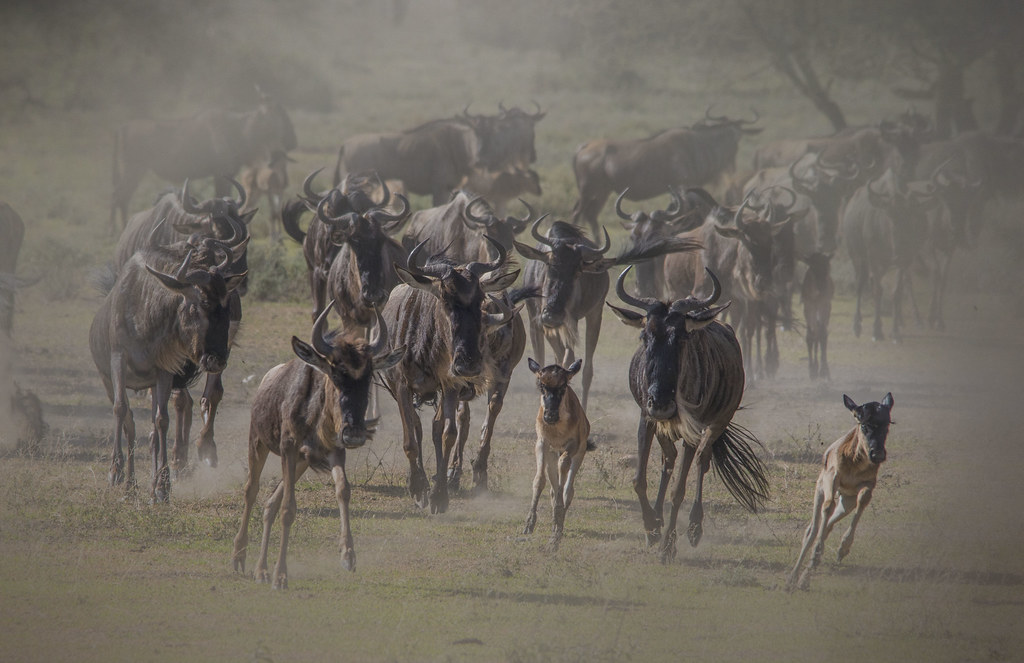
The Ndutu Plains play a crucial role in the Great Wildebeest Migration, serving as one of the most important seasonal grazing and calving areas in the Serengeti–Ngorongoro ecosystem. Every year, hundreds of thousands of wildebeest, accompanied by zebras and gazelles, move into the southern plains in search of fresh grass and suitable conditions for raising their young.
The region becomes particularly significant between December and March, when migrating herds gather across the grasslands and the annual wildebeest calving season takes place. February is often an excellent month to witness the spectacle, with large numbers of newborn calves appearing across the plains.
For safari travelers, Ndutu offers a remarkable opportunity to experience the Great Migration beyond the famous river crossings of northern Serengeti. Instead of focusing on herds crossing crocodile-filled rivers, visitors can observe wildebeest grazing, giving birth and protecting their young while predators follow the seasonal abundance of prey.
Ndutu is therefore not simply another stop on the migration route. It is a vital part of the annual cycle that supports the survival and continuation of the migrating wildebeest population.
1. Ndutu as a Seasonal Destination for Migrating Wildebeest
The Great Wildebeest Migration is a continuous movement of wildlife across the Serengeti ecosystem in Tanzania and the Maasai Mara ecosystem in Kenya. The herds move in response to rainfall, fresh grazing and water availability rather than following a fixed timetable.
During the short-rain season and the months that follow, many wildebeest move toward the southern Serengeti and Ndutu Plains. The arrival of the herds coincides with the development of nutritious short grass, which provides the energy females need during late pregnancy and after giving birth.
Ndutu’s open grasslands are particularly valuable because they provide suitable grazing for large numbers of herbivores. The surrounding woodlands, seasonal lakes and varied habitats also support other wildlife throughout the year.
The concentration of migrating animals transforms the landscape into one of Tanzania’s most important seasonal wildlife destinations.
2. Ndutu and the Wildebeest Calving Season
One of Ndutu’s most important contributions to the Great Migration is its role as a calving ground.
The main calving period generally occurs from January to March, although the exact timing depends on rainfall, grass growth and herd movements.
During this period, large numbers of female wildebeest give birth across the southern plains. Newborn calves must quickly learn to stand and move alongside their mothers and the herd. This ability is essential because remaining close to the migrating group offers protection and helps calves keep up as the animals move in search of food and water.
The abundance of nutritious grass supports lactating mothers, while the relatively open landscape allows herds to spread across extensive grazing areas.
For wildlife enthusiasts, calving season provides a different experience from other stages of the Great Migration. Visitors may observe mothers caring for newborn calves, young wildebeest finding their feet and large herds moving across green plains.
Why February Is an Excellent Month to Visit Ndutu
February is often one of the most rewarding months for a Ndutu safari because calving activity can be particularly intense.
Travelers may encounter large concentrations of wildebeest, newborn calves and predators moving through the herds. However, wildlife is unpredictable, and the best sightings depend on the actual location of the animals during the visit.
January and March can also offer excellent opportunities to experience the calving season.
3. How Ndutu Supports the Survival of the Great Migration
The Great Migration depends on the availability of suitable grazing and water throughout the year. Ndutu contributes to this annual cycle by providing seasonal feeding grounds when many female wildebeest are pregnant or caring for newborn calves.
The short grass of the southern plains is an important food source during this period. Adequate nutrition helps pregnant females maintain their condition and supports milk production after birth.
The availability of food also influences where the herds gather and how long they remain in the region. When rainfall patterns change and grazing conditions deteriorate, the animals gradually move toward other parts of the Serengeti ecosystem.
The importance of Ndutu therefore extends beyond the number of animals visitors can see. Its grasslands contribute to the natural reproductive cycle that sustains the migrating herds from one year to the next.
4. The Relationship Between Ndutu and the Southern Serengeti
Ndutu lies near the boundary between the Ngorongoro Conservation Area and Serengeti National Park. The wider landscape forms part of a connected ecosystem used by migrating wildlife throughout the year.
This geographical relationship is important for understanding the Great Migration. Wildebeest do not recognize administrative boundaries, and their seasonal movements can take them between protected areas as grazing and water conditions change.
The Ndutu area is particularly associated with the southern plains and the calving season. As the months progress, the herds gradually disperse and move toward other seasonal grazing areas, including parts of the central and western Serengeti.
Later in the year, migration patterns can take many animals toward the northern Serengeti and, for some herds, across the border into Kenya’s Maasai Mara.
The timing and route vary each year, so Ndutu should be understood as a key seasonal destination within a much larger migration system.
5. Ndutu and the Predator–Prey Relationship
The arrival of large numbers of wildebeest creates opportunities for predators. During calving season, newborn calves are particularly vulnerable, and predators take advantage of the temporary abundance of prey.
Lions
Lions are among the most frequently sought-after predators on Ndutu safaris. They may rest in the grass, move between herds or hunt when opportunities arise.
Cheetahs
The open plains provide suitable habitat for cheetahs, which rely on speed and open terrain to pursue prey. Their presence can make Ndutu particularly attractive to wildlife photographers.
Spotted Hyenas
Spotted hyenas are important predators and scavengers within the ecosystem. They may follow the herds, hunt vulnerable animals and feed on carcasses.
Other Predators
Jackals and other carnivores may also be seen in the area. Predator sightings vary according to season, location and individual animal movements.
The interaction between predators and migrating herbivores is a natural part of the ecosystem. Although calving season can produce dramatic wildlife encounters, a hunt is never guaranteed during any particular game drive.
6. What Happens to the Great Migration After the Ndutu Calving Season?
Ndutu is a seasonal destination rather than the permanent home of the migrating wildebeest herds.
As the southern plains become less suitable for grazing, the herds gradually move toward other parts of the Serengeti ecosystem. Their movements depend heavily on the arrival and distribution of rainfall.
During the following months, many animals spread through the central and western Serengeti, although the timing differs between herds and from year to year.
As the dry season develops, substantial concentrations of wildebeest may move northward. Some herds eventually reach the northern Serengeti and cross the Mara River into Kenya’s Maasai Mara.
The river-crossing period is famous for its dramatic wildlife encounters, but it represents only one stage of the annual migration.
Ndutu’s contribution comes earlier in the cycle, when reproduction and the survival of newborn calves become central features of the wildlife experience.
7. The Role of Ndutu in Tanzania’s Safari Tourism
Ndutu attracts travelers who want to experience the Great Migration during its calving phase. It offers a different atmosphere from the northern Serengeti’s river-crossing season and can be particularly rewarding for families, photographers and wildlife enthusiasts.
The region also complements other northern Tanzania destinations.
Travelers can combine Ndutu with the Ngorongoro Crater for a varied wildlife safari, or focus on the southern plains for several days to maximize their chances of finding migrating herds.
For self-drive travelers, Ndutu can form part of a carefully planned 4×4 safari, provided vehicle suitability, access regulations, accommodation and road conditions are considered. Visitors should confirm which parts of their planned route fall within the Ngorongoro Conservation Area and which enter Serengeti National Park, as applicable fees and rules differ.
Choosing accommodation near the intended game-drive area can reduce unnecessary driving and allow more time for wildlife viewing.
8. Best Time to Visit the Ndutu Plains
The best time to visit depends on the experience you want.
- December: Herds may begin gathering across the southern plains as seasonal rains improve grazing conditions.
- January: Calving activity becomes an important attraction as large herds occupy the region.
- February: Often a peak period for newborn calves and predator activity.
- March: Calving-season wildlife viewing can continue, although the distribution of the herds depends on rainfall.
- April onward: Some herds begin moving away from the southern plains as grazing conditions change, though timing varies.
These periods are general seasonal guidelines rather than guaranteed wildlife schedules. Checking recent migration reports and local conditions before travel can help you choose the most suitable dates.
9. Can You Experience the Great Migration by Visiting Ndutu Alone?
Yes, Ndutu can be the principal destination for a safari focused on the calving season. You do not necessarily need to visit the northern Serengeti or Kenya’s Maasai Mara to experience the Great Migration.
However, travelers should distinguish between visiting Ndutu and visiting the Ngorongoro Crater. Both are associated with the wider Ngorongoro region, but the crater is not the main calving ground.
If your main objective is to see newborn wildebeest, prioritize Ndutu and allow enough time for several game drives.
If you want a broader northern Tanzania safari, combining Ndutu with the Ngorongoro Crater adds another wildlife habitat and the possibility of seeing a wide range of resident animals.
Travelers interested in the dramatic river crossings should plan for a different season and destination, generally the northern Serengeti or Maasai Mara, depending on the herds’ movements.
Frequently Asked Questions About Ndutu and the Great Migration
What is the role of Ndutu in the Great Wildebeest Migration?
Ndutu provides important seasonal grazing and calving grounds in the southern Serengeti–Ngorongoro ecosystem. It supports pregnant wildebeest, newborn calves and the predators that follow migrating herds.
When does wildebeest calving take place in Ndutu?
The main calving season generally runs from January to March, with February often being an excellent month for viewing newborn calves.
Is Ndutu part of the Serengeti?
Ndutu is located near the boundary between the Ngorongoro Conservation Area and Serengeti National Park. The broader Ndutu landscape includes areas under different protected-area jurisdictions, so travelers should confirm the exact location of their camp and planned game drives.
Can I see the Great Migration in Ndutu without visiting the Ngorongoro Crater?
Yes. You can focus your safari on Ndutu and the surrounding plains without visiting the crater. The two destinations offer different wildlife experiences.
Can I see river crossings in Ndutu?
Ndutu is mainly associated with the calving season, not the famous Mara River crossings. Travelers seeking river crossings should consider the northern Serengeti or Maasai Mara during the appropriate seasonal period.
How many days should I spend in Ndutu?
Two to three full days of game drives can provide a useful opportunity to explore the area. More time may be worthwhile for wildlife photographers and travelers who want flexibility as herds move across the plains.
Conclusion: Ndutu Is a Vital Part of the Great Migration
The Ndutu Plains are one of the most important seasonal destinations in the Great Wildebeest Migration because they provide grazing grounds and a major calving area for migrating wildebeest.
From the arrival of large herds to the birth of newborn calves and the presence of predators, Ndutu reveals a crucial stage in the annual cycle of East Africa’s most famous wildlife movement.
For travelers visiting Tanzania between January and March, Ndutu offers an opportunity to experience the migration at a time when reproduction, survival and predator–prey interactions shape the landscape.
Plan your Ndutu calving-season safari and discover how this remarkable region connects with the wider Serengeti ecosystem and the Ngorongoro Conservation Area.
Contact Graceland Adventurous to discuss Ndutu safari itineraries, accommodation, guided game drives and self-drive 4×4 options for your preferred travel dates.