
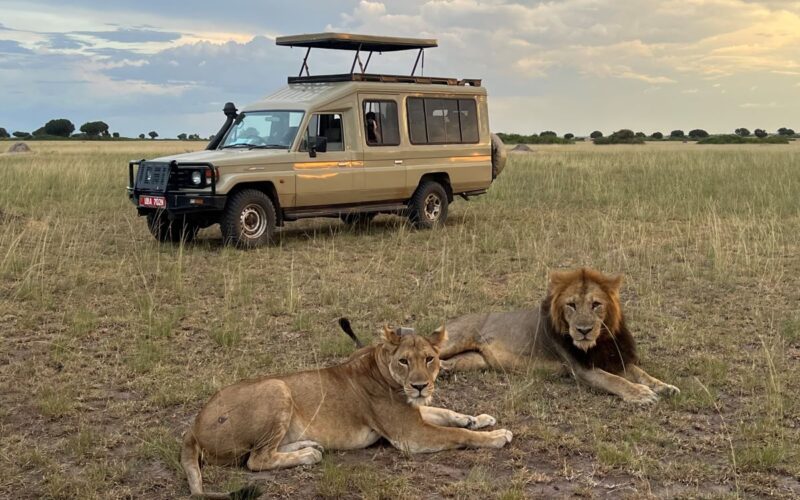
Beyond the Migration in Maasai Mara: Discover the Mara All Year Round
The Maasai Mara is one of Africa’s most famous safari destinations, internationally recognised as the northern extension of the Serengeti–Mara ecosystem and as one of the key destinations associated with the Great Wildebeest Migration.
Every year, huge herds of wildebeest and zebra move into the Mara ecosystem as part of their annual search for fresh grazing and water. The spectacular river crossings have made the destination famous around the world.
But there is another side to the Maasai Mara.
The Mara is not simply a migration destination.
Even when the migratory herds are somewhere else, the reserve and surrounding conservancies support an extraordinary population of resident wildlife.
Lions maintain territories, leopards move through woodland and riverine areas, cheetahs hunt across open grasslands, elephants cross the plains and giraffes browse among acacia trees.
The Mara is also a destination for birdwatching, photography, cultural experiences, conservation and intimate safari experiences in the surrounding conservancies.
For travellers willing to look beyond the migration, Maasai Mara can provide a remarkable safari experience throughout much of the year.
The Maasai Mara Beyond the Wildebeest
The annual migration is seasonal.
The wildlife community of the Mara is not.
Large numbers of animals remain in the ecosystem throughout the year, creating opportunities for game viewing even when the migrating herds have moved back toward Tanzania.
This resident wildlife is one of the most important reasons to consider visiting the Mara outside the famous July–October migration period.
A safari beyond the migration can focus on:
- Lions and other big cats
- Elephants
- Giraffes
- Buffalo
- Hippos
- Crocodiles
- Hyenas
- Antelopes
- Birds
- Mara landscapes
- Maasai culture
- Private conservancies
- Photography
- Walking experiences where permitted
- Balloon safaris
- Camping
- Self-drive adventures
The Lions of Maasai Mara
Lions are among the most iconic animals of the Mara.
Several prides occupy territories across the reserve and surrounding conservancies.
They depend on the abundance of resident herbivores, while the seasonal arrival of migratory wildebeest and zebra can provide additional feeding opportunities.
Outside the migration period, visitors can still search for lions during morning and afternoon game drives.
A lion pride resting in golden grass, a male walking through open plains or females caring for cubs can be just as memorable as a dramatic migration scene.
For many travellers, following the lives of resident lion prides provides a more intimate wildlife experience than simply watching large herds pass through.
Leopards in the Mara
Leopards are among the Mara’s most sought-after predators.
They are secretive, powerful and adaptable, often associated with areas containing trees, rocky ground and riverine vegetation.
A leopard may spend much of the day resting in a tree before becoming active later.
Finding one requires patience and an experienced guide’s knowledge of the landscape.
A leopard sighting is therefore a very different experience from watching thousands of wildebeest.
It is often quiet, intimate and dependent on careful observation.
Cheetahs of the Open Grasslands
The open plains of the Maasai Mara provide suitable habitat for cheetahs.
Their hunting strategy depends heavily on open terrain where they can use their speed to pursue prey.
Cheetahs may be encountered moving across the grasslands, scanning for prey or caring for young.
Their presence adds another dimension to the Mara safari experience beyond the migration.
The opportunity to watch a cheetah family interacting or hunting can be one of the highlights of a visit outside the peak migration period.
Elephants in Maasai Mara
Elephants are another important part of the Mara ecosystem.
They move through grasslands and woodland in search of food and water.
Unlike the migratory wildebeest, their movements are not governed by the same annual migration route.
A family of elephants moving slowly across the plains can provide an entirely different safari experience.
Watching young elephants stay close to their mothers, adults communicate with one another or a herd approach a water source allows visitors to appreciate the social complexity of these animals.
Giraffes and the Mara Landscape
Giraffes are frequently encountered across the Maasai Mara landscape.
Their height allows them to browse vegetation above the reach of many other herbivores.
A group of giraffes moving through open grassland or standing beneath an acacia tree creates one of the classic African safari scenes.
For photographers, giraffes also provide excellent opportunities for landscape compositions because of their distinctive silhouettes.
Buffalo and Resident Herbivores
Cape buffalo are important residents of the Mara.
They can gather in large herds and move between grazing areas and water sources.
Other herbivores contribute to the ecosystem throughout the year.
Depending on the area and season, visitors may encounter:
- Topi
- Impala
- Thomson’s gazelles
- Grant’s gazelles
- Eland
- Hartebeest
- Warthogs
- Zebra
- Waterbuck
These animals form the foundation of the Mara food chain.
They provide food for predators and help maintain the grassland ecosystem through grazing.
The Mara River Beyond the Crossing
The Mara River is internationally famous because of the wildebeest crossings.
But the river is important throughout the year.
Hippos occupy deeper pools, crocodiles rest along suitable riverbanks and many birds depend on the river and surrounding vegetation.
The river also supports wildlife that remains in the Mara outside the migration period.
A visit to the Mara River does not have to be about waiting for a wildebeest crossing.
Travellers can simply appreciate the river as one of the ecological features that sustains the ecosystem.
Hippos and Crocodiles
The Mara River provides habitat for two fascinating aquatic species.
Hippos spend much of the day in water and emerge to graze, often becoming active around dusk and during the night.
Nile crocodiles inhabit sections of the river and can be seen resting along the banks or partially submerged in the water.
During the migration, crocodiles receive enormous attention because of their relationship with crossing wildebeest.
Outside the migration season, they remain an important part of the river ecosystem.
Hyenas: Essential Members of the Mara Ecosystem
Spotted hyenas are among the Mara’s most adaptable predators.
They live in social clans and communicate through a remarkable range of calls and behaviours.
Hyenas benefit from both resident wildlife and seasonal concentrations of migratory herbivores.
A safari outside the migration period can provide opportunities to observe hyenas hunting, feeding, interacting with clan members or moving across the plains.
Their role as both predators and scavengers makes them an essential part of the Mara ecosystem.
Birdwatching Beyond the Big Cats
The Maasai Mara is also an excellent destination for bird enthusiasts.
The combination of open grassland, woodland, rivers and seasonal wetlands provides habitat for a wide variety of bird species.
Visitors may encounter:
- Ostriches
- Secretary birds
- Kori bustards
- Eagles
- Vultures
- Storks
- Herons
- Hornbills
- Rollers
- Bee-eaters
- Weavers
- Sunbirds
Birdwatching can be particularly rewarding when combined with a slower-paced safari.
Instead of driving quickly from one major sighting to another, travellers can stop to observe smaller species and understand how they interact with the landscape.
The Beauty of the Mara Landscape
Wildlife is only one part of the Maasai Mara experience.
The landscape itself is spectacular.
The reserve is characterised by broad grasslands, rolling hills, riverine vegetation and scattered trees.
Early morning mist can settle over the plains.
Golden light transforms the grasslands in the evening.
Distant hills provide a dramatic backdrop to wildlife.
The changing seasons also transform the appearance of the Mara.
This makes the destination rewarding for landscape photographers as well as wildlife photographers.
Maasai Culture
A journey beyond migration can also provide an opportunity to learn about Maasai culture.
The Maasai communities living around the Mara have long-standing connections with the landscape.
Depending on the location and arrangement, visitors may participate in cultural experiences involving traditional homes, livestock, crafts, music, dance and conversations about local life.
Responsible cultural tourism should be based on respect and meaningful interaction rather than treating communities simply as tourist attractions.
Where possible, travellers should choose experiences that provide clear benefits to local communities.
The Mara Conservancies
The areas surrounding the Maasai Mara National Reserve include a number of community conservancies.
These conservancies can provide a different safari experience from the main reserve.
Some offer smaller-scale tourism, fewer vehicles in particular areas, walking experiences, night drives where permitted and other activities that may not be available within the national reserve.
Conservancy rules and activities vary, so travellers should confirm the regulations and permitted experiences for the specific conservancy they plan to visit.
For travellers seeking a quieter safari beyond the migration, the conservancy model can be particularly interesting.
Walking Safaris
Walking can provide a completely different perspective on the Mara ecosystem.
Rather than viewing wildlife from a vehicle, travellers can focus on tracks, plants, insects, birds and smaller signs of animal activity.
Walking opportunities depend on where you are staying and the regulations of the particular reserve or conservancy.
Walking should always be conducted with an authorised and appropriately trained guide.
It is not an activity for independently approaching wildlife.
Night Safari Experiences
The Mara ecosystem changes dramatically after sunset.
Nocturnal animals become active, while many daytime species settle down.
In areas where night drives are permitted, visitors may have opportunities to observe nocturnal wildlife such as:
- Genets
- Civets
- Bushbabies
- Hyenas
- Nightjars
- Owls
- Other nocturnal species
Night-drive availability depends on the specific conservation area or conservancy.
This is another reason to consider staying outside the main reserve or combining the reserve with a suitable conservancy.
Balloon Safari Over the Mara
A hot-air balloon safari offers another way to experience the Maasai Mara.
From above, the scale of the grasslands becomes particularly apparent.
At sunrise, the plains stretch toward distant hills and river systems.
Wildlife can sometimes be observed from the air, although the experience is primarily about seeing the landscape from a completely different perspective.
Balloon safaris are usually conducted through licensed operators and are weather dependent.
Photography Beyond the Migration
The Mara is an outstanding destination for photographers even when there are no large migration herds.
Photographers can concentrate on:
Big cats
Lions, leopards and cheetahs provide opportunities for portraits, behaviour and action photography.
Elephants
Family groups create opportunities to photograph social interactions and environmental portraits.
Birds
Raptors, ostriches, colourful smaller birds and water-associated species add variety.
Landscapes
Rolling grasslands, trees, hills and river systems provide excellent compositions.
Wildlife behaviour
Grooming, hunting, territorial behaviour, courtship and mother-and-young interactions can be more rewarding than simply photographing large numbers of animals.
The Mara During the Green Seasons
The Mara can be particularly beautiful when rainfall transforms the grasslands.
Fresh vegetation attracts herbivores and changes the appearance of the landscape.
The skies can become dramatic, while the combination of green grass and wildlife provides excellent photographic conditions.
The precise rainfall pattern varies, but seasonal rains are an important part of the Mara’s ecological cycle.
Travellers who are more interested in landscapes and resident wildlife than guaranteed migration concentrations may find these periods particularly appealing.
A Different Safari Experience Outside Migration Season
One advantage of travelling outside the main migration period is the opportunity to slow down.
Instead of searching constantly for a river crossing, a safari can focus on individual animals and their behaviour.
You might spend an hour watching a lion pride.
You might follow a leopard through woodland.
You might watch elephants at a waterhole.
You might stop for an ostrich or secretary bird.
You might simply sit quietly on a hill and watch the Mara landscape change as the sun moves across the sky.
These moments demonstrate why the Maasai Mara is much more than a migration destination.
Self-Drive Maasai Mara Experience
For experienced travellers, a Kenya self-drive safari can provide flexibility and independence.
A suitable 4×4 is recommended for exploring safari areas, particularly when travelling during wetter periods or combining the Mara with other destinations.
Self-drive travellers must follow the rules of the specific reserve or conservancy they enter.
These may include designated roads, speed restrictions, opening hours and wildlife-viewing requirements.
A 4×4 with a rooftop tent can also be incorporated into a longer Kenya camping adventure, subject to authorised camping arrangements and applicable regulations.
Travellers planning to cross between Kenya and Tanzania should also allow time to understand border, vehicle and insurance requirements.
Suggested Maasai Mara Routes Beyond Migration
Nairobi to Maasai Mara
Nairobi → Maasai Mara → Nairobi
A straightforward route for travellers with limited time.
It allows several days of game drives focused on resident wildlife.
Kenya Wildlife Circuit
Nairobi → Lake Nakuru → Maasai Mara → Nairobi
This combines different ecosystems and provides opportunities to see rhinos and other wildlife before reaching the Mara.
Kenya–Tanzania Self-Drive Adventure
Nairobi → Maasai Mara → Northern Serengeti → Central Serengeti → Ngorongoro → Arusha
This route connects the Kenyan and Tanzanian sides of the greater Serengeti–Mara ecosystem.
Cross-border vehicle arrangements and current entry requirements should be confirmed before departure.
How Many Days Do You Need in Maasai Mara?
A short visit can introduce you to the Mara, but additional nights allow more time for exploration.
Two nights
Suitable for a brief introduction.
Three nights
Provides a better opportunity for multiple game drives and searching for predators.
Four nights or more
Allows a slower safari experience and can make it easier to combine the main reserve with a suitable conservancy.
Longer stays are particularly valuable when the focus is on photography and animal behaviour rather than checking off a list of species.
When to Visit Maasai Mara Beyond the Migration
There is no single ideal period for every traveller.
| Period | General Mara experience |
|---|---|
| January–March | Resident wildlife and generally good game viewing |
| April–May | Green landscapes and seasonal rainfall |
| June | Increasing wildlife activity before the main migration period |
| July–October | Migration may enter the Mara; excellent wildlife viewing |
| November–December | Green landscapes, resident wildlife and seasonal movement |
The migration period receives the greatest international attention, but the Mara’s resident wildlife remains important throughout the year.
Responsible Tourism in Maasai Mara
A great safari depends on protecting the ecosystem and respecting the communities surrounding it.
Visitors should:
- Maintain a safe distance from wildlife.
- Never chase animals.
- Avoid blocking wildlife movement.
- Follow reserve and conservancy rules.
- Stay on authorised roads and tracks.
- Keep noise to a minimum.
- Respect local communities.
- Avoid littering.
- Use responsible tourism operators where possible.
During sensitive wildlife encounters, responsible behaviour is especially important.
The goal is to observe natural behaviour rather than interfere with it.
Why the Mara Is More Than the Migration
The Great Wildebeest Migration is one of the greatest reasons to visit the Maasai Mara, but it is not the only reason.
The Mara has a permanent wildlife community.
Its grasslands support herbivores.
Its prey populations support predators.
Its rivers support hippos, crocodiles and birds.
Its conservancies create opportunities for different forms of tourism.
Its communities provide important cultural connections.
Its landscapes provide unforgettable photographic opportunities.
Together, these elements create a destination that remains fascinating even when the migratory herds are thousands of kilometres away.
Frequently Asked Questions
Can I visit Maasai Mara outside the wildebeest migration?
Yes. The Mara supports resident wildlife throughout the year, including lions, leopards, cheetahs, elephants, giraffes, buffalo, hyenas, hippos and many antelope species.
What can I see in Maasai Mara besides wildebeest?
The Mara is particularly known for its big cats and supports many other mammals and birds. Depending on the season and location, you may encounter lions, leopards, cheetahs, elephants, giraffes, buffalo, hippos, crocodiles, hyenas, gazelles, topi, eland and numerous bird species.
Is Maasai Mara worth visiting when there is no migration?
Yes. The resident wildlife, landscapes, predators, birds and cultural experiences provide reasons to visit throughout the year.
When is the best time to visit Maasai Mara outside migration?
The answer depends on your priorities. Different seasons offer different combinations of weather, vegetation, wildlife activity, visitor numbers and photography conditions.
Can I see lions outside the migration season?
Yes. Lions are resident in the Mara ecosystem and can be encountered outside the period when migratory wildebeest are present.
Can I do a walking safari in Maasai Mara?
Walking experiences may be available in particular conservancies and areas under appropriate guidance. Rules differ by location, so travellers should confirm what is permitted before booking.
Can I do a night game drive?
Night drives are generally associated with areas where they are permitted, particularly certain conservancies outside the main reserve. Regulations vary and should be confirmed locally.
Can I explore Maasai Mara by self-drive?
Self-drive may be possible depending on the area, vehicle and applicable regulations. Travellers should understand the specific rules of the reserve or conservancy before entering.
Can I combine Maasai Mara with Serengeti?
Yes. Maasai Mara and Serengeti form part of the same larger ecological system, and a Kenya–Tanzania safari can combine the two destinations subject to current border, vehicle and entry requirements.
Conclusion
The Maasai Mara is much more than the Great Wildebeest Migration.
The famous river crossings may attract visitors from around the world, but they represent only one chapter in the life of this extraordinary ecosystem.
Beyond the migration are resident lion prides, elusive leopards, fast-moving cheetahs, elephants, giraffes, buffalo, hippos, crocodiles, hyenas and hundreds of bird species.
There are also rolling grasslands, rivers, woodland, spectacular sunsets, Maasai communities and community conservancies offering different ways to experience the landscape.
A safari outside the migration period can therefore reveal another side of the Mara—one focused on resident wildlife, predator behaviour, landscapes, culture and conservation rather than simply following the moving herds.
Whether you visit for two nights or spend a week exploring the reserve and surrounding conservancies, the Maasai Mara offers an opportunity to experience the African wilderness throughout the year.
The migration may put the Mara on the world map, but the wildlife and landscapes that remain after the herds have moved on are what make the Mara a complete safari destination.