
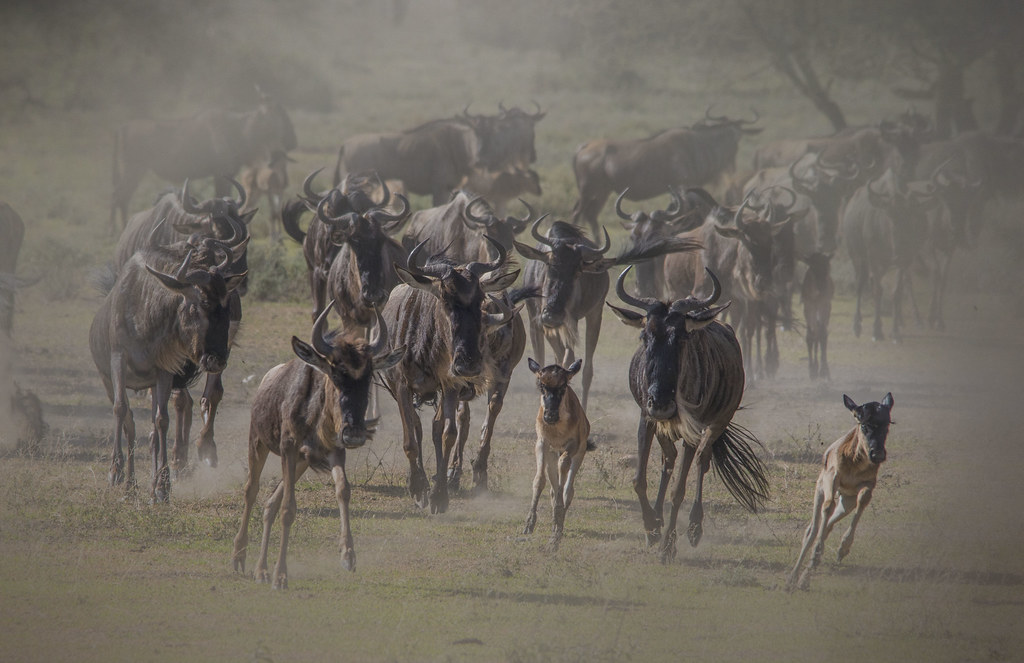
Wildebeest Calving Season in Ngorongoro: A Complete Safari Guide
Introduction: Can You See Wildebeest Calving in Ngorongoro Alone?
Yes! You can plan a wildebeest calving safari focused entirely on the Ngorongoro Conservation Area in northern Tanzania, without necessarily visiting Serengeti National Park. The key is to visit the Ndutu Plains, an important seasonal gathering and calving area within the wider Ngorongoro–Serengeti ecosystem.
Every year, vast herds of wildebeest and zebras move into the southern plains in search of fresh grass. During the calving season, thousands of wildebeest calves are born, attracting predators such as lions, cheetahs and hyenas. This creates one of the most remarkable wildlife experiences in Africa.
However, it is important to distinguish between the Ngorongoro Crater and the wider Ngorongoro Conservation Area. The famous crater offers exceptional year-round wildlife viewing, but the main wildebeest calving spectacle takes place on the open plains around Ndutu, rather than on the crater floor.
For travelers with limited time or a preference for a shorter Tanzania safari, focusing on Ndutu and the Ngorongoro Crater can provide an excellent combination of migration wildlife, dramatic scenery and Big Five viewing.
1. Where Does Wildebeest Calving Take Place in Ngorongoro?
The most important destination for calving-season wildlife viewing is the Ndutu area, located in the western part of the Ngorongoro Conservation Area near the southern Serengeti boundary.
The wider Ndutu landscape includes open grasslands, seasonal lakes, woodland and short-grass plains. During the rainy season, these grasslands provide nutritious grazing for migrating wildebeest and zebras.
Ndutu Plains
Ndutu is the principal destination to prioritize if your main goal is to witness wildebeest calving. The landscape attracts enormous herds during the migration season, particularly between January and March.
Visitors may encounter newborn calves, large herds grazing across the plains, and predators searching for opportunities to hunt. Wildlife sightings are never guaranteed, but the concentration of animals makes this one of Tanzania’s most rewarding seasonal safari destinations.
Lake Ndutu
The area around Lake Ndutu is another useful location for wildlife viewing. Depending on rainfall and animal movements, visitors may see wildebeest, zebras, gazelles, elephants and a variety of predators.
The lake and surrounding plains also provide excellent scenery for photography, especially during early morning and late-afternoon game drives.
Ngorongoro Crater
The Ngorongoro Crater is one of Tanzania’s most famous wildlife destinations. Its enclosed landscape supports resident populations of lions, elephants, buffaloes, zebras and other animals, with opportunities to see endangered black rhinos.
Nevertheless, the crater is not the primary location for the Great Wildebeest Migration’s annual calving event. If seeing newborn wildebeest is your priority, plan your game drives around Ndutu and add the crater as a complementary experience.
2. When Is the Wildebeest Calving Season in Ngorongoro?
The main calving season generally takes place between January and March, although the precise timing varies according to rainfall, grazing conditions and herd movements.
February is often considered the peak period for newborn calves and predator activity. December can be a good time to see the herds arriving, while March may still provide excellent wildlife viewing as many animals remain in the area.
January: The Beginning of the Calving Experience
January is a good month to explore Ndutu as the plains become greener and large herds gather across the landscape. Visitors may see pregnant wildebeest, newly born calves and predators following the herds.
This month can suit travelers who want to experience the migration without relying exclusively on the busiest part of the calving season.
February: The Peak Calving Period
February is generally the strongest recommendation for travelers whose main objective is wildebeest calving.
Large numbers of calves are born across the southern plains, creating opportunities to observe mothers caring for their young and young animals learning to stand and run shortly after birth.
The abundance of vulnerable young animals also attracts lions, cheetahs, hyenas and other predators. These interactions make February particularly appealing to wildlife photographers and travelers interested in predator-prey behavior.
March: Continued Wildlife and Calf Sightings
March can still offer rewarding calving-season experiences, although the distribution of the herds depends on changing weather and grazing conditions.
Travelers may continue to see young wildebeest, zebras and predators across the Ndutu landscape. The plains can remain green and scenic, making this a worthwhile option for visitors whose schedules do not allow travel in February.
Best recommendation: Choose February if your dates are flexible, but remember that the migration follows rainfall and natural conditions rather than a fixed timetable.
3. What Wildlife Can You See During the Ndutu Calving Season?
A calving-season safari offers much more than newborn wildebeest. The seasonal concentration of herbivores supports a wide range of wildlife.
Wildebeest and Newborn Calves
The main attraction is the opportunity to observe wildebeest gathering in large numbers and giving birth across the plains. Calves can often stand and begin moving shortly after birth, an important adaptation that helps them keep up with the herd.
Zebras and Gazelles
Zebras and gazelles accompany the migration, sharing the grazing landscape with wildebeest. Their presence adds diversity to wildlife sightings and creates excellent photography opportunities.
Lions
Lions frequently follow large concentrations of herbivores. A patient game drive may reveal lions resting in the grass, moving through the herds or hunting.
Cheetahs
The open plains around Ndutu can provide suitable habitat for cheetahs, which use their speed to hunt smaller or vulnerable prey. Sightings depend on location, weather and daily animal movements.
Spotted Hyenas and Other Predators
Spotted hyenas are important predators and scavengers within the ecosystem. Jackals and other smaller carnivores may also be encountered.
Other Wildlife
Depending on the route and habitat, visitors may see elephants, giraffes, buffaloes, ostriches and numerous bird species. A visit to the Ngorongoro Crater can expand the wildlife experience further.
4. Can You Visit Only Ngorongoro Without Entering Serengeti National Park?
Yes, it is possible to design a safari around the Ngorongoro Conservation Area, including Ndutu and the Ngorongoro Crater, without planning a separate visit to the main Serengeti National Park areas.
This is an attractive option for travelers who want to focus on calving-season wildlife while limiting the number of destinations on their itinerary.
However, Ndutu is part of a connected ecosystem that crosses the protected-area boundary. Some routes, camps and game-drive areas lie within the Ngorongoro Conservation Area, while others extend into Serengeti National Park.
When booking, confirm the exact location of your accommodation and the areas included in your game drives. If you want to remain entirely within the Ngorongoro Conservation Area, your itinerary and permits must be arranged accordingly.
This distinction matters because the two protected areas have separate management authorities and applicable fees.
5. Suggested 3-Day Ngorongoro Wildebeest Calving Safari
A three-day safari may suit travelers who want to combine the crater with Ndutu while keeping the trip relatively short. Actual driving times depend on road conditions, accommodation location and the chosen route.
Day 1: Arusha to the Ngorongoro Conservation Area
Depart Arusha and travel toward the Ngorongoro highlands. Depending on your schedule, you can enjoy scenic stops and learn about the region’s landscapes and cultural heritage.
Continue to your accommodation in or near the conservation area, ideally choosing a location that makes the following day’s activities practical.
Overnight: Ngorongoro area.
Day 2: Ngorongoro Crater Game Drive
Descend into the Ngorongoro Crater for a wildlife-viewing excursion. The crater floor supports a remarkable variety of animals, and you may encounter lions, buffaloes, zebras, elephants and, with luck, a black rhino.
After the game drive, continue toward Ndutu if your accommodation and route arrangements allow. For a less hurried experience, consider staying overnight in the Ngorongoro highlands and traveling to Ndutu the following morning.
Overnight: Ndutu area or another suitable location based on your itinerary.
Day 3: Wildebeest Calving Safari in Ndutu
Begin early with a game drive across the Ndutu Plains. Your guide can look for large wildebeest herds, newborn calves, zebras and predators.
The exact wildlife encounters will depend on herd movements and conditions on the day. Allow sufficient time for searching the plains rather than expecting to find every species immediately.
After the game drive, begin your return journey if road conditions and your departure arrangements permit.
Planning note: Three days can be tight if you want a full crater visit and substantial time in Ndutu. A four- or five-day itinerary is generally more comfortable, particularly for wildlife photographers and travelers who prefer longer game drives.
6. Suggested 4-Day Ndutu and Ngorongoro Safari
A four-day itinerary gives you more time to experience the two different wildlife environments.
Day 1: Arusha to Ngorongoro. Travel from Arusha to the conservation area and overnight near the highlands.
Day 2: Ngorongoro Crater. Enjoy a crater game drive before continuing to accommodation positioned for the Ndutu area, if practical.
Day 3: Full-day Ndutu safari. Spend the day searching for wildebeest herds, newborn calves and predators across the plains.
Day 4: Morning Ndutu game drive and departure. Enjoy another wildlife-viewing session before returning toward Arusha, subject to road conditions and your onward travel plans.
Travelers who want to maximize their time in Ndutu can also choose to skip the crater and spend more of their safari in the calving area.
7. Where Should You Stay for Wildebeest Calving in Ngorongoro?
Accommodation location can make a significant difference to your experience.
Ndutu Tented Camps
Seasonal tented camps around Ndutu are convenient for early-morning and afternoon game drives. Staying nearby can reduce unnecessary driving and give you more time to search for wildlife.
Options range from comfortable mobile tented camps to higher-end safari camps. Availability and operating dates vary, so advance reservations are recommended for February.
Lodges in the Ngorongoro Highlands
Lodges around the crater rim and highlands are suitable for travelers prioritizing the crater. However, staying here may involve longer drives to reach the Ndutu Plains.
If calving is your primary objective, prioritize accommodation near the area where you intend to spend most of your game drives.
Camping Options
Camping can suit budget-conscious and adventurous travelers, including those interested in a self-drive safari. Confirm the current rules, permitted campsites, vehicle requirements and availability before traveling.
Do not assume that all campsites allow unrestricted access or that a vehicle rental automatically includes the required conservation-area permissions.
8. Self-Drive Wildebeest Calving Safari in Ngorongoro
A self-drive safari can provide flexibility for travelers who prefer to explore Tanzania independently. However, Ndutu and the wider Ngorongoro ecosystem require careful planning, particularly during the rainy season.
A suitable 4×4 vehicle is important because some routes can become muddy or difficult after rainfall. Travelers should also understand local driving regulations, protected-area access requirements and the practical challenges of navigating remote wildlife areas.
Before departure, confirm:
- Whether the rental vehicle is authorized for your intended route and protected areas.
- Which Ngorongoro and, if applicable, Serengeti permits and fees are required.
- Whether your accommodation is accessible in the expected weather conditions.
- Whether the rental company provides recovery equipment, spare tires and roadside assistance.
- Whether your route allows sufficient time for game drives and the return journey.
A guided safari may be preferable for travelers who want help locating wildlife, avoiding difficult routes and managing the logistics of the conservation areas.
For self-drive visitors, a well-equipped 4×4 and a realistic itinerary are essential to enjoying the trip safely.
9. What Does a Wildebeest Calving Safari in Ngorongoro Cost?
The total price depends on travel dates, accommodation category, group size, vehicle type and whether you choose a private guide or self-drive arrangement.
| Expense | What affects the price |
|---|---|
| 4×4 vehicle rental | Vehicle model, rental duration and included equipment |
| Accommodation | Camping, tented camps or luxury lodges |
| Conservation fees | Applicable Ngorongoro charges and permits |
| Crater visit | Relevant crater service and vehicle charges |
| Serengeti fees, if applicable | Whether your route enters the national park |
| Guide or driver | Guided service versus self-drive |
| Meals and drinks | Included board arrangements or independent purchases |
| Fuel and transfers | Distance traveled and pickup or drop-off arrangements |
Rather than relying on a single advertised price, request a quote based on your actual itinerary. Official tariffs and permit requirements should be checked before booking because charges may change.
For the latest Ngorongoro visitor information, consult the Ngorongoro Conservation Area Authority. For Serengeti National Park fees and regulations, consult Tanzania National Parks.
10. What Should You Pack for a Calving-Season Safari?
January to March can bring warm daytime temperatures, cool mornings and changing weather conditions. Rain can affect road conditions, so preparation is important.
Recommended items include:
- Lightweight, neutral-colored safari clothing.
- A warm jacket for early-morning game drives.
- Waterproof outerwear and suitable walking shoes.
- Binoculars and a camera with a suitable zoom lens.
- Sunscreen, sunglasses and a hat.
- Insect repellent and personal medication.
- Reusable water bottles.
- Spare camera batteries, memory cards and charging equipment.
For self-drive travelers, additional essentials include navigation tools, a first-aid kit, recovery equipment appropriate to the vehicle and emergency contact information.
Always follow your guide’s instructions, maintain a safe distance from wildlife and avoid disturbing animals around newborn calves.
11. Is Ngorongoro Alone Enough for a Wildebeest Calving Safari?
For many travelers, yes. If your main goal is to see wildebeest calving, focusing on Ndutu within the Ngorongoro Conservation Area can be sufficient without adding a separate Serengeti itinerary.
The advantage is a more focused safari, with fewer destinations and more time devoted to the seasonal wildlife spectacle. You can also include the Ngorongoro Crater if you want to combine calving-season viewing with a classic Big Five game drive.
However, remaining within Ngorongoro does not guarantee that the herds will be concentrated in a particular location. Wildlife follows rainfall, fresh grass and seasonal conditions. A flexible itinerary and several game drives will improve your chances of rewarding sightings.
If you have only two or three days, consider prioritizing Ndutu over the crater when calving is your principal interest. If you have four or five days, combining Ndutu with the crater offers a more varied experience.
Frequently Asked Questions
Can I see wildebeest calving in Ngorongoro without visiting Serengeti National Park?
Yes. You can focus on the Ndutu sector within the Ngorongoro Conservation Area. Confirm that your planned game-drive routes and accommodation remain within the area if you do not want to enter Serengeti National Park.
Is the Ngorongoro Crater the best place to see wildebeest calving?
No. The crater is excellent for year-round wildlife viewing, but the principal calving grounds are on the Ndutu and southern Serengeti plains.
What is the best month for wildebeest calving in Ngorongoro?
February is generally the best month to prioritize, although January and March can also offer excellent sightings.
How many days do I need for a Ndutu calving safari?
Three days may be possible for a short visit, but four to five days provides more time to combine Ndutu with the Ngorongoro Crater and account for driving conditions.
Can I do a self-drive safari to Ndutu?
Yes, subject to vehicle suitability, current access rules, permits and route conditions. A capable 4×4 is recommended, especially when rain affects unpaved roads.
Will I definitely see newborn wildebeest?
No wildlife encounter can be guaranteed. Calving activity and herd locations vary with rainfall and other natural conditions. Traveling during the peak season and allowing multiple game drives can improve your chances.
Is Ndutu suitable for families with children?
Yes, subject to the family’s needs and the accommodation’s age policies. Families should select suitable lodging, plan realistic driving days and follow all wildlife-safety guidance.
Do I need separate permits for Ngorongoro and Serengeti?
The requirements depend on the areas you visit and the route you take. Ngorongoro and Serengeti are managed separately, so check the applicable fees and permits before your safari.
Plan Your Wildebeest Calving Safari in Ngorongoro
Experience Tanzania’s seasonal wildlife spectacle with a safari focused on the Ndutu Plains, where migrating herds gather and wildebeest calves are born across the grasslands. Add the Ngorongoro Crater for a classic Big Five wildlife experience, or spend more time in Ndutu if calving is your main priority.
Whether you prefer a private guided safari or an independent 4×4 adventure, choosing the right season, accommodation and route will help you make the most of your visit.
Contact Graceland Adventurous to plan your Ngorongoro and Ndutu calving-season safari. Ask about itinerary options, accommodation, 4×4 rentals, guided game drives and the applicable conservation fees for your travel dates.