
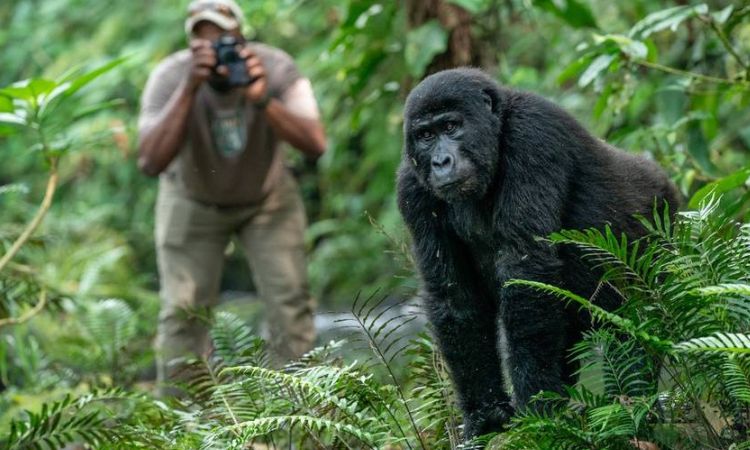
Gorilla Habituation Experience Uganda: Spend More Time with Mountain Gorillas
Uganda’s Gorilla Habituation Experience offers one of Africa’s most immersive primate encounters: the opportunity to spend several hours in the forest with a mountain gorilla group that is being prepared for regular human observation.
Unlike standard gorilla trekking, which normally provides a shorter encounter with a fully habituated gorilla family, the habituation experience allows visitors to spend substantially more time observing gorillas and learning about their behavior, social relationships, feeding patterns and daily life.
The experience takes place in Bwindi Impenetrable National Park, a UNESCO World Heritage-listed rainforest in southwestern Uganda and one of the world’s most important habitats for mountain gorillas.
For travelers looking for a deeper primate experience, a gorilla habituation safari in Uganda can be combined with chimpanzee tracking in Kibale, wildlife viewing in Queen Elizabeth National Park, or a longer self-drive journey through southwestern Uganda.
What Is the Gorilla Habituation Experience?
Gorilla habituation is the gradual process of introducing a wild gorilla group to the presence of humans.
Researchers, trackers and experienced guides spend time with a gorilla group so that the animals gradually become accustomed to people without changing their natural behavior.
The Gorilla Habituation Experience allows visitors to accompany the habituation team and spend an extended period observing the gorillas.
Rather than simply searching for a habituated family and spending a limited period with them, visitors become part of a longer forest experience focused on observation, learning and conservation.
You may observe:
- Feeding behavior
- Social interactions
- Grooming
- Movement through the forest
- Communication between individuals
- Young gorillas playing
- Silverback behavior
- Nesting areas
- Group dynamics
- Interactions between mothers and infants
The exact experience can vary depending on the gorilla group’s location, weather, forest conditions and conservation requirements.
Where Can You Experience Gorilla Habituation in Uganda?
The Gorilla Habituation Experience is associated with Bwindi Impenetrable National Park in southwestern Uganda.
Bwindi is an ancient rainforest characterized by steep slopes, dense vegetation, streams and extensive forest habitat.
The park is divided into several tourism sectors, including:
- Buhoma
- Ruhija
- Rushaga
- Nkuringo
The Rushaga sector has historically been particularly associated with gorilla habituation experiences.
Because gorilla groups, permits and tourism arrangements can change, travelers should confirm the current sector and availability before booking.
Gorilla Habituation vs Gorilla Trekking
The biggest difference is the amount of time and the purpose of the encounter.
| Feature | Gorilla Trekking | Gorilla Habituation Experience |
|---|---|---|
| Main purpose | Observe a habituated gorilla family | Observe a group undergoing habituation |
| Forest time | Usually shorter | Longer |
| Gorilla encounter | Limited viewing period | Extended observation |
| Group status | Habituated | Being habituated |
| Experience style | Wildlife encounter | Conservation and research-oriented experience |
| Ideal for | First-time gorilla visitors | Travelers wanting a deeper experience |
| Availability | More widely available | More limited |
Both experiences are closely regulated to protect the gorillas and their habitat.
What Happens During a Gorilla Habituation Experience?
A typical day begins early in the morning.
You meet your guides and tracking team before entering the forest. Depending on the location of the gorilla group, you may drive to the trailhead before beginning the trek.
Once inside Bwindi, the team searches for the gorillas using information from trackers and signs left by the animals.
The trek itself can involve steep slopes, muddy trails, dense vegetation and uneven terrain.
When the gorilla group is located, the experience changes from trekking to observation.
You may spend several hours watching the animals while researchers and guides explain their behavior and social structure.
1. Early Morning Preparation
Your guide explains the rules of the experience and prepares you for the forest.
You should carry:
- Waterproof hiking boots
- Long trousers
- Long-sleeved clothing
- Rain jacket
- Water
- Packed lunch
- Snacks
- Camera
- Extra batteries
- Walking poles
- Insect repellent
- Gardening gloves
2. Entering Bwindi Forest
The forest is dense and mountainous.
The trail can change depending on the location of the gorilla group, meaning that the walking distance cannot always be predicted in advance.
Your guide and trackers lead the way while looking for signs such as:
- Broken vegetation
- Gorilla footprints
- Feeding remains
- Nesting sites
- Droppings
- Sounds and calls
3. Finding the Gorilla Group
Once the group is located, the team maintains the required distance and follows the established rules.
The gorillas may continue feeding, moving, resting or interacting naturally.
This is one of the most fascinating parts of the experience because you are not watching a staged wildlife encounter.
4. Extended Gorilla Observation
The extended observation period gives you more opportunity to understand gorilla behavior.
Instead of simply seeing a silverback, mother and infant before returning to the trail, you may have time to observe how individuals interact over a longer period.
Researchers and guides can explain:
- Gorilla communication
- Family relationships
- Feeding habits
- Territorial behavior
- Reproductive behavior
- Infant development
- Silverback responsibilities
- Conservation challenges
5. Returning Through the Forest
After the observation period, you leave the gorilla group and return through the forest.
The return journey provides another opportunity to experience Bwindi’s biodiversity.
You may encounter forest birds, butterflies, primates and other wildlife along the trail.
Why Choose the Gorilla Habituation Experience?
The main attraction is the opportunity to experience mountain gorillas over a longer period.
For wildlife photographers, primate enthusiasts, researchers and travelers who want a deeper understanding of gorilla conservation, this can be particularly rewarding.
More Time for Observation
Longer observation can reveal behaviors that may not be visible during a shorter gorilla encounter.
A gorilla may spend several minutes feeding before moving to another location, or young animals may become increasingly active as the group settles.
A More Educational Experience
The habituation experience provides greater insight into the process of getting wild gorillas accustomed to human presence.
Your guides and trackers can explain how researchers monitor individual animals and document their behavior.
Excellent for Photography
The additional observation time can provide more photographic opportunities.
However, photography must always follow the official gorilla viewing rules.
Do not use flash photography unless specifically permitted, and follow your guide’s instructions regarding positioning and distance.
A Conservation-Focused Adventure
Mountain gorilla tourism contributes to conservation and supports communities around Bwindi.
Choosing a regulated gorilla experience helps connect tourism with the protection of one of Africa’s most remarkable primate populations.
Bwindi Impenetrable National Park
Bwindi is more than a gorilla destination.
The forest contains exceptional biodiversity and supports numerous species of birds, mammals, butterflies, plants and other organisms.
The landscape is characterized by:
- Ancient rainforest
- Steep mountain slopes
- Dense vegetation
- Forest streams
- Bamboo zones
- Misty valleys
- Agricultural communities surrounding the park
A gorilla habituation safari can therefore become part of a broader rainforest adventure.
Other Activities in Bwindi
Gorilla Trekking
Travelers who do not choose habituation can undertake conventional gorilla trekking.
The trek takes visitors into the forest to find a habituated gorilla family.
Forest Walks
Guided forest walks can provide opportunities to discover the park’s plant life, birds and smaller wildlife.
Birdwatching
Bwindi is one of Uganda’s important birdwatching destinations.
Forest birding can be combined with a gorilla safari for travelers interested in both primates and birds.
Batwa Cultural Experiences
Community-based experiences can introduce visitors to aspects of Batwa heritage and the historical relationship between forest communities and the Bwindi landscape.
Gorilla Habituation and Chimpanzee Tracking
Uganda is particularly attractive for travelers who want to experience more than one great ape species.
After Bwindi, your itinerary can continue toward Kibale National Park, Uganda’s principal chimpanzee trekking destination.
A combination of gorilla habituation and chimpanzee tracking creates a powerful primate-focused safari.
You can experience:
Mountain gorillas → chimpanzees → forest monkeys → birds → savannah wildlife
Gorilla Habituation + Queen Elizabeth National Park
A classic southwestern Uganda itinerary can combine Bwindi with Queen Elizabeth National Park.
After your gorilla experience, continue north toward Queen Elizabeth for a different type of wildlife safari.
Possible activities include:
- Game drives
- Kazinga Channel boat cruises
- Tree-climbing lion viewing in the Ishasha region
- Hippo viewing
- Elephant sightings
- Buffalo viewing
- Antelope viewing
- Birdwatching
This creates a strong contrast between rainforest trekking and open savannah wildlife.
Gorilla Habituation + Kibale + Queen Elizabeth
For travelers with more time, Uganda’s southwestern circuit can combine three major experiences:
Bwindi
Gorilla habituation experience.
Queen Elizabeth
Savannah wildlife and the Kazinga Channel.
Kibale
Chimpanzee trekking and forest primates.
This route is ideal for travelers interested in Uganda’s great apes as well as traditional safari wildlife.
Gorilla Habituation for Couples
A gorilla habituation safari can be an excellent choice for couples seeking an adventurous Uganda holiday.
A typical couple’s itinerary could combine:
- Entebbe
- Lake Mburo
- Queen Elizabeth
- Bwindi
- Gorilla habituation
- Kibale
- Kampala or Entebbe
Accommodation can range from comfortable safari lodges to forest guesthouses and boutique properties.
Gorilla Habituation for Families
Families should consider the age requirements and current permit regulations before booking.
The forest terrain can also be physically demanding.
For families who meet the applicable requirements, Uganda can combine:
- Gorilla experiences
- Wildlife drives
- Boat cruises
- Chimpanzee tracking
- Cultural experiences
- Nature walks
A private vehicle can make the journey between destinations more comfortable and flexible.
Gorilla Habituation for Solo Travelers
Solo travelers can join organized gorilla habituation experiences while using a private or shared safari vehicle for the wider Uganda journey.
A solo trip can combine:
Kampala → Kibale → Queen Elizabeth → Bwindi → Gorilla habituation → Lake Bunyonyi → Entebbe
Travelers can also add Rwanda or Kenya if their itinerary involves a wider East African journey.
Self-Drive Gorilla Habituation Safari Uganda
Uganda is well suited to adventurous travelers who want to explore by 4×4.
A self-drive itinerary can take you from Kampala or Entebbe through western Uganda toward Bwindi.
A typical route might be:
Kampala → Lake Mburo → Queen Elizabeth → Bwindi → Gorilla Habituation → Lake Bunyonyi → Kampala
A more extensive itinerary could continue to Kibale for chimpanzee trekking.
A capable 4×4 is recommended because some roads around southwestern Uganda can be challenging, particularly during rainy conditions.
Remember that self-driving does not mean independently approaching gorillas. Gorilla encounters are conducted under the supervision of authorized guides and trackers.
4×4 Rental with Rooftop Tent
For adventurous travelers, a 4×4 with a rooftop tent can provide a flexible way to explore Uganda.
A suitable safari vehicle can be equipped with:
- Rooftop tent
- Mattress
- Sleeping bags
- Camping chairs
- Camping table
- Cooking equipment
- Fridge or cooler
- Gas stove
- Water containers
- Recovery equipment
- Spare wheel
- Basic camping equipment
Camping locations must always comply with park regulations and campsite availability.
Best Time for Gorilla Habituation in Uganda
Gorilla experiences are possible throughout the year.
However, weather conditions can affect trekking conditions.
The dry seasons are generally popular because forest trails may be easier to navigate.
Uganda’s rainforest remains wet even during traditionally drier periods, so rain gear should always be carried.
The wetter seasons can also offer lush forest scenery, although muddy trails may make trekking more demanding.
Rather than choosing dates based only on weather, travelers should also consider:
- Permit availability
- Accommodation availability
- International flights
- Other safari destinations
- Personal travel schedule
How Difficult Is Gorilla Habituation?
The experience can be physically demanding.
Bwindi is mountainous, and trails can involve:
- Steep climbs
- Descents
- Mud
- Roots
- Dense vegetation
- Uneven ground
Fitness preparation is therefore recommended.
Walking or hiking regularly before your trip can help.
Travelers should also inform their safari operator about mobility limitations before booking so that the itinerary can be planned appropriately.
What to Pack for Gorilla Habituation
A practical packing list includes:
Clothing
- Long trousers
- Long-sleeved shirt
- Fleece or warm layer
- Waterproof jacket
- Waterproof trousers
- Hiking socks
Footwear
- Waterproof hiking boots
- Comfortable camp shoes
Trekking Equipment
- Daypack
- Walking poles
- Water bottle
- Small towel
- Gloves
Photography
- Camera
- Telephoto lens
- Extra batteries
- Memory cards
- Waterproof camera protection
Personal Items
- Sunscreen
- Insect repellent
- Personal medication
- Hand sanitizer
- Snacks
How Much Does the Gorilla Habituation Experience Cost?
The cost depends on the current Uganda Wildlife Authority tariff, visitor category, permit availability, accommodation, transportation and safari duration.
Gorilla habituation permits are priced differently from ordinary gorilla trekking permits, so travelers should confirm the current rate before making a booking.
A complete safari budget can include:
| Expense | What It Covers |
|---|---|
| Gorilla habituation permit | Regulated gorilla habituation experience |
| Accommodation | Lodge, hotel or camp |
| 4×4 vehicle | Safari transportation or self-drive rental |
| Fuel | Road travel |
| Guide | Depending on safari arrangement |
| Meals | Based on accommodation package |
| Park fees | Where applicable |
| Community activities | Optional experiences |
| Airport transfers | If included |
| Travel insurance | Recommended |
Permit prices and park regulations can change, so current rates should be checked when planning your trip.
Suggested Uganda Gorilla Habituation Itineraries
4-Day Gorilla Habituation Safari
Day 1: Kampala/Entebbe → Bwindi
Day 2: Gorilla habituation experience
Day 3: Bwindi forest or cultural experience
Day 4: Return to Kampala/Entebbe
6-Day Gorilla & Wildlife Safari
Day 1: Kampala → Queen Elizabeth
Day 2: Queen Elizabeth safari
Day 3: Queen Elizabeth → Bwindi
Day 4: Gorilla habituation experience
Day 5: Bwindi → Lake Bunyonyi
Day 6: Lake Bunyonyi → Kampala/Entebbe
8-Day Uganda Primate Safari
Day 1: Entebbe → Kibale
Day 2: Chimpanzee trekking
Day 3: Kibale → Queen Elizabeth
Day 4: Queen Elizabeth safari
Day 5: Queen Elizabeth → Bwindi
Day 6: Gorilla habituation experience
Day 7: Bwindi → Lake Bunyonyi
Day 8: Return to Entebbe
Gorilla Habituation and Rwanda
Travelers planning a larger East African primate adventure can combine Uganda with Rwanda.
A cross-border itinerary may include:
Kigali → Volcanoes National Park → Uganda → Bwindi → Queen Elizabeth → Kibale
Rwanda’s Volcanoes National Park is famous for mountain gorilla trekking, while Uganda offers both conventional gorilla trekking and the specialized habituation experience.
Cross-border vehicle requirements, insurance and border procedures should be confirmed before travel.
Why Book a Gorilla Habituation Safari?
A gorilla habituation safari combines adventure, wildlife observation and conservation.
You are not simply visiting a famous wildlife destination. You are entering an ancient rainforest, following experienced trackers and learning about one of the world’s most closely studied great apes.
For travelers who have already experienced conventional gorilla trekking, the habituation experience can offer a different perspective.
For first-time visitors, it provides an opportunity to spend an extended period learning about gorilla behavior and conservation.
Frequently Asked Questions
What is the Gorilla Habituation Experience in Uganda?
It is an extended gorilla experience in Bwindi where visitors accompany guides and trackers to observe a gorilla group undergoing habituation.
Where does gorilla habituation take place?
The experience is associated with Bwindi Impenetrable National Park in southwestern Uganda, with the Rushaga sector historically associated with habituation activities.
How is habituation different from gorilla trekking?
Gorilla trekking normally involves visiting a fully habituated gorilla family for a shorter viewing period. Habituation involves spending substantially more time with a group that is still being accustomed to human presence.
How long does gorilla habituation take?
The overall experience is longer than conventional gorilla trekking, but the exact schedule and observation time should be confirmed with the current Uganda Wildlife Authority arrangements.
Is gorilla habituation difficult?
It can be physically demanding because Bwindi is mountainous and forest trails can be steep, muddy and uneven.
Can children participate?
Age requirements and permit conditions apply and can change. Confirm the current requirements before booking.
Can I take photographs?
Photography is generally permitted subject to the applicable gorilla viewing rules. Flash photography and other restrictions may apply.
Can I combine gorilla habituation with chimpanzee trekking?
Yes. A popular combination is Bwindi for gorillas and Kibale National Park for chimpanzees.
Can I do gorilla habituation on a self-drive safari?
You can drive yourself between destinations, but the gorilla experience itself is conducted with authorized guides and trackers.
Can I combine Uganda and Rwanda?
Yes. Uganda and Rwanda can be combined into a wider East African primate itinerary, subject to current border, vehicle and immigration requirements.
Plan Your Uganda Gorilla Habituation Safari
The Gorilla Habituation Experience Uganda is designed for travelers who want more than a brief encounter with mountain gorillas.
From the misty slopes of Bwindi to the savannahs of Queen Elizabeth and the chimpanzee forests of Kibale, Uganda offers the opportunity to build a multi-destination primate and wildlife adventure.
Whether you are planning a private safari, honeymoon, family adventure, photography trip, self-drive journey or extended East African expedition, a well-planned itinerary can combine gorilla habituation with chimpanzees, wildlife, forest walks and cultural experiences.
Contact Graceland Adventurous to plan your Uganda gorilla habituation safari, arrange permits and accommodation, organize a private 4×4 safari vehicle, or create a customized Uganda and East Africa itinerary.