
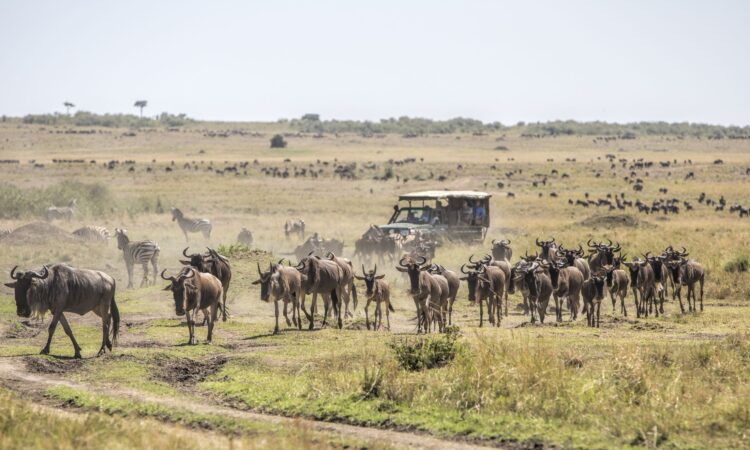
Serengeti–Mara Ecosystem: The Complete East African Wildlife & Migration Guide
The Serengeti–Mara Ecosystem is one of the most remarkable wildlife landscapes in Africa. Stretching across northern Tanzania and southwestern Kenya, this vast ecosystem supports enormous herds of wildebeest, zebra and gazelles alongside lions, cheetahs, leopards, elephants, buffalo, hyenas and hundreds of bird species.
It is best known as the home of the Great Wildebeest Migration, but the Serengeti–Mara ecosystem is much more than a seasonal migration route. Wildlife moves through this landscape throughout the year, following rainfall, fresh grass, water and changing environmental conditions.
For travellers planning a safari, understanding the ecosystem rather than focusing on a single park can make it easier to choose the right destination, season and route.
What Is the Serengeti–Mara Ecosystem?
The Serengeti–Mara ecosystem is a large interconnected wildlife landscape extending across the international border between Tanzania and Kenya.
On the Tanzanian side, the ecosystem includes the Serengeti and surrounding conservation areas. On the Kenyan side, it includes the Maasai Mara and surrounding conservancies.
There is no wildlife border.
Wildebeest, zebra, elephants, lions and other animals move according to environmental conditions rather than international boundaries.
This connectivity is one of the most important characteristics of the ecosystem.
The Serengeti Side
The Tanzanian portion contains some of Africa’s most famous safari landscapes.
Major areas include:
- Southern Serengeti
- Ndutu
- Central Serengeti
- Western Serengeti
- Grumeti
- Northern Serengeti
- Kogatende
Each region offers a different wildlife experience.
Southern Serengeti and Ndutu
The southern plains are particularly important during the beginning of the annual migration cycle.
From approximately January to March, large concentrations of wildebeest can gather around the short-grass plains.
This period is associated with the wildebeest calving season.
Newborn calves attract predators, making the southern Serengeti particularly interesting for travellers who enjoy predator and wildlife photography.
Central Serengeti
Central Serengeti is a year-round safari destination.
The region contains extensive grasslands, rocky kopjes and woodland habitats.
It supports large populations of:
- lions;
- leopards;
- cheetahs;
- elephants;
- giraffes;
- buffalo;
- hippos;
- hyenas;
- wildebeest;
- zebra;
- and numerous antelope species.
The Seronera area is particularly well known for year-round wildlife viewing.
Western Serengeti
Western Serengeti includes the Grumeti region.
During part of the migration cycle, wildebeest move through this area before continuing north.
The Grumeti River is associated with dramatic wildlife scenes and large crocodiles, although the exact timing and concentration of animals varies each year.
Northern Serengeti
Northern Serengeti becomes especially important as the migration moves north.
Areas around Kogatende and the Mara River can become focal points for travellers hoping to witness wildebeest river crossings.
The northern Serengeti also provides excellent resident wildlife viewing outside the migration season.
The Kenya Side
The northern continuation of the ecosystem is the Maasai Mara.
The Mara is famous for its open grasslands, resident wildlife and role in the Great Wildebeest Migration.
The ecosystem includes:
- Maasai Mara National Reserve;
- Mara Triangle;
- surrounding conservancies;
- Mara River;
- Talek River;
- and adjoining community landscapes.
Maasai Mara National Reserve
The reserve supports large populations of:
- lions;
- cheetahs;
- leopards;
- elephants;
- buffalo;
- giraffes;
- hippos;
- hyenas;
- wildebeest;
- zebra;
- and gazelles.
Even outside the migration season, the Mara offers excellent wildlife viewing.
Mara Triangle
The Mara Triangle occupies the western portion of the Mara ecosystem.
Its location along the Mara River makes it an important part of the northern migration landscape.
The Triangle is also known for relatively open grasslands and strong resident wildlife populations.
Mara River
The Mara River is one of the most famous features of the ecosystem.
During the northern migration period, wildebeest may gather along the river before attempting to cross.
These crossings can be spectacular but unpredictable.
A herd may gather for hours before crossing, cross at one location and then move back, or leave the river without crossing.
The Great Wildebeest Migration
The Serengeti–Mara ecosystem is home to one of the world’s largest terrestrial wildlife movements.
Around 1.5 million wildebeest participate in the annual migration, accompanied by large numbers of zebra and gazelles.
The animals move in response to:
- rainfall;
- fresh grass;
- water availability;
- soil conditions;
- and seasonal changes.
This means the migration should not be understood as a simple circular route with fixed dates.
It is a constantly changing movement across a huge landscape.
Serengeti–Mara Migration Calendar
| Period | Main migration area | Key experience |
|---|---|---|
| January | Southern Serengeti/Ndutu | Herd gathering |
| February | Ndutu/southern Serengeti | Calving season |
| March | Southern Serengeti | Calving and early movement |
| April | Central/western Serengeti | Migration moves north |
| May | Central/western Serengeti | Large herds moving |
| June | Western/northern Serengeti | Migration continues north |
| July | Northern Serengeti/Mara | Northern migration |
| August | Mara/Northern Serengeti | River-crossing period |
| September | Mara/Northern Serengeti | Large herds and predators |
| October | Mara/Northern Serengeti | Late migration |
| November | Serengeti | Movement south |
| December | Southern Serengeti | Herds return |
These periods are general seasonal patterns, not guaranteed dates.
Calving Season
The annual cycle begins with the return of the herds toward the southern plains.
The short grasses of the southern Serengeti provide nutrient-rich grazing.
During January to March, large numbers of wildebeest give birth.
February is traditionally regarded as one of the key calving months.
This creates a remarkable concentration of young animals and predators.
For travellers interested in:
- newborn wildebeest;
- predator behaviour;
- cheetahs;
- lions;
- wildlife photography;
- and large herds,
the southern Serengeti is an important destination.
The Mara River Crossing Season
As the year progresses, the herds gradually move north.
Eventually, many reach the northern Serengeti and Maasai Mara.
The Mara River crossings are one of the most famous spectacles associated with the migration.
The main planning period is generally July to October.
However, the crossing cannot be guaranteed.
Rainfall and grass conditions determine when and where the animals move.
Wildlife of the Serengeti–Mara Ecosystem
The migration is only one component of the ecosystem.
The region supports an extraordinary diversity of wildlife.
Lions
The Serengeti–Mara ecosystem is famous for its large lion populations.
Lions benefit from the abundance of prey throughout the ecosystem.
Cheetahs
Open grasslands provide excellent habitat for cheetahs.
Southern and central Serengeti and the Maasai Mara can all provide opportunities to see these fast-moving predators.
Leopards
Leopards are generally more difficult to find because they spend much of their time in woodland and rocky habitats.
They are often associated with riverine forests and areas containing suitable trees for resting and storing kills.
Elephants
Elephants are found throughout parts of the ecosystem, particularly in woodland and areas with reliable water.
Hyenas
Spotted hyenas are important predators and scavengers.
During migration periods, the abundance of wildebeest and zebra provides substantial feeding opportunities.
Giraffes
Giraffes are commonly seen in woodland and open areas across the ecosystem.
Hippos and Crocodiles
Rivers and seasonal water sources support hippos and crocodiles.
The Grumeti and Mara rivers are particularly notable for large crocodiles.
Why the Ecosystem Is Important
The Serengeti–Mara ecosystem demonstrates why wildlife conservation cannot always be managed according to political boundaries.
Animals move between Tanzania and Kenya.
A wildebeest born in the southern Serengeti may eventually travel through central Serengeti, northern Serengeti and the Maasai Mara before returning south.
Conservation therefore depends on maintaining:
- migration corridors;
- grazing areas;
- water sources;
- protected habitats;
- wildlife dispersal areas;
- and community conservation initiatives.
Safari Seasons Across the Ecosystem
There is no single month when the Serengeti–Mara ecosystem is “closed” to wildlife viewing.
Each season offers something different.
January–March
Focus: Southern Serengeti and Ndutu
Best known for:
- calving;
- newborn animals;
- predator activity;
- large herds.
April–June
Focus: Central and western Serengeti
Best known for:
- green landscapes;
- migration movement;
- resident wildlife;
- fewer peak-season pressures in some areas.
July–October
Focus: Northern Serengeti and Maasai Mara
Best known for:
- northern migration;
- large herds;
- Mara River;
- potential river crossings.
November–December
Focus: Central and southern Serengeti
The herds gradually move south as the short rains stimulate fresh grass.
Self-Drive in the Serengeti–Mara Ecosystem
The ecosystem is also an excellent destination for travellers interested in an East Africa 4×4 self-drive safari.
A properly equipped 4×4 allows travellers to create flexible routes through Tanzania and, where cross-border vehicle arrangements are available and authorised, combine Tanzania and Kenya.
Recommended 4×4 Equipment
A serious self-drive safari vehicle should ideally have:
- 4WD;
- high ground clearance;
- good all-terrain tyres;
- spare wheel;
- recovery equipment;
- compressor;
- jack;
- tyre-repair kit;
- sufficient fuel range;
- fridge;
- camping equipment;
- rooftop tent;
- navigation system;
- and emergency communication arrangements appropriate to the route.
Self-Drive Route: Northern Tanzania
A classic Tanzania itinerary can be:
Arusha → Tarangire → Ngorongoro → Ndutu → Central Serengeti → Northern Serengeti → Arusha
Allow approximately 8–12 days depending on how much time you want to spend in each area.
This route provides an opportunity to experience several stages of the migration cycle.
Self-Drive Route: Kenya
A Kenya-focused itinerary can be:
Nairobi → Lake Nakuru → Maasai Mara → Mara Triangle → Nairobi
A five- to seven-day trip provides enough time to explore the Mara rather than simply rushing through it.
Kenya–Tanzania Self-Drive Safari
For travellers wanting to explore the broader ecosystem:
Arusha → Ngorongoro → Serengeti → Northern Serengeti → Maasai Mara → Nairobi
This is one of the most interesting East African road-trip concepts because it connects the two sides of the migration ecosystem.
However, cross-border vehicle permissions, insurance, immigration requirements and applicable park regulations must be arranged before departure.
Where to Stay
Accommodation should ideally be chosen according to the season.
Southern Serengeti
For calving season:
- Ndutu seasonal camps;
- southern Serengeti camps;
- mobile migration camps.
Central Serengeti
For year-round wildlife:
- Seronera;
- central Serengeti lodges;
- tented camps;
- authorised campsites.
Northern Serengeti
For the northern migration:
- Kogatende;
- Lamai;
- northern Serengeti camps;
- mobile migration camps.
Maasai Mara
For Kenya:
- Talek;
- Sekenani;
- central Mara;
- Mara Triangle;
- private conservancies.
Choosing accommodation close to the wildlife area you want to explore can reduce unnecessary driving.
Camping in the Serengeti–Mara Ecosystem
Camping offers an alternative to luxury lodges.
A 4×4 with rooftop tent is particularly suitable for adventurous travellers who want to experience the ecosystem independently.
Camping can also make a longer safari more affordable than staying exclusively in luxury lodges.
However, travellers must use authorised campsites and comply with current park and reserve regulations.
How Much Does a Serengeti–Mara Safari Cost?
Prices vary significantly depending on the travel style.
| Safari style | Approximate planning level |
|---|---|
| Budget camping | USD 150–300+ per person/day |
| Mid-range safari | USD 300–600+ per person/day |
| Private safari | USD 500–900+ per person/day |
| Luxury safari | USD 900–1,500+ per person/day |
| Luxury fly-in safari | USD 1,500+ per person/day |
These are broad planning ranges rather than fixed prices.
Park fees, accommodation rates, vehicle rental and cross-border charges should always be confirmed for the year of travel.
Serengeti–Mara Ecosystem vs Single-Park Safari
A single-park safari can be excellent if your time is limited.
However, exploring multiple sections of the ecosystem gives you a better understanding of how wildlife movements change throughout the year.
For example:
February: Ndutu calving
June: Western/Central Serengeti
August: Northern Serengeti/Mara
November: Southern Serengeti
The ecosystem therefore offers a different wildlife story depending on when you visit.
Responsible Tourism
The Serengeti–Mara ecosystem is an incredibly sensitive environment.
Travellers can contribute to its protection by following responsible safari practices.
Always:
- remain on authorised roads;
- follow park and reserve regulations;
- maintain a safe distance from wildlife;
- never chase animals;
- avoid blocking wildlife;
- minimise noise;
- do not litter;
- use authorised campsites;
- respect local communities;
- and follow guide or ranger instructions.
During migration and calving periods, responsible behaviour is particularly important because large concentrations of animals can be sensitive to vehicle pressure.
Frequently Asked Questions
Is the Serengeti–Mara one ecosystem?
Yes. The Serengeti and Maasai Mara form interconnected parts of a wider ecological landscape extending across Tanzania and Kenya.
Is the Great Migration year-round?
Yes. The migration is a continuous annual cycle, although the location of the herds changes throughout the year.
When is calving season?
Calving is generally associated with January to March, particularly around the southern Serengeti and Ndutu.
When are the Mara River crossings?
River crossings are generally associated with July to October, although exact timing varies and crossings cannot be guaranteed.
Can I visit the Serengeti and Maasai Mara on one safari?
Yes, provided the required border, vehicle, immigration, insurance and park arrangements are organised.
Can I self-drive?
Self-drive is possible in parts of both Tanzania and Kenya, but travellers need suitable 4×4 vehicles and must follow current park, reserve and conservation-area regulations.
Is a rooftop tent suitable?
A rooftop tent can be an excellent option for an independent East African road trip where authorised camping facilities are available.
How many days do I need?
For a Tanzania-focused ecosystem safari, 7–12 days provides considerably more flexibility than a short three- or four-day trip. A Kenya–Tanzania combination generally benefits from additional time.
Which side should I visit?
The answer depends on the season and your interests. Southern Serengeti is particularly associated with calving, while northern Serengeti and Maasai Mara are important during the northern migration and river-crossing period.
Explore the Serengeti–Mara Ecosystem
The Serengeti–Mara ecosystem is not simply a destination on a safari map. It is a living landscape that connects Tanzania and Kenya through wildlife movement, seasonal rainfall and natural grazing patterns.
From the calving plains of Ndutu to the central Serengeti, the Grumeti region, the northern Serengeti, the Mara River and the Maasai Mara, every section contributes to the larger ecosystem.
For travellers planning an East Africa self-drive safari, this interconnected landscape also provides an opportunity to combine a 4×4 rental with rooftop tent camping, wildlife viewing and long-distance road travel.
Whether your goal is to witness newborn wildebeest, follow huge migrating herds, search for predators, photograph a Mara River crossing or simply experience the Serengeti and Maasai Mara outside the busiest migration periods, understanding the ecosystem helps you choose the right route and season.
The Serengeti–Mara is one ecosystem, two countries and an extraordinary wildlife journey that continues throughout the year.