
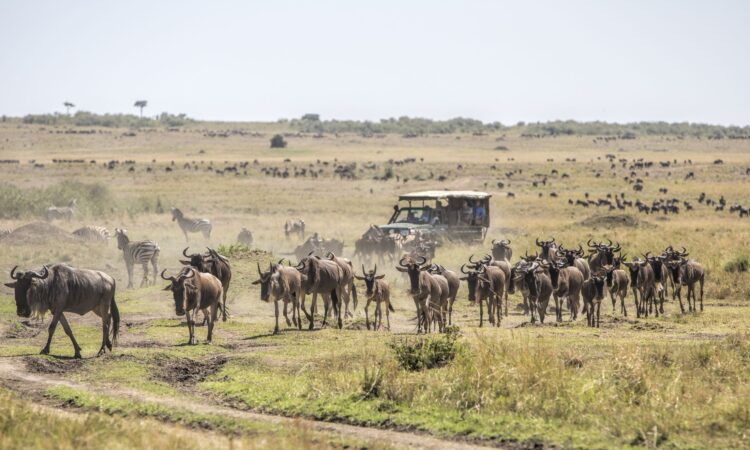
Why Do Wildebeest Migrate to Ndutu and the Southern Serengeti?
Introduction: Why Do Wildebeest Travel to Ndutu and the Southern Serengeti?
Every year, enormous herds of wildebeest move across the Serengeti ecosystem in Tanzania as part of the Great Wildebeest Migration. One of their most important seasonal destinations is the Ndutu area and the surrounding plains of the southern Serengeti, where fresh grass, seasonal water and suitable calving grounds attract hundreds of thousands of migrating animals.
The main reason wildebeest migrate to this region is the search for nutritious grass following seasonal rainfall. These grazing conditions are particularly important for pregnant females and mothers nursing newborn calves. The open plains provide extensive feeding areas during one of the most critical stages of the wildebeest life cycle.
The seasonal gathering also attracts zebras, gazelles and predators such as lions, cheetahs and spotted hyenas. As a result, Ndutu and the Southern Serengeti become some of Tanzania’s most rewarding safari destinations during the calving season.
Understanding why wildebeest migrate to this region helps travelers choose the best time for a safari and appreciate how rainfall, grass growth and wildlife survival are connected.
1. Seasonal Rainfall Creates Fresh Grazing
The most important factor influencing the Great Wildebeest Migration is the availability of food. Wildebeest depend on grass, and their movements are closely linked to seasonal rainfall and the growth of new vegetation.
When rains reach the southern Serengeti and Ndutu plains, the landscape can develop fresh, nutrient-rich grass. These grazing conditions attract migrating herds from other parts of the Serengeti ecosystem.
The southern plains are particularly valuable because their short grasses can provide highly nutritious forage. This food helps wildebeest maintain their condition during pregnancy and supports females as they produce milk for their calves.
However, rainfall is variable. The herds do not arrive according to an exact annual timetable, and the quality of grazing differs from one season to another. The migration responds to actual environmental conditions rather than a fixed route or calendar.
2. Ndutu Is an Important Wildebeest Calving Ground
One of the main reasons wildebeest gather in Ndutu and the Southern Serengeti is the annual calving season.
The main calving period generally occurs between January and March, although the timing and concentration of births vary with rainfall and herd movements. February is often an excellent month for travelers hoping to see newborn calves.
During this period, large numbers of female wildebeest give birth across the southern plains. Newborn calves usually attempt to stand and move shortly after birth, helping them remain with their mothers and the herd.
The availability of nutritious grass is essential because females need sufficient energy during late pregnancy and while nursing their young. The broad grasslands provide feeding opportunities for large concentrations of animals.
For safari visitors, this creates opportunities to witness mothers caring for their calves, herds moving across the plains and predators searching for prey.
3. Short Grass Helps Wildebeest Find Suitable Feeding Areas
The southern Serengeti and Ndutu region contain extensive open grasslands that can produce short, nutritious grazing after seasonal rains.
Short grass is especially valuable to wildebeest because it can provide high-quality forage. These conditions help explain why large herds gather in the region during the calving season.
Open terrain also allows animals to spread across broad feeding areas rather than depending entirely on smaller patches of vegetation. For wildlife observers, the relatively open landscape can make it easier to spot herds and watch their movements.
The exact distribution of grass depends on soil, rainfall and local conditions, so wildebeest may concentrate in different parts of the southern ecosystem from year to year.
4. Water Availability Influences the Migration
Water is another important factor in the seasonal movements of wildebeest. Rain replenishes temporary water sources and encourages the growth of fresh vegetation across the plains.
During wetter periods, the southern Serengeti and Ndutu can provide a combination of grazing and water that supports large herbivore populations.
As rainfall declines, water and fresh grass become less abundant in some locations. The herds then begin moving toward other areas where conditions are more favorable.
Water alone does not determine the migration. The availability and quality of grass, recent rainfall and the condition of the landscape all influence where wildebeest travel and how long they remain in a particular area.
5. Why the Southern Serengeti Is Suitable for Newborn Calves
The southern Serengeti and Ndutu plains offer several features that make them important during the calving season.
First, fresh grass provides food for pregnant and nursing females. Second, the open landscape supports extensive grazing, allowing large herds to spread across the plains. Third, the concentration of animals makes it possible for calves to remain close to their mothers and the moving herd.
Newborn wildebeest face natural dangers, including predators and the challenges of keeping up with the herd. Their ability to stand and move soon after birth is an important survival adaptation.
Although the open plains offer feeding and visibility advantages, they do not make calves safe from predators. The calving season is a natural period of both new life and intense predator–prey interaction.
6. Why Do Predators Follow Wildebeest to Ndutu?
The migration does not attract only grazing animals. Large concentrations of wildebeest also create feeding opportunities for predators.
Lions
Lions may follow the herds and hunt when opportunities arise. They are frequently sought after by visitors exploring the Ndutu area during the calving season.
Cheetahs
The open grasslands can provide suitable hunting terrain for cheetahs. Their speed and hunting behavior make them particularly interesting to observe in this landscape.
Spotted Hyenas
Spotted hyenas are both hunters and scavengers. They play an important role in the ecosystem and may take advantage of the seasonal abundance of prey.
Other Predators
Jackals and other carnivores may also be present. Sightings depend on the location of the herds, habitat conditions and the movements of individual animals.
Predators are a natural part of the Great Migration ecosystem. Their presence contributes to the region’s wildlife dynamics, but a hunt or predator encounter cannot be guaranteed on any particular game drive.
7. What Happens When the Wildebeest Leave Ndutu?
Wildebeest do not remain in Ndutu throughout the year. Their movements change as rainfall patterns shift and the quality of grazing changes across the Serengeti ecosystem.
After the main calving period, many herds gradually disperse toward other parts of the ecosystem. Depending on seasonal conditions, they may move through the central and western Serengeti before some herds continue toward the north.
During the dry season, parts of the northern Serengeti become important wildlife destinations. Some herds cross the Mara River into Kenya’s Maasai Mara, where they find seasonal grazing opportunities.
Later in the year, rainfall in the southern ecosystem may encourage herds to move south again.
This is a broad seasonal pattern, not a guaranteed itinerary. Different herds may move at different times, and local rainfall can significantly influence their routes.
8. When Is the Best Time to See Wildebeest in Ndutu?
The best time to visit depends on whether you want to see the herds arriving, newborn calves or the wider migration landscape.
- December: Some herds begin gathering in the southern Serengeti as seasonal rains improve grazing conditions.
- January: The calving season becomes a major attraction, and newborn calves may be seen across the plains.
- February: Often one of the best months for calving-season wildlife viewing, with large herds and opportunities to observe predator activity.
- March: Calving-season sightings may continue, although herd distribution depends on rainfall and grazing.
- April onward: Many herds gradually move toward other areas as conditions change, but the timing varies each year.
Best overall recommendation: Consider February if your main objective is to see newborn wildebeest. If your dates are flexible, check recent migration reports and local rainfall conditions before confirming your itinerary.
9. Ndutu and the Southern Serengeti: Are They the Same Place?
Ndutu and the Southern Serengeti are closely connected geographically and ecologically, but the names do not refer to exactly the same administrative area.
Ndutu lies near the boundary between the Ngorongoro Conservation Area and Serengeti National Park. The wider seasonal wildlife landscape crosses protected-area boundaries, and migrating animals move freely through the ecosystem.
This distinction matters when arranging accommodation, game drives and park fees. Some locations and routes are within the Ngorongoro Conservation Area, while others enter Serengeti National Park.
Travelers should confirm the precise location of their camp and the protected areas included in their itinerary. If you want to remain within one management area, your route and permits need to be planned accordingly.
10. How to Plan a Wildebeest Migration Safari in Ndutu
A well-planned Ndutu safari should allow enough time to explore the plains and respond to changing wildlife movements.
Choose the Right Travel Period
January to March is generally the main period to consider for calving-season wildlife viewing. February is often a strong choice, but weather and herd movements can change the experience.
Stay Near Your Main Game-Drive Area
Accommodation near Ndutu can reduce unnecessary driving and give you more time for early-morning and afternoon wildlife viewing.
Allow Multiple Game Drives
Wildebeest may be spread across a large area, and sightings can vary from one day to another. Spending two or three full days exploring the region can give you more flexibility than a brief stop.
Choose Guided or Self-Drive Safaris Carefully
A guided safari offers help with navigation, wildlife spotting and logistics. A self-drive safari can provide greater independence, but it requires a suitable 4×4 vehicle, preparation for changing road conditions and an understanding of protected-area regulations.
Confirm the necessary fees and access requirements for every area you intend to visit.
Combine Ndutu With Other Northern Tanzania Destinations
If you have additional time, you can combine Ndutu with the Ngorongoro Crater, Tarangire National Park or other suitable destinations. If calving is your main objective, however, consider spending more time in Ndutu rather than rushing between too many locations.
11. Frequently Asked Questions About Wildebeest Migration to Ndutu
Why do wildebeest migrate to Ndutu?
Wildebeest migrate to Ndutu mainly because seasonal rains encourage the growth of nutritious grass. The region provides important feeding grounds for pregnant females and nursing mothers, as well as suitable plains for calving.
What month do wildebeest arrive in Ndutu?
Many herds begin gathering in the southern Serengeti and Ndutu area around December, with large concentrations often present between January and March. The exact timing depends on rainfall and grazing conditions.
Why is February popular for a Ndutu safari?
February is often a peak period for wildebeest calving. Visitors may see newborn calves, large herds and predators taking advantage of the seasonal abundance of prey.
Do wildebeest migrate to Ndutu every year?
Ndutu is a regular and important seasonal destination for many migrating wildebeest. However, the exact distribution of herds and the timing of their movements vary with rainfall and other environmental conditions.
Do wildebeest migrate to Ndutu because of predators?
No. The main drivers are food and water availability, influenced by seasonal rainfall. Predators follow the herds because they provide a source of prey.
Can I see the Great Migration in Ndutu without visiting the Ngorongoro Crater?
Yes. You can focus on the Ndutu Plains and surrounding calving grounds without visiting the crater. The crater is a separate wildlife-viewing destination within the wider Ngorongoro region.
Is Ndutu better than the Northern Serengeti?
They offer different experiences. Ndutu is especially associated with calving season, generally January to March, while the northern Serengeti is known for seasonal concentrations of wildebeest and potential Mara River crossings. The best choice depends on your travel dates and wildlife interests.
How many days should I spend in Ndutu?
Two or three full days of game drives can provide a worthwhile opportunity to explore the region. More time may be beneficial for photographers and travelers who want flexibility as the herds move.
Conclusion: Ndutu Is Essential to the Wildebeest Migration Cycle
Wildebeest migrate to Ndutu and the Southern Serengeti because seasonal rainfall creates the fresh grazing and water resources they need to survive. The region’s short-grass plains are especially important during the calving season, when pregnant females and newborn calves depend on suitable feeding conditions.
The seasonal gathering also supports the wider ecosystem, attracting zebras, gazelles and predators while contributing to the natural cycle of the Great Wildebeest Migration.
For travelers, the best opportunity to experience this stage of the migration is generally between January and March, with February often a particularly rewarding month. Because rainfall and wildlife movements change from year to year, flexible planning is essential.
Plan your Ndutu wildebeest calving safari with Graceland Adventurous. Explore guided safari packages, accommodation options and self-drive 4×4 adventures designed around your travel dates and wildlife interests.