
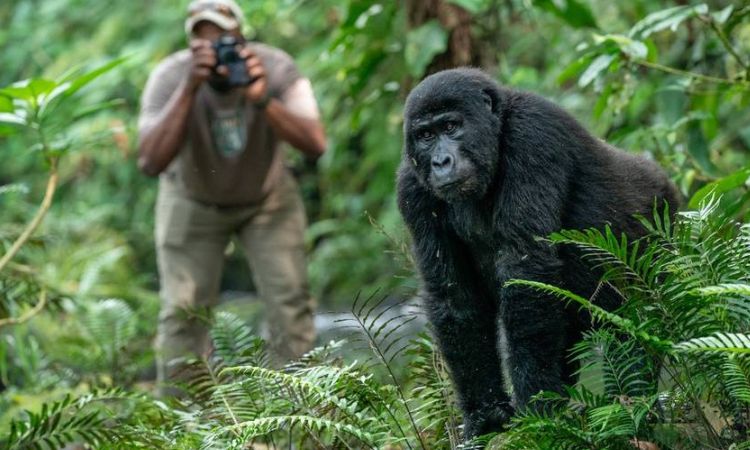
Gorilla Trekking in East Africa
Gorilla trekking is one of Africa’s most extraordinary wildlife experiences, offering travellers the rare opportunity to walk through montane forests and spend time observing wild mountain gorillas in their natural habitat. Unlike a traditional safari where wildlife is viewed from a vehicle, gorilla trekking takes you into the forest on foot, creating a much more intimate and immersive encounter.
The experience is primarily associated with Rwanda, Uganda and the Democratic Republic of Congo (DRC), home to the remaining populations of mountain gorillas. Rwanda’s Volcanoes National Park, Uganda’s Bwindi Impenetrable National Park and Mgahinga Gorilla National Park, and DRC’s Virunga National Park are the principal destinations.

What Is Gorilla Trekking?
Gorilla trekking involves hiking through dense rainforest in search of a habituated gorilla family. Once the trackers locate the family, visitors normally spend a strictly limited period observing the gorillas, watching them feed, groom, play, rest and interact with one another.
The trek itself can be relatively short or involve several hours of challenging hiking. The location of the gorilla family changes constantly, so there is no guaranteed distance or duration before you reach them.
This unpredictability is part of what makes the experience special.
You may walk through thick vegetation, cross muddy trails and climb steep forested slopes before suddenly finding yourself only a few metres from a silverback and his family.
Where Can You Go Gorilla Trekking?
Rwanda – Volcanoes National Park
Rwanda is one of the most popular destinations for gorilla trekking. Volcanoes National Park protects part of the Virunga volcanic mountain range and is home to numerous habituated mountain gorilla families.
The park is particularly attractive for travellers who want to combine gorilla trekking with a comfortable safari itinerary. Kigali is relatively accessible, and the journey from Kigali to the Volcanoes region can generally be completed in a few hours by road.
The dramatic volcanic landscape, bamboo forests and mist-covered mountains provide a spectacular setting for the trek.
Uganda – Bwindi Impenetrable National Park
Bwindi Impenetrable National Park is another major gorilla trekking destination and is famous for its ancient rainforest and rich biodiversity.
Bwindi offers several trekking sectors, and the experience can vary considerably depending on where your gorilla family is located.
The journey to Bwindi can also form part of a longer Ugandan adventure incorporating Queen Elizabeth National Park, Kibale Forest, Lake Bunyonyi and other attractions.
Uganda – Mgahinga Gorilla National Park
Mgahinga Gorilla National Park protects the Ugandan section of the Virunga Mountains. It is smaller than Bwindi but offers a spectacular combination of mountain scenery, rainforest and gorilla trekking.
The park is also known for the dramatic volcanic peaks that dominate the landscape.
Democratic Republic of Congo – Virunga National Park
Virunga National Park is historically one of Africa’s most remarkable wildlife destinations and protects mountain gorillas as well as extensive volcanic and forest ecosystems.
However, travellers should carefully check current security conditions, park operating status and official travel advice before planning a visit to the region.
What Happens on a Gorilla Trek?
A typical trekking day begins early in the morning. After breakfast, visitors travel to the park headquarters for registration and a briefing.
Rangers explain the trekking rules, safety procedures and appropriate behaviour around the gorillas. Visitors are then assigned to a gorilla family and begin the hike with trained guides and trackers.
The trek can take anywhere from a relatively short hike to several hours, depending on where the gorillas have moved.
Once the gorillas are found, the atmosphere changes completely.
You may see a massive silverback resting beneath the trees, mothers caring for infants, young gorillas playing around the vegetation or members of the family feeding quietly.
The guides help visitors understand the behaviour of the animals while ensuring that the encounter remains respectful and controlled.
How Difficult Is Gorilla Trekking?
Gorilla trekking requires a reasonable level of fitness, but the difficulty varies significantly.
The forests are mountainous and trails can be steep, slippery and muddy. In some areas, dense vegetation makes walking more demanding.
Weather can also influence the experience. Rain can make paths slippery, while humid conditions can make strenuous climbs feel harder.
Travellers should therefore prepare for:
- Steep and uneven terrain
- Muddy and slippery trails
- Dense vegetation
- Several hours of walking
- Variable weather
- High humidity
- Elevation changes
Older travellers or people who are concerned about strenuous hiking should discuss their physical limitations with their tour operator before booking.
What Should You Wear?
Proper clothing makes a major difference.
Long trousers and a long-sleeved shirt help protect against vegetation and insects. Waterproof hiking boots are highly recommended, particularly during wet conditions.
A useful trekking outfit includes:
- Waterproof hiking boots
- Long trousers
- Long-sleeved shirt
- Lightweight waterproof jacket
- Warm layer
- Gardening or trekking gloves
- Hat
- Sunglasses
- Small backpack
- Reusable water bottle
- Insect repellent
- Camera with spare batteries
A walking stick can also be useful on steep or muddy sections of the trail.
Gorilla Trekking Rules
Gorilla tourism is carefully controlled because these animals are vulnerable to human-borne diseases and excessive human disturbance.
Visitors are expected to follow the instructions of their guides and maintain an appropriate distance from the gorillas. Flash photography is generally prohibited, and visitors should avoid sudden movements, loud noises and attempts to attract the animals’ attention.
Anyone who is sick should inform the trekking authorities rather than risk exposing the gorillas to illness.
These rules are not simply formalities. They are an important part of protecting one of the world’s most endangered great apes.
When Is the Best Time for Gorilla Trekking?
Gorilla trekking is possible throughout much of the year, but conditions vary seasonally.
The drier periods are often preferred because trails tend to be easier to navigate. However, gorilla habitat is rainforest, so rain can occur at almost any time.
The wetter months can bring more challenging trekking conditions but also produce lush vegetation and beautiful forest scenery.
For travellers who are flexible, the best time depends on whether they prioritise easier hiking conditions, lower-season travel opportunities, photography or combining gorilla trekking with other East African activities.
Gorilla Trekking and a Safari
One of the biggest advantages of visiting East Africa is that gorilla trekking can be combined with a conventional wildlife safari.
A traveller might, for example, combine Rwanda’s gorillas with Akagera National Park, or Uganda’s gorillas with Queen Elizabeth and Kibale.
For travellers exploring several countries, an East African itinerary can potentially combine:
Kenya → Uganda → Rwanda → Tanzania
with wildlife viewing, gorilla trekking, chimpanzee trekking, cultural experiences and the Great Migration.
However, cross-border travel requires careful planning because vehicle regulations, insurance, border procedures, permits and rental conditions vary between countries.
Gorilla Trekking vs Gorilla Habituation
Standard gorilla trekking and gorilla habituation are not exactly the same experience.
Gorilla trekking normally involves visiting a habituated family for a limited viewing period.
Gorilla habituation involves spending considerably more time with a gorilla group that is undergoing the habituation process, subject to the rules and availability of the relevant park authority.
For most first-time visitors, standard trekking provides an excellent introduction to mountain gorillas.
Why Gorilla Trekking Is So Special
The appeal of gorilla trekking goes beyond simply seeing a rare animal.
Mountain gorillas live in complex family groups with strong social relationships. Watching them interact at close range can reveal behaviours that are difficult to appreciate from a safari vehicle.
There is also something uniquely memorable about reaching the gorilla family after hiking through a remote rainforest.
The sounds of the forest, the mist around the mountains, the vegetation and the anticipation of finding the gorillas all become part of the experience.
For many travellers, the moment they first see a silverback looking back through the vegetation is one of the defining memories of their African journey.
Plan Your Gorilla Trekking Adventure
Gorilla trekking can be incorporated into a wider East African safari, Rwanda holiday, Uganda wildlife tour or multi-country adventure. With careful planning, travellers can combine gorillas with chimpanzee trekking, savannah safaris, cultural experiences, mountain hiking and other wildlife destinations.