
Gorilla Trekking Safari in Uganda and Rwanda: The Ultimate Guide to Africa’s Most Extraordinary Wildlife Encounter
Introduction
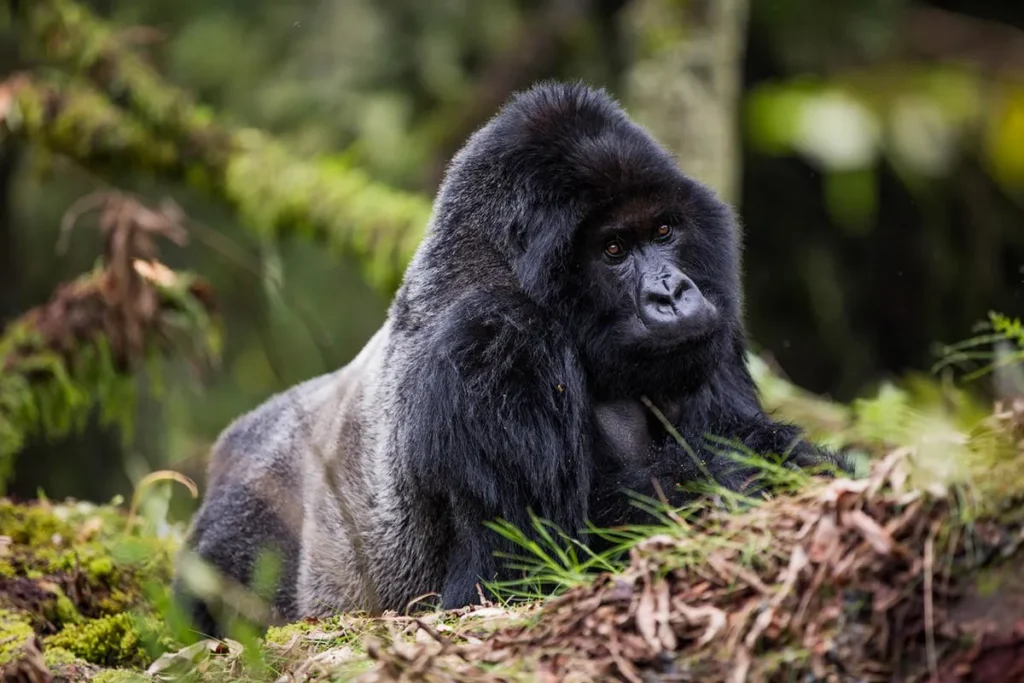
Imagine standing quietly in a mist-covered rainforest, listening to the sounds of the jungle around you. The air is cool and damp, birds call from the treetops, and dense vegetation surrounds the narrow trail beneath your feet. Suddenly, your guide raises a hand and signals for silence. Just ahead, partially hidden among giant ferns and tangled vines, sits a massive silverback gorilla. He glances in your direction before calmly continuing to feed, while young gorillas play nearby and mothers cradle their infants close.
This is gorilla trekking—one of the most powerful wildlife experiences on Earth.
Unlike a traditional safari where animals are viewed from a vehicle, gorilla trekking brings visitors into the heart of the rainforest to observe mountain gorillas in their natural habitat. It is an intimate encounter that combines adventure, conservation, culture, and breathtaking scenery into a single unforgettable journey.
The mountain gorillas of East Africa are found only in a small region spanning Uganda, Rwanda, and the Democratic Republic of Congo. Fortunately, Uganda and Rwanda offer safe, well-organized, and highly rewarding gorilla trekking experiences that attract travelers from around the world.
Whether you are a wildlife enthusiast, photographer, conservation supporter, or simply someone seeking a truly life-changing adventure, a gorilla trekking safari in Uganda and Rwanda deserves a place on your travel bucket list.
Understanding Mountain Gorillas
Mountain gorillas are a subspecies of eastern gorillas and are among the rarest primates in the world. Unlike lowland gorillas found elsewhere in Africa, mountain gorillas inhabit high-altitude forests characterized by cool temperatures, dense vegetation, and mountainous terrain.
Adult male gorillas can weigh over 180 kilograms and are easily recognized by the silver patch of hair on their backs, earning them the title of “silverback.” These dominant males lead family groups known as troops, which often consist of females, infants, juveniles, and subordinate males.
Despite their enormous size and strength, mountain gorillas are remarkably gentle creatures. They spend much of their day feeding on leaves, stems, shoots, fruits, and roots. Social interactions play an important role in gorilla life, with grooming, playing, and nurturing behaviors commonly observed.
One of the most fascinating aspects of gorilla trekking is witnessing how similar gorillas are to humans. Sharing approximately 98% of our DNA, they display emotions, family bonds, and social behaviors that feel surprisingly familiar.
The History of Gorilla Conservation
Only a few decades ago, mountain gorillas faced a bleak future. Habitat destruction, poaching, disease, and political instability threatened their survival.
The groundbreaking work of primatologist Dian Fossey brought international attention to the plight of mountain gorillas during the 1960s and 1970s. Her research in the Virunga Mountains helped transform public understanding of these magnificent animals and inspired conservation efforts that continue today.
Thanks to collaboration between governments, local communities, conservation organizations, and tourism operators, mountain gorilla populations have gradually increased.
Today, gorilla trekking tourism plays a crucial role in funding conservation initiatives. Permit fees directly support park management, ranger salaries, anti-poaching programs, habitat protection, and community development projects.
Every visitor who participates in gorilla trekking contributes to the ongoing protection of one of the world’s most endangered species.
Gorilla Trekking in Uganda
Uganda is often regarded as the premier gorilla trekking destination in Africa. The country hosts more than half of the world’s mountain gorilla population and offers diverse trekking experiences across multiple sectors.
Bwindi Impenetrable National Park
Nestled in southwestern Uganda, Bwindi Impenetrable National Park is one of Africa’s most biologically diverse rainforests. Covering approximately 331 square kilometers, this UNESCO World Heritage Site is home to hundreds of bird species, butterflies, mammals, and nearly half of the world’s mountain gorillas.
The name “Impenetrable” is well deserved. Dense vegetation, steep slopes, tangled vines, and ancient forest create an environment that feels untouched by time.
Bwindi is divided into four main trekking sectors:
Buhoma Sector
Located in the northern part of the park, Buhoma is the most established tourism sector. It offers excellent accommodation options, beautiful forest scenery, and several habituated gorilla families.
Ruhija Sector
Known for its elevated terrain and spectacular views, Ruhija attracts birdwatchers and travelers seeking a quieter trekking experience.
Rushaga Sector
Rushaga has one of the highest concentrations of habituated gorilla families, making it a popular choice for visitors.
Nkuringo Sector
Nkuringo offers some of the most challenging but rewarding trekking routes, featuring dramatic mountain scenery and unforgettable forest experiences.
Mgahinga Gorilla National Park
Although smaller than Bwindi, Mgahinga Gorilla National Park offers a unique gorilla trekking experience within the spectacular Virunga Mountain range.
The park protects three extinct volcanoes:
- Mount Muhabura
- Mount Gahinga
- Mount Sabyinyo
In addition to gorilla trekking, visitors can enjoy golden monkey tracking, volcano hiking, birdwatching, and cultural encounters with the indigenous Batwa people.
The scenery here is among the most beautiful in East Africa, with bamboo forests giving way to alpine vegetation and volcanic peaks.
Gorilla Trekking in Rwanda
Rwanda has become synonymous with luxury gorilla tourism. The country’s efficient infrastructure, excellent roads, and premium safari experiences make it an attractive option for travelers with limited time.
Volcanoes National Park
Volcanoes National Park lies in northwestern Rwanda and forms part of the greater Virunga Conservation Area.
The park’s landscape is dominated by dramatic volcanic mountains, lush bamboo forests, and mist-covered slopes that create an almost mystical atmosphere.
The park protects numerous habituated gorilla families, each carefully monitored by rangers and researchers.
One of Rwanda’s greatest advantages is accessibility. The park is only a few hours from Kigali International Airport, allowing travelers to reach gorilla trekking headquarters quickly and comfortably.
For visitors seeking a luxury safari experience without lengthy transfers, Rwanda is difficult to beat.
What Happens During a Gorilla Trek?
Every gorilla trek follows a structured process designed to ensure visitor safety and minimize disturbance to the gorillas.
Early Morning Briefing
The day begins with registration and a briefing by park officials. Visitors receive information about:
- Gorilla behavior
- Trekking guidelines
- Safety procedures
- Conservation rules
- Photography regulations
Trekkers are then assigned to specific gorilla families based on fitness levels and group sizes.
Entering the Forest
Accompanied by experienced guides and trackers, visitors enter the forest in search of their assigned gorilla family.
Trackers often leave before dawn to locate gorillas and communicate their position to trekking groups.
The hike can vary significantly depending on the location of the gorillas.
Some treks last only an hour.
Others may require several hours of hiking through dense forest, steep hillsides, muddy trails, and thick vegetation.
The journey itself becomes part of the adventure.
The Magical Encounter
Once the gorillas are located, visitors are allowed exactly one hour with the family.
During this precious time, you may observe:
- Silverbacks feeding
- Mothers caring for infants
- Young gorillas playing
- Family interactions
- Grooming behavior
- Resting and socializing
Many visitors describe the experience as emotional and deeply moving.
Seeing these gentle giants in their natural environment often creates a profound appreciation for wildlife conservation.
Gorilla Habituation Experience in Uganda
For travelers seeking a more immersive encounter, Uganda offers the Gorilla Habituation Experience.
Unlike standard trekking, which allows one hour with gorillas, habituation permits provide up to four hours with a semi-habituated gorilla family.
Participants accompany researchers, trackers, and conservationists as they monitor gorillas and gradually accustom them to human presence.
This experience is particularly appealing to photographers, wildlife enthusiasts, and travelers interested in conservation.
Best Time for Gorilla Trekking
Gorilla trekking is available year-round, but seasonal conditions can affect the trekking experience.
Dry Season
The dry seasons occur during:
- June to September
- December to February
Benefits include:
- Easier hiking conditions
- Less mud
- Better visibility
- More comfortable trekking
These months are also the busiest and require advance permit bookings.
Wet Season
The rainy seasons occur during:
- March to May
- October to November
Advantages include:
- Fewer tourists
- Lush green forests
- Excellent photography opportunities
- Greater lodge availability
Although trails can be muddy, gorilla sightings remain excellent.
Physical Fitness Requirements
Many people worry that gorilla trekking requires extreme fitness.
While some treks can be challenging, most reasonably active travelers can participate successfully.
Trekking difficulty depends on:
- Gorilla location
- Terrain conditions
- Weather
- Individual fitness levels
Porters are available to assist with backpacks and provide support on steep sections of the trail.
Hiring a porter not only makes trekking easier but also supports local communities.
What to Pack for Gorilla Trekking
Packing appropriately can significantly improve your trekking experience.
Essential items include:
- Waterproof hiking boots
- Long-sleeved shirts
- Long trousers
- Rain jacket
- Gardening gloves
- Insect repellent
- Sunscreen
- Hat
- Camera
- Extra batteries
- Reusable water bottle
- Energy snacks
Neutral-colored clothing is recommended.
Avoid bright colors that may disturb wildlife.
Gorilla Trekking Rules and Etiquette
To protect gorillas from disease and stress, strict regulations apply.
Visitors must:
- Maintain a safe distance
- Avoid flash photography
- Speak quietly
- Follow ranger instructions
- Stay with the group
- Refrain from eating near gorillas
Anyone showing symptoms of illness may be prevented from trekking to protect gorilla health.
These rules play a critical role in conservation efforts.
Cultural Experiences Beyond Gorilla Trekking
A gorilla safari offers more than wildlife encounters.
Batwa Cultural Experience
The Batwa people were among the original forest inhabitants of the region.
Visitors can learn about traditional hunting techniques, medicinal plants, music, dance, and cultural heritage through guided community experiences.
Community Tourism
Many villages surrounding gorilla parks offer:
- Coffee tours
- Craft workshops
- Traditional dance performances
- Local cuisine experiences
- Agricultural visits
These activities provide meaningful interactions while supporting local livelihoods.
Combining Gorilla Trekking with Traditional Safaris
Many travelers choose to combine gorilla trekking with classic African wildlife experiences.
Uganda Safari Extensions
Popular additions include:
Queen Elizabeth National Park
Famous for tree-climbing lions, elephants, buffaloes, hippos, and boat safaris.
Kibale National Park
Known as the primate capital of East Africa and home to chimpanzee trekking.
Murchison Falls National Park
Offers spectacular waterfalls and excellent game viewing.
Lake Mburo National Park
Ideal for walking safaris, cycling, and close wildlife encounters.
Rwanda Safari Extensions
Akagera National Park
A successful conservation story that now supports the Big Five.
Nyungwe Forest National Park
Renowned for chimpanzee trekking and canopy walks.
Kigali City
One of Africa’s cleanest and most vibrant cities, offering museums, cultural experiences, and historical sites.
Sample 8-Day Uganda Gorilla Trekking Safari
Day 1
Arrival in Entebbe.
Day 2
Drive to Bwindi Impenetrable National Park.
Day 3
Gorilla trekking adventure.
Day 4
Batwa cultural experience.
Day 5
Transfer to Queen Elizabeth National Park.
Day 6
Game drive and Kazinga Channel boat safari.
Day 7
Chimpanzee tracking in Kyambura Gorge.
Day 8
Return to Entebbe and departure.
Sample 5-Day Rwanda Gorilla Trekking Safari
Day 1
Arrival in Kigali.
Day 2
Transfer to Volcanoes National Park.
Day 3
Gorilla trekking.
Day 4
Golden monkey tracking and cultural village visit.
Day 5
Return to Kigali and departure.
Why Gorilla Trekking Changes People
Many travelers arrive expecting an exciting wildlife encounter and leave with something far more meaningful.
Watching a gorilla family interact naturally in the wild creates a deep sense of connection to the natural world. Visitors often gain a new appreciation for conservation, biodiversity, and humanity’s relationship with nature.
The experience reminds us that we share this planet with remarkable creatures whose survival depends on responsible stewardship.
Few adventures offer such a powerful combination of excitement, education, conservation, and emotional impact.
Conclusion
A gorilla trekking safari in Uganda and Rwanda represents one of Africa’s greatest wildlife experiences. Whether exploring the ancient rainforests of Bwindi, trekking through the volcanic slopes of Rwanda’s Virunga Mountains, or combining gorilla encounters with classic safari adventures, visitors are guaranteed memories that will last a lifetime.
The opportunity to stand face-to-face with a mountain gorilla is rare, humbling, and profoundly moving. It is an experience that transcends ordinary travel and becomes a story worth telling for generations.
For those seeking an authentic African adventure that combines wildlife, conservation, culture, and breathtaking landscapes, gorilla trekking in Uganda and Rwanda remains unmatched.