
Marangu Route Kilimanjaro: Complete 6-Day Climbing Guide, Itinerary & Mountain Hut Experience
Introduction: Discover the Marangu Route on Mount Kilimanjaro
The Marangu Route is one of the oldest and most established climbing routes on Mount Kilimanjaro in northern Tanzania. Popularly known as the Coca-Cola Route, it offers an exciting opportunity to reach Uhuru Peak, the highest point in Africa at 5,895 metres above sea level.
Unlike other popular Kilimanjaro climbing routes that use mountain tents, the Marangu Route offers overnight accommodation in mountain huts. This makes it a popular choice among travellers who prefer sleeping in permanent shelters rather than camping in tents.
The journey takes climbers through beautiful tropical rainforest, open moorland, alpine desert and the spectacular high-altitude landscapes surrounding Kilimanjaro’s summit. Along the way, you experience impressive views of Kibo and Mawenzi peaks while gradually ascending towards the highest point on the mountain.
The Marangu Route can be completed in five or six days. However, the six-day itinerary is generally recommended because it includes an additional acclimatization day at Horombo Hut, giving climbers more time to adjust to the increasing altitude.
At Graceland Adventurous, we help travellers organize memorable African adventures, including guided Kilimanjaro climbing experiences, wildlife safaris and East African trekking holidays.
Whether you are travelling alone, as a couple, with friends or in a private group, we can help you plan your Marangu Route Kilimanjaro climbing adventure.
Where Does the Marangu Route Start?
The Marangu Route approaches Mount Kilimanjaro from the southeastern side of the mountain. The climb begins at Marangu Gate, located within Kilimanjaro National Park.
Marangu Gate is accessible from Moshi and Arusha, making it convenient for travellers arriving through Kilimanjaro International Airport.
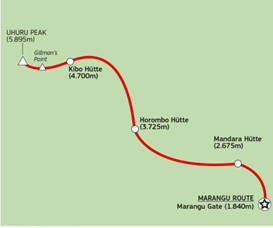
After completing registration and park entry formalities, climbers begin their journey through the tropical rainforest. The route gradually ascends towards Mandara Hut, Horombo Hut and Kibo Hut before reaching the summit.
Unlike the Machame and Lemosho routes, Marangu follows the same general trail for both the ascent and descent.
This out-and-back arrangement means climbers experience some sections of the mountain twice, although the scenery can look quite different when travelling in the opposite direction.
Why Choose the Marangu Route for Climbing Kilimanjaro?
The Marangu Route is particularly attractive to travellers who prefer mountain hut accommodation and a relatively straightforward trekking arrangement.
One of its biggest advantages is the availability of permanent mountain shelters. Climbers sleep in shared dormitory-style huts equipped with bunk beds and mattresses, while meals are generally served in designated dining areas.
This provides protection from rain and wind compared with sleeping in tents, although mountain huts are shared facilities and can become busy during popular climbing seasons.
Another advantage is the route’s established trail infrastructure. The Marangu Route has been used by climbers for many years and is supported by designated overnight hut facilities.
The route also offers beautiful scenery as it passes through different ecological zones, from lush rainforest to open moorland and the dry alpine desert.
For travellers with sufficient time, the six-day itinerary provides an additional acclimatization opportunity at Horombo Hut before continuing towards Kibo Hut.
Marangu Route Kilimanjaro: Complete 6-Day Itinerary
The following is the recommended six-day Marangu Route itinerary, beginning at Marangu Gate and finishing at the same gate after the summit attempt.
Day 1: Marangu Gate to Mandara Hut
Elevation: Approximately 1,860 metres to 2,720 metres
Hiking distance: Approximately 8 kilometres
Hiking time: 4–5 hours
Vegetation zone: Montane rainforest
Your Kilimanjaro adventure begins with a transfer from your hotel in Moshi or Arusha to Marangu Gate.
After completing park registration and meeting your mountain crew, you begin walking through the beautiful tropical rainforest.
The trail passes through dense vegetation, tall trees and impressive forest scenery. You may encounter blue monkeys, black-and-white colobus monkeys and several bird species along the way.
The gradual ascent makes the first day a pleasant introduction to the mountain, although maintaining a comfortable walking pace is important.
After several hours of trekking, you arrive at Mandara Hut, where you settle into your mountain accommodation.
If time and weather permit, you can take an optional walk towards Maundi Crater for additional views of the surrounding landscape.
Overnight at Mandara Hut.
Day 2: Mandara Hut to Horombo Hut
Elevation: Approximately 2,720 metres to 3,720 metres
Hiking distance: Approximately 12 kilometres
Hiking time: 5–7 hours
Vegetation zone: Heathland and moorland
After breakfast, you leave Mandara Hut and continue climbing towards Horombo Hut.
The trail gradually exits the rainforest and enters the open heathland and moorland zone.
The landscape becomes more exposed, with shorter vegetation, giant heathers and distinctive giant groundsels.
As you gain elevation, you may enjoy your first impressive views of Kibo and Mawenzi, two of Kilimanjaro’s three volcanic cones.
The walking trail continues through beautiful mountain scenery before reaching Horombo Hut at approximately 3,720 metres.
Horombo is one of the main overnight stops on the Marangu Route and is also used by climbers descending from the summit.
Upon arrival, you have time to rest, enjoy your meals and prepare for the next stage of the climb.
Overnight at Horombo Hut.
Day 3: Acclimatization Day at Horombo Hut
Elevation: Approximately 3,720 metres, with an optional ascent towards 4,000 metres
Hiking distance: Approximately 5–6 kilometres, depending on the selected walk
Hiking time: 3–4 hours
The third day is an important acclimatization opportunity on the six-day Marangu Route.
Rather than continuing immediately towards Kibo Hut, you spend another night at Horombo Hut to allow your body additional time to adjust to the increasing altitude.
After breakfast, your guide may organize an acclimatization walk towards Zebra Rocks or higher terrain in the direction of Mawenzi.
The walk provides an opportunity to experience higher elevation before returning to Horombo Hut for overnight rest.
This follows the principle of climbing higher during the day and returning to a lower elevation to sleep.
The surrounding scenery is spectacular, with views of Mawenzi Peak, Kibo Peak and the wide mountain landscape.
You can spend the afternoon resting, drinking water and preparing for the next stage.
Overnight at Horombo Hut.
Day 4: Horombo Hut to Kibo Hut
Elevation: Approximately 3,720 metres to 4,703 metres
Hiking distance: Approximately 10 kilometres
Hiking time: 5–7 hours
Vegetation zone: Alpine desert
After breakfast, you leave Horombo Hut and continue towards Kibo Hut, the final overnight stop before the summit attempt.
The trail crosses the famous Saddle, a broad alpine desert area situated between Kibo and Mawenzi peaks.
The landscape becomes increasingly dry and rocky, with limited vegetation and impressive views of the surrounding volcanic formations.
The ascent is gradual but physically demanding because of the increasing altitude.
Upon reaching Kibo Hut, you settle into your accommodation and prepare for the summit attempt.
Your mountain guide will explain the climbing schedule, check your equipment and provide important instructions.
Dinner is normally served early, followed by rest before the midnight departure.
Overnight at Kibo Hut.
Day 5: Kibo Hut to Uhuru Peak and Horombo Hut
Elevation: 4,703 metres to 5,895 metres, descending to approximately 3,720 metres
Hiking distance: Approximately 20–22 kilometres
Hiking time: Approximately 12–16 hours or longer
This is the most challenging and rewarding day of the Marangu Route.
The summit attempt normally begins around midnight, when climbers start ascending the steep volcanic scree slopes towards Gilman’s Point.
The climb is demanding because of the high altitude, freezing temperatures and darkness.
Your guide will maintain a slow and steady walking pace, allowing the group to manage the difficult ascent.
After reaching Gilman’s Point at approximately 5,685 metres on the crater rim, you continue along the crater rim towards Stella Point and Uhuru Peak.
Uhuru Peak stands at 5,895 metres and is the highest point in Africa.
Reaching the summit is an unforgettable achievement. You can celebrate your accomplishment, take photographs and enjoy the remarkable views of the surrounding glaciers and African landscapes.
After the summit experience, you begin the long descent towards Kibo Hut, where you may take a short rest before continuing down to Horombo Hut.
Overnight at Horombo Hut.
Day 6: Horombo Hut to Marangu Gate
Elevation: Approximately 3,720 metres to 1,860 metres
Hiking distance: Approximately 20 kilometres
Hiking time: 5–7 hours
Vegetation zone: Moorland and rainforest
After breakfast, you begin the final descent towards Marangu Gate.
The trail follows the familiar route through the moorland zone and continues into the beautiful rainforest.
As you descend, temperatures become warmer and the vegetation becomes increasingly dense.
You pass Mandara Hut before continuing towards the park exit.
At Marangu Gate, you complete the exit formalities and receive your Kilimanjaro climbing certificate if you successfully reached the summit.
Your driver will be waiting to transfer you back to your hotel in Moshi or Arusha.
Your six-day Marangu Route Kilimanjaro adventure comes to an end.
Marangu Route Kilimanjaro: 5 Days or 6 Days?
The Marangu Route can be completed in five or six days.
The five-day itinerary is shorter because it does not include the additional acclimatization day at Horombo Hut.
Although it may appeal to experienced high-altitude trekkers with limited time, the shorter schedule involves a faster ascent and provides less opportunity for the body to adjust to altitude.
The six-day itinerary includes an additional night at Horombo Hut and an acclimatization walk before continuing towards Kibo Hut.
For most travellers, particularly first-time Kilimanjaro climbers, we recommend the six-day Marangu Route.
Additional acclimatization time can improve the opportunity for successful altitude adjustment, although it does not eliminate the risk of altitude sickness or guarantee reaching the summit.
How Difficult Is the Marangu Route?
The Marangu Route is often described as a moderate-to-challenging Kilimanjaro climbing route.
Although the trail is well established, reaching Uhuru Peak requires considerable physical effort and the ability to cope with high altitude.
The first two days involve gradual trekking through rainforest and moorland. The trail becomes more demanding as climbers approach Kibo Hut and prepare for the summit attempt.
The final ascent from Kibo Hut is particularly challenging because of the altitude, cold weather and steep volcanic terrain.
Unlike technical mountain climbing, the Marangu Route does not require specialist mountaineering skills. However, good physical preparation, suitable equipment and proper acclimatization are essential.
Climbers should walk slowly, drink sufficient water, eat regularly and immediately report symptoms of altitude sickness to their guides.
Marangu Route Accommodation: Sleeping in Mountain Huts
One of the most distinctive features of the Marangu Route is its mountain hut accommodation.
Unlike the Machame, Lemosho and Rongai routes, where climbers normally sleep in tents, Marangu provides permanent mountain shelters.
The three main overnight accommodation points are Mandara Hut, Horombo Hut and Kibo Hut.
Mandara Hut: The first overnight stop, located in the rainforest zone at approximately 2,720 metres.
Horombo Hut: A larger mountain hut complex situated at approximately 3,720 metres. It serves as an overnight stop during the ascent and descent and provides accommodation for climbers taking an acclimatization day.
Kibo Hut: The final overnight shelter before the summit attempt, situated at approximately 4,703 metres.
The huts generally offer shared dormitory-style sleeping arrangements with bunk beds and mattresses. Dining facilities are available for climbers and mountain crews.
Travellers should bring a suitable sleeping bag and personal sleeping accessories. Mountain hut facilities are shared, so climbers should not expect private hotel-style rooms.
What Is Included in a Marangu Route Kilimanjaro Package?
A professionally organized Marangu Route climbing package normally includes:
- Kilimanjaro National Park entrance fees.
- Hut accommodation fees.
- Experienced English-speaking mountain guides.
- Professional mountain porters.
- Mountain cook and prepared meals.
- Drinking water during the climb, subject to the operator’s arrangements.
- Mountain dining equipment.
- Transfers between your hotel and Marangu Gate.
- Applicable government taxes and levies.
- Rescue and emergency support arrangements provided under park regulations.
Items that may be excluded include international flights, travel insurance, personal hiking equipment, sleeping bags, hotel accommodation before and after climbing, tips for the mountain crew and personal expenses.
Always request a detailed quotation confirming the exact package inclusions and exclusions.
How Much Does the Marangu Route Kilimanjaro Climb Cost?
The cost of climbing Kilimanjaro through the Marangu Route depends on the number of trekking days, group size, travel season, accommodation arrangements and the level of service included.
The six-day itinerary generally costs more than the five-day option because it includes an additional day of park-related expenses, meals and mountain crew arrangements.
Private climbs are normally more expensive per person than joining a group departure.
When comparing Kilimanjaro climbing packages, consider the quality of mountain guides, porter welfare, food arrangements, hut accommodation, safety procedures and the services included in the quotation.
Contact Graceland Adventurous for assistance with planning your Marangu Route adventure and requesting an updated climbing quotation.
What to Pack for the Marangu Route
Although the Marangu Route provides mountain hut accommodation, climbers still need appropriate clothing and personal trekking equipment.
Kilimanjaro has several climatic zones, and temperatures can vary significantly between the rainforest and the summit.
Important items include:
Clothing: Thermal base layers, fleece jackets, an insulated down jacket, waterproof jacket, waterproof trousers, hiking trousers, warm socks, gloves and a warm hat.
Footwear: Comfortable waterproof hiking boots, camp shoes and gaiters.
Personal equipment: A comfortable daypack, trekking poles, headlamp, sunglasses, sunscreen, water bottles or hydration system and a suitable sleeping bag.
Personal supplies: Toiletries, personal medication, blister treatment, snacks and a small first-aid kit.
A sleeping bag is particularly important because the mountain huts can become very cold, especially at Kibo Hut.
Your duffel bag should contain most of your equipment, while your daypack should hold essential items needed during the daily trek.
Graceland Adventurous can provide a detailed packing checklist before your climbing departure.
How to Prepare Physically for Climbing Kilimanjaro
Physical preparation is an important part of a successful Kilimanjaro adventure.
We recommend starting training several months before your planned climbing date.
Regular hiking is one of the best ways to prepare. Include longer walks, uphill trails and hikes carrying a light backpack.
Cardiovascular activities such as cycling, swimming, jogging and walking can also help improve endurance.
If possible, practise hiking on uneven terrain while wearing the boots you intend to use on Kilimanjaro.
Remember that physical fitness does not prevent altitude sickness. Following the guide’s walking pace, allowing enough time for acclimatization and communicating any health concerns are essential.
Is the Marangu Route Suitable for Beginners?
Yes. Beginners can climb Kilimanjaro through the Marangu Route if they have reasonable physical fitness, suitable equipment and sufficient preparation.
The established trail and mountain hut accommodation make the route attractive to travellers who prefer not to camp.
However, the summit attempt remains physically demanding, and the altitude can affect even experienced hikers.
For beginners, we recommend the six-day itinerary because it includes an additional acclimatization day at Horombo Hut.
Previous mountaineering experience is not compulsory, but preparation and realistic expectations are important.
Best Time to Climb the Marangu Route
Mount Kilimanjaro can be climbed throughout the year, although some months generally provide better trekking conditions than others.
January to early March: These months generally offer favourable weather, relatively warm temperatures and good opportunities for mountain views.
June to October: This is a popular climbing period because of generally drier conditions. July, August and September are particularly busy.
November to December: Short rains may occur, particularly in November, but climbing is still possible with suitable preparation.
April and May: These months experience the main rainy season, when trails may become wet and visibility can be reduced.
The permanent mountain huts offer shelter from rain and wind, which is one reason some travellers prefer Marangu during wetter periods. However, rain can still make the hiking experience more challenging.
For favourable trekking conditions, January, February, July, August, September and early October are popular choices.
Combining the Marangu Route with a Tanzania Safari
After completing your Kilimanjaro climb, you can extend your Tanzania adventure with a wildlife safari.
Northern Tanzania offers some of Africa’s most spectacular wildlife destinations, making it an excellent addition to a mountain climbing holiday.
Tarangire National Park is famous for its large elephant populations, impressive baobab trees and diverse wildlife.
Lake Manyara National Park offers beautiful scenery, birdlife, elephants, giraffes and other wildlife.
Ngorongoro Crater is one of Africa’s most remarkable wildlife destinations, with opportunities to see lions, elephants, buffaloes and endangered black rhinos.
Serengeti National Park is famous for its expansive savannah plains, large predator populations and the Great Wildebeest Migration.
Travellers with additional time can also extend their holiday to Zanzibar for a relaxing beach experience.
Explore our Tanzania wildlife safaris, East Africa safari tours, Uganda wildlife safaris and Rwanda safari adventures to discover more African travel experiences.
Explore More African Adventures with Graceland Adventurous
Graceland Adventurous helps travellers discover some of Africa’s most exciting destinations through mountain trekking, wildlife encounters and unforgettable safari experiences.
Beyond Mount Kilimanjaro, you can explore other remarkable adventures across East Africa.
- Uganda Gorilla Trekking: Experience an unforgettable encounter with mountain gorillas in Bwindi Impenetrable National Park or Mgahinga Gorilla National Park.
- Rwanda Gorilla Trekking: Discover mountain gorillas in Volcanoes National Park.
- Akagera National Park Self-Drive Safari: Explore Rwanda’s beautiful savannah landscapes and wildlife on a self-drive safari.
- Uganda Wildlife Safaris: Discover national parks, diverse wildlife and spectacular natural landscapes.
- Rwanda Wildlife Safaris: Experience wildlife viewing in Akagera National Park, including opportunities to see lions, elephants, rhinos and giraffes.
- Tree-Climbing Lions in East Africa: Discover the fascinating tree-climbing lions of Queen Elizabeth National Park in Uganda and Lake Manyara National Park in Tanzania.
Whether you are interested in African mountain climbing adventures, gorilla trekking in East Africa or self-drive African safaris, Graceland Adventurous can help you explore different destinations and experiences.
Marangu Route vs Machame Route: Which Kilimanjaro Route Is Better?
Both routes offer opportunities to reach Uhuru Peak, but they provide different mountain experiences.
The Marangu Route is known for its permanent mountain huts and out-and-back trail. It is a popular option for travellers who prefer sleeping indoors rather than in tents.
The Machame Route is a camping route that approaches Kilimanjaro from the southern side and descends through Mweka Gate. It offers more varied scenery and a longer seven-day itinerary option.
Travellers who prefer hut accommodation may find Marangu more suitable, while those interested in a scenic camping adventure may prefer Machame.
For either route, choosing a suitable duration and allowing enough time for acclimatization are important considerations.
Why Choose Graceland Adventurous?
Graceland Adventurous is focused on creating memorable African travel experiences through carefully planned adventures, wildlife exploration and mountain trekking.
Our destination experiences cover some of East Africa’s most remarkable attractions, including Mount Kilimanjaro, Uganda’s mountain gorilla habitats, Rwanda’s Volcanoes National Park and Akagera National Park.
We help travellers explore different adventure opportunities, from challenging mountain climbs to wildlife safaris and independent road trips.
Whether you are planning your first Kilimanjaro climb or a wider East African adventure, we can help you discover experiences that match your interests and travel plans.
Frequently Asked Questions About the Marangu Route Kilimanjaro
1. How many days does the Marangu Route take?
The Marangu Route can be completed in five or six days. The six-day itinerary is generally recommended because it includes an additional acclimatization day at Horombo Hut.
2. Why is the Marangu Route called the Coca-Cola Route?
The Marangu Route is popularly known as the Coca-Cola Route because of its long-standing popularity and historical associations with refreshments sold along the route. It is also sometimes contrasted with the Machame Whiskey Route.
3. Does the Marangu Route have mountain huts?
Yes. Marangu is the only standard Kilimanjaro climbing route with permanent mountain hut accommodation at Mandara, Horombo and Kibo.
4. What is the highest point on the Marangu Route?
The highest point is Uhuru Peak at 5,895 metres above sea level.
5. Is the Marangu Route difficult?
Yes. Although the route is established and offers hut accommodation, the high altitude and summit attempt make it physically demanding.
6. Where does the Marangu Route start?
The route starts at Marangu Gate on the southeastern side of Mount Kilimanjaro within Kilimanjaro National Park.
7. Where does the Marangu Route finish?
The route follows the same general trail for the ascent and descent, finishing at Marangu Gate.
8. Is the Marangu Route suitable for beginners?
Yes. Beginners can climb the route with proper preparation, reasonable physical fitness and sufficient time for acclimatization.
9. Do I need a sleeping bag on the Marangu Route?
Yes. Although the route has permanent huts, climbers should bring suitable sleeping bags because the huts are not heated and temperatures can become very cold.
10. Is the Marangu Route better than the Machame Route?
Neither route is automatically better for every climber. Marangu offers hut accommodation, while Machame offers a scenic camping experience and a longer seven-day itinerary. Your preferred accommodation, schedule and acclimatization needs should guide your choice.
11. Can I climb the Marangu Route alone?
You can book as a solo traveller, but Kilimanjaro climbs must be organized with the required registered mountain crew and park-authorized arrangements. Solo travellers can join scheduled group departures or arrange private climbs.
12. Can I combine the Marangu Route with a safari?
Yes. You can combine your Kilimanjaro climb with wildlife safaris to Tarangire, Ngorongoro Crater and Serengeti National Park.
13. What happens if I experience altitude sickness?
Inform your mountain guide immediately. Depending on the severity of your symptoms, the appropriate response may include stopping the ascent, descending and arranging medical assistance or evacuation.
14. What is the best time to climb the Marangu Route?
January, February, July, August, September and early October are popular months because they generally offer favourable trekking conditions.
15. Is the six-day Marangu Route better than the five-day option?
For most climbers, yes. The six-day itinerary includes an additional acclimatization day at Horombo Hut, providing more time for the body to adjust to altitude.
Book Your Marangu Route Kilimanjaro Climbing Adventure
Reaching Uhuru Peak is one of the most rewarding adventure experiences in Africa. The Marangu Route provides a unique opportunity to explore the mountain while enjoying the convenience of permanent hut accommodation.
From the lush rainforest around Mandara Hut to the spectacular alpine landscapes near Kibo and the unforgettable summit of Uhuru Peak, every stage of the journey offers something special.
Whether you are planning your first Kilimanjaro climb or returning for another mountain adventure, Graceland Adventurous can help you organize your trekking experience.
Contact Graceland Adventurous today to plan your Marangu Route Kilimanjaro climbing adventure!
Destination: Mount Kilimanjaro, Tanzania
Available options: Private climbs and group departures
Recommended duration: 6 days
Accommodation: Mountain huts
Start planning your adventure and take the first step towards reaching the Roof of Africa!