
Understanding the Great Migration Season: Serengeti and Maasai Mara – The Ultimate East Africa Safari Guide
Introduction: Understanding the Great Wildebeest Migration
The Great Wildebeest Migration is one of the most extraordinary wildlife spectacles in the world. Every year, approximately 1.5 million wildebeest, accompanied by hundreds of thousands of zebras and gazelles, travel across the vast plains of Tanzania’s Serengeti National Park and Kenya’s Maasai Mara National Reserve in search of fresh grazing and water.
This remarkable natural phenomenon is not a single event that happens on a particular date. It is a continuous annual movement influenced by rainfall, seasonal changes, water availability and the growth of fresh grass.
The migration takes place throughout the year, creating different wildlife experiences in different locations. From the dramatic calving season in the southern Serengeti to the famous Mara River crossings in northern Serengeti and Maasai Mara, every period offers something special.
Understanding the Great Migration season is essential when planning an African safari. Choosing the right month and accommodation location can make a significant difference to your wildlife experience.
Whether you are interested in witnessing thousands of newborn wildebeest, watching predators hunting across the plains or experiencing dramatic river crossings, Tanzania and Kenya offer exceptional opportunities to explore this natural wonder.
What Is the Great Wildebeest Migration?
The Great Wildebeest Migration is the annual circular movement of large herds of wildebeest across the Serengeti-Mara ecosystem.
The migration begins and ends in Tanzania, although the herds move into Kenya’s Maasai Mara during the northern migration season.
Wildebeest are primarily searching for nutritious grass, which grows after seasonal rainfall. Their movement is accompanied by zebras and Thomson’s gazelles, creating enormous concentrations of wildlife across the East African savannah.
The migration also supports a rich predator population. Lions, cheetahs, leopards, hyenas and crocodiles take advantage of the abundance of prey throughout the year.
One of the most fascinating aspects of the migration is that it follows a circular route rather than a fixed northbound journey. The herds continuously respond to environmental conditions.
Great Migration Calendar: Month-by-Month Guide
Understanding the migration calendar helps travellers select the best destination for their preferred wildlife experience.
January to March: Wildebeest Calving Season in Southern Serengeti
January, February and March are among the most exciting months to visit southern Serengeti and the Ndutu plains.
During this period, enormous herds gather across the short-grass plains of the southern Serengeti ecosystem, including areas within the Ngorongoro Conservation Area.
February is generally the peak calving month. Hundreds of thousands of wildebeest calves are born during a relatively short period, attracting large numbers of predators.
Lions, cheetahs, hyenas and other carnivores take advantage of the abundance of vulnerable newborn animals.
Visitors can experience:
- Large concentrations of wildebeest.
- Newborn wildebeest calves.
- Excellent predator sightings.
- Cheetah hunting opportunities.
- Beautiful green landscapes.
- Excellent wildlife photography.
Best locations: Ndutu, Kusini, southern Serengeti and the surrounding short-grass plains.
Recommended travel period: January to March, particularly February.
April to May: Green Season and Migration Movement
April and May coincide with Tanzania’s long rainy season. During these months, the herds gradually begin moving away from the southern plains towards central and western Serengeti.
The landscape becomes greener, creating beautiful scenery for photography and wildlife viewing.
Although heavy rainfall can make some roads challenging, this period can offer a quieter safari experience with fewer visitors in many areas.
Visitors can enjoy:
- Beautiful green savannah landscapes.
- Large wildlife herds.
- Excellent birdwatching opportunities.
- Fewer safari vehicles in many locations.
- Potentially attractive accommodation rates.
Best locations: Central Serengeti and Western Corridor.
Recommended travel period: April to May.
June to July: Grumeti River and Migration Towards Northern Serengeti
June and July mark an important transition in the migration calendar.
The herds move through the western corridor of Serengeti towards the northern regions of Tanzania.
Some wildebeest encounter the Grumeti River, where crocodiles wait for opportunities as the animals attempt to cross.
The Grumeti River crossings are spectacular wildlife experiences, although they are less predictable than many travellers expect.
As the season progresses, the herds continue towards Lobo, Kogatende and Lamai in northern Serengeti.
Visitors can enjoy:
- Large migrating herds.
- Potential Grumeti River crossings.
- Predator sightings.
- Beautiful western Serengeti landscapes.
- Early migration activity in northern Serengeti.
Best locations: Grumeti, Western Corridor, Lobo and northern Serengeti.
Recommended travel period: June to July.
July to October: Mara River Crossing Season
July to October is the most famous period of the Great Wildebeest Migration.
During these months, large herds move through northern Serengeti towards Kenya’s Maasai Mara, where they encounter the Mara River.
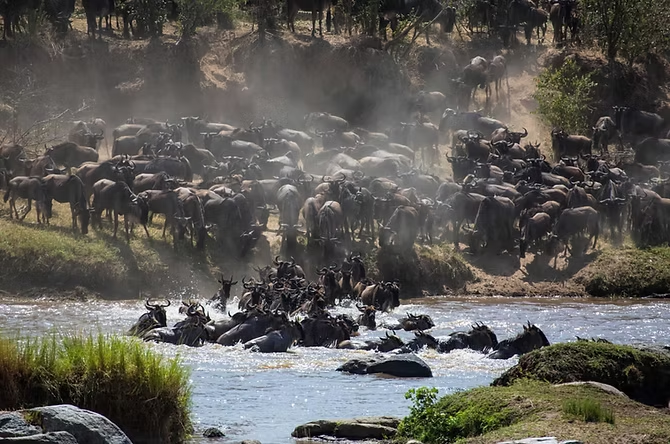
The river crossings are among the most dramatic wildlife experiences in Africa. Wildebeest and zebras gather along the riverbanks before attempting to cross strong currents and negotiate steep riverbanks while crocodiles wait in the water.
However, the crossings are unpredictable. Herds may gather for several hours or days before making the decision to cross.
Northern Serengeti and Maasai Mara are both excellent destinations during this period.
Visitors can enjoy:
- Large concentrations of wildebeest.
- Dramatic Mara River crossings.
- Nile crocodile encounters.
- Lions and other predators.
- Excellent wildlife photography.
- Spectacular African savannah scenery.
Best locations: Kogatende, Lamai, Mara Triangle and Maasai Mara National Reserve.
Recommended travel period: July to October, especially August and September.
November to December: Return Migration to Southern Serengeti
November and December mark the gradual return movement of the wildebeest towards Tanzania’s eastern and southern Serengeti.
Following the short rains, fresh grass begins growing across the plains, attracting the migrating herds southwards.
Although the exact location of the herds varies according to rainfall, this is an interesting period for visitors looking for migration experiences outside the busiest months.
Visitors can enjoy:
- Herds moving southwards.
- Fresh green landscapes.
- Excellent birdwatching.
- Resident wildlife and predators.
- Fewer crowds in selected safari areas.
Best locations: Northern, eastern and central Serengeti, depending on rainfall.
Recommended travel period: November to December.
Serengeti vs Maasai Mara: Where Is the Best Place to See the Migration?
The Serengeti and Maasai Mara form part of the same ecological system, but each destination offers different migration experiences.
Serengeti National Park, Tanzania
Serengeti National Park is one of Africa’s most important wildlife destinations and the main habitat of the Great Wildebeest Migration.
Its vast plains, woodland areas, river systems and seasonal grasslands support enormous concentrations of wildlife.
The Serengeti is particularly attractive because visitors can experience several stages of the migration throughout the year.
The southern plains are famous for the calving season, the western corridor for the Grumeti River crossings, and northern Serengeti for the Mara River crossings.
The park also offers excellent opportunities to see lions, elephants, leopards, cheetahs, giraffes, buffaloes and many other species.
Best migration experiences: Calving season, Grumeti River crossings and Mara River crossings.
Maasai Mara National Reserve, Kenya
Maasai Mara National Reserve is one of Kenya’s most famous wildlife destinations.
It is particularly popular during the northern migration season when large herds of wildebeest and zebras move into Kenya from northern Serengeti.
The Mara River is the main attraction during this period, providing opportunities to witness spectacular river crossings.
Beyond the migration, Maasai Mara is famous for its resident lions, cheetahs, leopards, elephants and other wildlife.
Visitors can also explore the surrounding conservancies, which offer different safari experiences and accommodation options.
Best migration experiences: Mara River crossings, large wildebeest herds and predator viewing.
Best Months to Visit Serengeti and Maasai Mara
| Month | Best destination | Main experience |
|---|---|---|
| January | Southern Serengeti | Large herds and calving |
| February | Ndutu | Peak calving season |
| March | Southern Serengeti | Calving and predators |
| April | Central Serengeti | Green season |
| May | Western Serengeti | Migration movement |
| June | Western Corridor | Grumeti River crossings |
| July | Northern Serengeti | Migration towards Mara |
| August | Northern Serengeti and Maasai Mara | Mara River crossings |
| September | Northern Serengeti and Maasai Mara | River crossings |
| October | Maasai Mara and northern Serengeti | Migration and river crossings |
| November | Serengeti | Return migration |
| December | Eastern and southern Serengeti | Movement towards calving grounds |
Migration locations can change considerably depending on rainfall and grass availability. The calendar should therefore be treated as a general guide rather than a guaranteed schedule.
Best Safari Accommodation for Following the Great Migration
Choosing accommodation in the right location is extremely important when planning a migration safari.
The migration covers an enormous geographical area, so staying in the wrong region can involve long drives to reach the herds.
Ndutu Mobile Tented Camps
Ndutu is an excellent accommodation base during the calving season.
Mobile tented camps allow visitors to stay close to the southern plains and enjoy early morning and afternoon game drives.
Central Serengeti Safari Lodges
Central Serengeti is a good option for visitors travelling during the green season and for those interested in year-round wildlife viewing.
Northern Serengeti Mobile Camps
Northern Serengeti accommodation around Kogatende and Lamai is particularly important during the Mara River crossing season.
Staying in this region provides access to different river crossing locations and the surrounding wildlife areas.
Maasai Mara Tented Camps and Safari Lodges
Maasai Mara offers a wide selection of luxury lodges, permanent tented camps and conservancy accommodation.
During the migration season, travellers should consider accommodation near the Mara River and the main wildlife-viewing areas.
Combining Serengeti and Maasai Mara in One Great Migration Safari
Travelling through both Tanzania and Kenya provides an opportunity to explore different sections of the migration ecosystem.
A combined safari is particularly attractive between July and October when large herds are moving through northern Serengeti and Maasai Mara.
Suggested 12-Day Tanzania and Kenya Great Migration Safari
Day 1: Arrival in Arusha, Tanzania
Arrive at Kilimanjaro International Airport and transfer to Arusha for an overnight stay.
Day 2: Arusha to Tarangire National Park
Travel to Tarangire National Park for a game drive featuring elephants, baobab trees, giraffes, zebras and other wildlife.
Day 3: Tarangire to Ngorongoro Conservation Area
Continue towards the Ngorongoro Highlands, enjoying the beautiful landscapes and wildlife along the way.
Day 4: Ngorongoro Crater to Serengeti
Descend into the Ngorongoro Crater for a wildlife experience before continuing towards Serengeti National Park.
Day 5: Central Serengeti
Explore the central Serengeti plains, famous for lions, leopards, cheetahs and other resident wildlife.
Day 6: Central Serengeti to Northern Serengeti
Travel towards Kogatende or Lamai, following the seasonal migration movement.
Day 7: Northern Serengeti Migration Safari
Enjoy game drives around the Mara River and surrounding migration areas.
Day 8: Northern Serengeti
Spend another day exploring the migration areas, increasing your opportunities to encounter wildebeest gathering near the river.
Day 9: Northern Serengeti to Maasai Mara
Transfer into Kenya using an appropriately arranged border crossing and suitable transport connections.
Day 10: Maasai Mara National Reserve
Explore the Mara plains in search of wildebeest, zebras, lions, cheetahs and other wildlife.
Day 11: Full-Day Maasai Mara Safari
Enjoy another full day of game viewing, with opportunities to explore the Mara River region.
Day 12: Maasai Mara to Nairobi
Transfer to Nairobi for your international departure.
This itinerary is a seasonal example. Cross-border transport, park permits, vehicle arrangements and border procedures must be confirmed before booking.
How Many Days Do You Need for a Great Migration Safari?
The ideal duration depends on the type of migration experience you want.
4–5 Days: Suitable for a short migration safari focusing on one region, such as Ndutu or northern Serengeti.
6–8 Days: Allows visitors to explore several areas of Serengeti and spend additional time following the herds.
9–12 Days: Excellent for combining Tanzania’s Serengeti with Kenya’s Maasai Mara.
13–15 Days: Suitable for a comprehensive East African wildlife safari, combining the migration with Tarangire, Ngorongoro, Lake Manyara and other destinations.
For visitors hoping to see the Mara River crossings, spending at least three nights in northern Serengeti or Maasai Mara is advisable.
Can You Experience the Great Migration on a Self-Drive Safari?
Yes, visitors can explore parts of the Serengeti and Maasai Mara on a self-drive safari, provided they comply with the relevant park regulations and vehicle requirements.
A properly equipped 4×4 vehicle is essential for exploring remote safari areas, particularly during rainy periods and when travelling on rough park roads.
Self-drive travellers should consider:
- A reliable 4×4 Land Cruiser or equivalent safari vehicle.
- Good ground clearance and suitable tyres.
- GPS navigation and offline maps.
- Adequate drinking water and camping equipment.
- Knowledge of park rules and driving regulations.
- Advance accommodation and campsite reservations.
- Reliable emergency assistance arrangements.
For travellers planning an independent safari, explore our 4×4 Car Rental in Tanzania, Self-Drive Safari in Tanzania, Kenya 4×4 Car Rental and Self-Drive Safari in Kenya services.
A cross-border self-drive safari requires additional planning because vehicle permissions, insurance and commercial operating arrangements differ between Tanzania and Kenya.
Important Tips for Planning Your Great Migration Safari
- Choose your travel month before selecting accommodation.
- Book migration-area accommodation well in advance, especially for August and September.
- Spend multiple nights in the region where you expect to find the herds.
- Use experienced safari guides who understand seasonal migration patterns.
- Allow flexibility in your itinerary because wildlife movements are unpredictable.
- Consider combining Serengeti with Maasai Mara for a broader East African experience.
- Remember that river crossings are never guaranteed.
- Choose accommodation based on location rather than price alone.
Frequently Asked Questions About the Great Migration
When is the best time to see the Great Migration in Serengeti?
The best time depends on your preferred experience. January to March is excellent for calving, June to July for the Grumeti River region, and July to October for Mara River crossings in northern Serengeti.
When does the Great Migration reach Maasai Mara?
The main herds generally begin arriving in Maasai Mara around July, with significant migration activity often continuing through August, September and October.
Is August the best month for the Great Migration?
August is one of the most popular months because large herds are commonly found in northern Serengeti and Maasai Mara. However, river crossings remain unpredictable.
Can I see the Great Migration in Tanzania in September?
Yes. Northern Serengeti, particularly Kogatende and Lamai, offers excellent opportunities to experience the migration in September.
Is the Great Migration better in Kenya or Tanzania?
Both destinations offer excellent experiences. Tanzania provides access to more stages of the annual migration, while Kenya’s Maasai Mara is particularly attractive during the northern migration season.
What is the best month to see wildebeest giving birth?
February is generally the peak calving month in the southern Serengeti and Ndutu plains.
Are there crocodiles in the Mara River?
Yes. The Mara River is home to Nile crocodiles, which prey on wildebeest and other animals attempting to cross.
Can I combine Serengeti and Maasai Mara in one safari?
Yes. A combined Tanzania and Kenya safari is possible, particularly between July and October. The itinerary requires careful planning of border transfers, vehicle arrangements and park entry procedures.
How much does a Great Migration safari cost?
The cost depends on travel dates, accommodation category, number of travellers, transport arrangements and itinerary duration. Luxury mobile camps and peak-season accommodation are generally more expensive than budget camping and selected midrange lodges.
Book Your Great Migration Safari in Tanzania and Kenya
The Great Wildebeest Migration is an extraordinary opportunity to discover the natural beauty and wildlife diversity of East Africa.
Whether you choose the calving season in southern Serengeti, the Grumeti River crossings in western Serengeti or the famous Mara River crossings in northern Serengeti and Maasai Mara, every migration season offers a unique safari experience.
Our East African safari planning services can help you select the right travel dates, accommodation and destinations based on your wildlife interests and budget.
Explore our Tanzania Great Migration Safaris, Kenya Great Migration Safaris, Serengeti Safari Packages and Maasai Mara Safari Packages to start planning your next African wildlife adventure.
Contact us today to plan your Great Migration safari in Tanzania and Kenya.