
Tanzania Wildebeest Calving Season: Best Time, Places to Visit and Safari Guide
Introduction: Discover Tanzania’s Wildebeest Calving Season
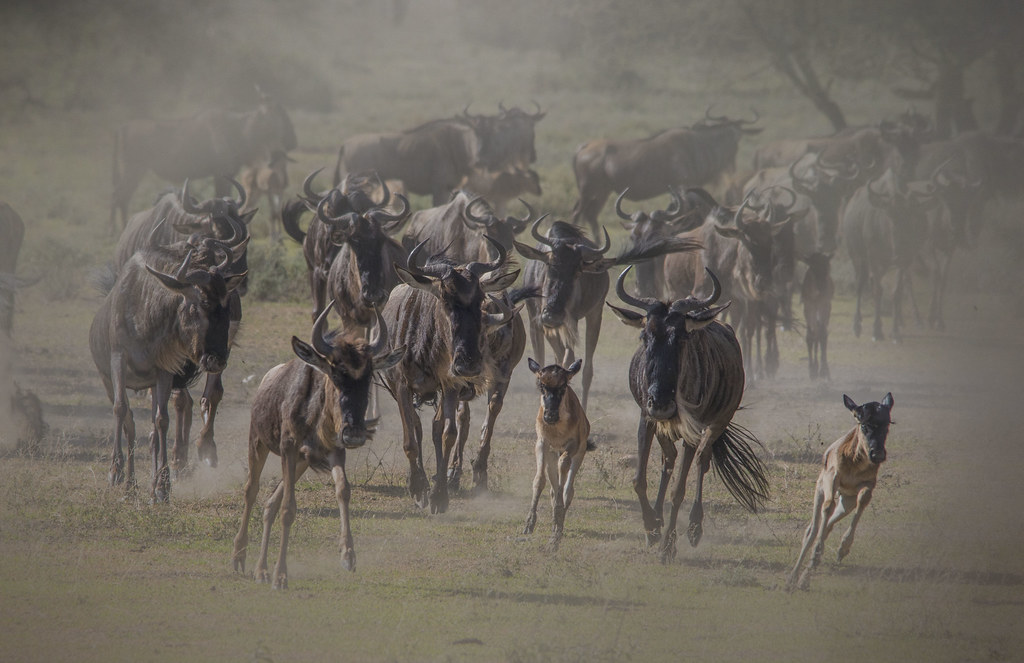
The Tanzania wildebeest calving season is one of the most exciting wildlife experiences in East Africa. Every year, hundreds of thousands of wildebeest gather across the southern Serengeti ecosystem and the Ndutu plains to give birth to their young. The result is an extraordinary natural spectacle featuring newborn calves, enormous migrating herds and predators searching for opportunities to hunt.
The calving season generally takes place from January to March, with February often considered the peak period. During these months, Tanzania’s grasslands provide important grazing opportunities for pregnant wildebeest and their newborn calves.
For travelers planning a Great Migration safari, this is an excellent time to experience the migration from a different perspective. Instead of focusing only on river crossings, visitors can witness the beginning of life for a new generation of wildebeest and observe how lions, cheetahs, hyenas and other predators interact with the migrating herds.
The Ndutu plains and Southern Serengeti are the principal areas to consider when planning a calving season safari. Understanding the difference between these locations, when to visit and how to organize your itinerary can help you make the most of your Tanzania wildlife adventure.
When Is the Tanzania Wildebeest Calving Season?
Tanzania’s wildebeest calving season usually runs from January through March. The exact timing and intensity vary from year to year because the migration depends on rainfall, grass growth and the availability of fresh grazing.
February is often the most productive month for witnessing large numbers of newborn calves. However, excellent wildlife encounters can also occur in January and March.
January: The Beginning of the Calving Season
January is an excellent month to visit the Ndutu plains and surrounding grasslands. Large herds gather in the southern Serengeti ecosystem, where seasonal rains encourage the growth of nutritious grasses.
Calving activity increases during this period, and visitors may see pregnant wildebeest, newborn calves and large groups moving between grazing areas.
January is particularly attractive to travelers who want to combine the calving season with green landscapes, birdwatching and photographic safaris.
February: Peak Wildebeest Calving Season
February is generally the highlight of Tanzania’s wildebeest calving season. Large numbers of wildebeest give birth across the southern plains, creating remarkable opportunities for wildlife photography and observation.
Newborn calves are often able to stand and begin moving shortly after birth. This helps them remain with their mothers as the herds move across the grasslands.
The concentration of young animals also attracts predators. Lions, cheetahs, hyenas and other carnivores may be encountered hunting or moving through areas occupied by the herds.
For travelers whose main objective is to witness wildebeest births and the associated predator activity, February is an excellent month to prioritize.
March: Calving Continues Across the Southern Plains
March can still provide rewarding calving season experiences. Wildebeest may continue giving birth in the southern Serengeti ecosystem, although rainfall patterns and herd movements influence where the largest concentrations are found.
As the season progresses, some herds may begin shifting toward other grazing areas. The timing is not fixed, so visitors should remain flexible when planning game drives.
March can be particularly appealing to travelers interested in combining migration viewing with birdwatching, green scenery and broader wildlife exploration.
Where Does Wildebeest Calving Take Place in Tanzania?
The main calving grounds are found in the southern Serengeti ecosystem, particularly around the Ndutu plains. Although these areas are closely connected ecologically, they are not exactly the same destination.
1. Ndutu Plains: The Heart of the Calving Season
Ndutu is one of Tanzania’s best-known destinations for wildebeest calving. Located in the southern part of the Ngorongoro Conservation Area, close to Serengeti National Park, it forms part of the wider ecosystem used by migrating wildebeest.
During the calving season, the open grasslands provide grazing opportunities for large herds and create favorable conditions for newborn calves.
Visitors to Ndutu may experience:
- Large concentrations of migrating wildebeest.
- Newborn calves walking alongside their mothers.
- Lions resting or hunting near the herds.
- Cheetahs searching for vulnerable prey across open plains.
- Hyenas and jackals moving through the calving grounds.
- Excellent opportunities for wildlife photography.
Ndutu is particularly attractive because the open landscape can make it easier to observe wildlife across considerable distances. However, sightings depend on animal movements, weather and the location of the herds on any particular day.
For travelers specifically interested in the calving season, spending several nights around Ndutu is a practical way to improve the chances of encountering the main wildlife activity.
2. Southern Serengeti: An Essential Part of the Migration Ecosystem
Southern Serengeti refers to the southern portion of Serengeti National Park and the surrounding ecosystem used by migrating wildlife.
The area is important because wildebeest move across a broad landscape rather than remaining in one fixed location. Depending on rainfall and grazing conditions, herds may be concentrated in different parts of the southern plains.
A Southern Serengeti safari can provide opportunities to see migrating wildebeest, zebras, predators and other wildlife in their natural habitat.
Combining the southern Serengeti with Ndutu can provide a broader understanding of the Great Migration and its seasonal movements.
3. Ngorongoro Conservation Area: More Than the Crater
The Ngorongoro Conservation Area includes the Ndutu region and other landscapes that support wildlife and pastoral communities.
However, the Ngorongoro Crater itself is not the principal destination for witnessing the annual wildebeest calving event. The crater has resident wildlife, including lions, elephants, buffaloes and other species, but the seasonal calving spectacle is primarily associated with Ndutu and the southern Serengeti plains.
Travelers who want to see newborn wildebeest should therefore plan their itinerary around the southern calving grounds rather than assuming that a crater visit alone will provide the same experience.
Why Do Wildebeest Give Birth in Ndutu and the Southern Serengeti?
The Great Migration is driven largely by the seasonal availability of water and nutritious grazing. Wildebeest move across the Serengeti ecosystem in response to rainfall and changing grass conditions.
During the calving season, the southern plains often offer short, nutritious grasses that support pregnant females and lactating mothers.
The relatively open terrain also makes it easier for animals to move together in large herds. For newborn calves, remaining close to their mothers and the herd is essential for protection and survival.
The calving season is not simply a collection of isolated births. It is a major ecological event that influences predator movements, grazing patterns and the behavior of many other species across the ecosystem.
How Many Wildebeest Calves Are Born During the Calving Season?
The Great Migration involves approximately 1.5 million wildebeest, alongside large numbers of zebras and gazelles. During the main calving period, several hundred thousand wildebeest calves may be born across the southern Serengeti ecosystem.
A commonly cited estimate is around 400,000 to 500,000 calves over a few weeks, although actual figures vary and should be understood as approximate rather than an exact annual count.
This concentration of births makes the calving season one of the most remarkable wildlife events in Tanzania.
Wildlife to See During Tanzania’s Calving Season
Although wildebeest are the main attraction, the calving season supports a wider variety of wildlife experiences.
Wildebeest and Zebras
Wildebeest dominate the migrating herds, while zebras frequently travel alongside them. The two species use grazing resources somewhat differently, and their movements form an important part of the broader migration ecosystem.
Lions
Lions are among the major predators encountered around the calving grounds. They may be seen resting in the grass, moving between herds or hunting when opportunities arise.
Cheetahs
The open plains of the southern Serengeti ecosystem can offer suitable viewing conditions for cheetahs. These predators may use the open terrain to search for prey and take advantage of opportunities created by the large herds.
Spotted Hyenas and Jackals
Spotted hyenas and jackals are also active around the calving grounds. They may scavenge, hunt or search for vulnerable young animals.
Other Wildlife and Birdlife
Depending on the location and season, visitors may encounter gazelles, giraffes, elephants, ostriches, vultures and numerous other bird species.
The combination of migrating herbivores, newborn calves and active predators makes the calving season particularly interesting for wildlife enthusiasts and photographers.
Best Time to Visit Tanzania for Wildebeest Calving
The best month depends on the experience you want, your travel dates and the prevailing weather conditions.
January is suitable for travelers who want to experience the beginning of the main calving period.
February is often the preferred choice for visitors hoping to see large numbers of newborn calves and predator activity.
March can still provide excellent wildlife viewing, particularly when herds remain in favorable grazing areas.
If your schedule is flexible, consider traveling in February and allowing enough time to explore Ndutu and the surrounding southern plains.
It is important to remember that the migration is a natural event, not a scheduled wildlife show. Rainfall can change herd locations, so no month guarantees a particular sighting.
How Many Days Do You Need for a Calving Season Safari?
A Tanzania calving season safari can be arranged in different lengths depending on your budget, arrival airport and other destinations you want to visit.
Three to Four Days: A Short Ndutu Safari
A short safari may be possible for travelers who are already in northern Tanzania and want to focus mainly on Ndutu.
This option generally requires careful transport planning and sufficient time for game drives. It is more practical when the itinerary avoids unnecessary detours.
Five to Six Days: Ndutu and Serengeti
A five- or six-day itinerary can allow travelers to explore Ndutu and additional parts of Serengeti National Park.
This provides more flexibility to follow wildlife movements and experience different landscapes.
Seven to Eight Days: A Broader Northern Tanzania Safari
A longer itinerary can combine the calving grounds with destinations such as Tarangire National Park, Lake Manyara National Park or the Ngorongoro Crater.
This is suitable for travelers who want to experience more of Tanzania’s wildlife diversity in addition to the calving season.
The exact itinerary should reflect your starting point, travel budget, preferred accommodation and the location of the migrating herds.
Sample Six-Day Tanzania Wildebeest Calving Safari
Day 1: Arrive in Arusha
Arrive in Arusha, meet your safari representative if arranged, and prepare for your journey into the northern Tanzania safari circuit.
Day 2: Arusha to Ndutu
Travel toward Ndutu through the landscapes of the Ngorongoro Conservation Area. Depending on road conditions and arrival time, a game drive may be possible along the way or upon arrival.
Day 3: Full-Day Game Drive in Ndutu
Spend the day exploring the calving grounds, looking for wildebeest herds, newborn calves and predators. Your guide or carefully planned self-drive route should adapt to current wildlife sightings and road conditions.
Day 4: Explore Ndutu and the Southern Plains
Continue exploring different sections of the area. Spending additional time in the calving grounds can provide more opportunities to observe animal behavior and photograph wildlife.
Day 5: Ngorongoro Crater or Another Serengeti Area
Depending on your interests and park arrangements, visit the Ngorongoro Crater or continue exploring the wider Serengeti ecosystem. Remember that the crater requires separate planning and fees.
Day 6: Return to Arusha
Drive back to Arusha for onward travel or an additional overnight stay.
This is an illustrative itinerary. Actual driving times, park fees and accommodation availability depend on your travel dates and route. A six-day trip that includes both Ndutu and the crater requires careful planning to avoid excessive driving.
Self-Drive or Guided Safari: Which Is Better for Calving Season?
Both options can work well, depending on your experience, budget and preferred style of travel.
Self-Drive Calving Season Safari
A self-drive safari offers independence and flexibility. Travelers can explore at their own pace and spend more time in areas where wildlife is active.
A suitable 4×4 vehicle is important because roads can become muddy or difficult after rain. Drivers should also understand park regulations, road conditions and the limitations of driving in remote areas.
Before booking, confirm that the rental company permits the vehicle to enter the intended parks and that the insurance policy covers the planned route and type of use.
Guided Wildebeest Calving Safari
A guided safari is suitable for travelers who prefer an experienced driver-guide to handle navigation, wildlife tracking and road conditions.
Guides familiar with Ndutu and the southern Serengeti can help locate herds and identify interesting animal behavior. However, sightings are never guaranteed.
A guided safari can also be convenient for visitors who want accommodation, transport and park arrangements coordinated as part of one package.
What Does a Tanzania Wildebeest Calving Safari Cost?
Safari costs vary according to travel dates, accommodation category, transport, group size and whether you choose a private guided trip or self-drive arrangement.
Typical cost components include:
- 4×4 vehicle rental or a safari vehicle with a driver-guide.
- Accommodation inside or near the calving grounds.
- Park and conservation-area fees.
- Ngorongoro Crater service and vehicle fees, if visiting.
- Fuel and transfers.
- Meals and drinking water.
- Optional activities and travel insurance.
February can be a popular travel period, so accommodation near Ndutu may require advance reservations. Rates can vary considerably between camping, standard tented camps and luxury lodges.
For an accurate quotation, provide your travel dates, number of travelers, preferred accommodation level and whether you want a self-drive or guided safari.
What Should You Pack for a Calving Season Safari?
The weather can vary between warm days, cool mornings and evenings, and periods of rain.
Recommended items include:
- Neutral-colored clothing suitable for game drives.
- A warm jacket for early mornings and evenings.
- Comfortable walking shoes for use around camp.
- Sunscreen, sunglasses and a hat.
- Binoculars and a camera with a suitable zoom lens.
- Insect repellent and personal toiletries.
- A reusable water bottle.
- Any necessary personal medication.
- Waterproof bags or protective covers for camera equipment.
For self-drive travelers, additional equipment may include navigation tools, a spare tyre, recovery equipment appropriate to the vehicle, and emergency supplies. Check the rental company’s equipment list before departure.
Responsible Wildlife Viewing During the Calving Season
The calving season can provide intimate wildlife encounters, but newborn animals are particularly vulnerable.
Visitors should follow park regulations and the instructions of their guide or ranger. Maintain appropriate distances from wildlife, never block animal movements, and avoid chasing herds for photographs.
Do not pressure a driver to approach a newborn calf or predator too closely. Avoid loud noises and never feed wild animals.
Responsible viewing protects wildlife and helps preserve the quality of the safari experience for future visitors.
Frequently Asked Questions About Tanzania’s Wildebeest Calving Season
1. When is the wildebeest calving season in Tanzania?
The calving season generally runs from January to March, with February often being the peak month.
2. Where is the best place to see wildebeest calving?
Ndutu and the southern Serengeti ecosystem are the principal areas to consider. The precise location of the largest herds varies with rainfall and grazing conditions.
3. Can I see wildebeest calving in the Ngorongoro Crater?
The Ngorongoro Crater is not the main calving ground. For the best chance of seeing newborn wildebeest, focus on Ndutu and the southern Serengeti plains.
4. Is February the best month for a calving safari?
February is often an excellent choice because many calves are born during this period. January and March can also provide rewarding sightings.
5. Can I see the Big Five during the calving season?
You may encounter lions, elephants, buffaloes, leopards and rhinoceroses during a broader northern Tanzania safari. However, the chance of seeing all five varies by location, and Ndutu’s main attraction is the migration and calving spectacle.
6. Are river crossings part of the calving season?
The famous Mara River crossings generally occur later in the migration cycle, usually during the middle or later part of the year, depending on conditions. The calving season focuses on births in the southern ecosystem.
7. Is Ndutu inside Serengeti National Park?
Ndutu is generally described as being within the Ngorongoro Conservation Area, near the southern boundary of Serengeti National Park. The wider calving ecosystem spans connected landscapes and requires careful attention to park boundaries and fees.
8. How long should I stay in Ndutu?
Two or three nights is a useful starting point. Longer stays can provide greater flexibility to explore different areas and respond to changing wildlife movements.
9. Can I visit Ndutu on a self-drive safari?
Yes, subject to the vehicle’s suitability, rental-company permission, park rules and road conditions. A reliable 4×4 and good preparation are particularly important during rainy periods.
10. Should I book my calving season safari in advance?
Yes. Booking accommodation and transport ahead of time is advisable, particularly for February and other popular travel periods.
Plan Your Tanzania Wildebeest Calving Safari
Tanzania’s wildebeest calving season offers an unforgettable opportunity to witness one of nature’s most remarkable wildlife events. From newborn calves taking their first steps to predators moving across the plains, Ndutu and the southern Serengeti provide a different perspective on the Great Migration.
For the best experience, plan your visit between January and March, consider February if your dates are flexible, and allow enough time to explore the calving grounds.
Whether you prefer a guided safari or a self-drive adventure in a well-equipped 4×4, careful planning will help you make the most of your journey.
Start planning your Tanzania calving season safari today. Choose your preferred travel dates, decide whether you want a guided or self-drive experience, and arrange accommodation close to the wildlife areas you intend to explore.