
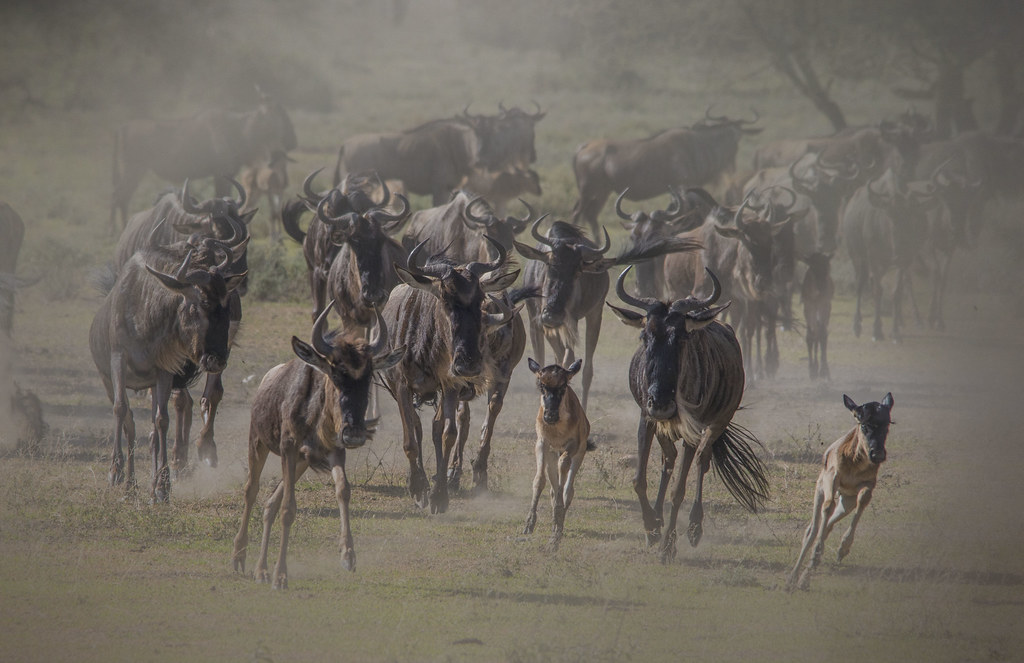
January to March Wildebeest Calving Season in Tanzania: Ndutu and Southern Serengeti Safari Guide
Introduction: Experience the Great Wildebeest Calving Season
The January to March wildebeest calving season is one of the most exciting times to visit Tanzania for a wildlife safari. During these months, large herds of wildebeest gather across the southern Serengeti ecosystem, particularly around the Ndutu plains, where seasonal grasses provide important nourishment for pregnant females and newborn calves.
This remarkable natural event is part of the annual Great Wildebeest Migration, which sees wildebeest move across the Serengeti ecosystem in search of fresh grazing and water. The calving season brings opportunities to observe newborn animals, large herds of grazing wildlife and predators such as lions, cheetahs and spotted hyenas.
For travelers planning a Tanzania safari, Ndutu and the Southern Serengeti are especially attractive destinations between January and March. Although February is often considered a particularly rewarding month, wildlife movements depend on rainfall, so sightings and herd locations vary from year to year.
Whether you prefer a guided safari or a self-drive adventure, understanding the calving season will help you choose the best travel dates and plan a rewarding wildlife experience.
1. What Is the Wildebeest Calving Season?
The wildebeest calving season is the period when large numbers of female wildebeest give birth to their calves across the southern Serengeti ecosystem. It generally takes place from January to March, although the timing varies with seasonal rainfall and grazing conditions.
The southern plains become important feeding grounds when rain encourages fresh grass to grow. This nutritious vegetation helps pregnant wildebeest maintain their condition and supports mothers nursing their young.
Many calves are born within a relatively short period, creating a remarkable wildlife spectacle across the plains. Newborn wildebeest typically attempt to stand and move shortly after birth, allowing them to remain close to their mothers and the herd.
The concentration of prey also attracts predators. Visitors may see lions, cheetahs and hyenas in the region, although individual sightings and hunting events can never be guaranteed.
2. Where to See Wildebeest Calving in Tanzania
Ndutu Plains
Ndutu is one of Tanzania’s best-known destinations for wildebeest calving. Located within the wider Serengeti–Ngorongoro ecosystem, the area features open grasslands, seasonal water sources and surrounding woodland habitats.
During the calving season, large herds may spread across the Ndutu plains and nearby grazing areas. This can provide excellent opportunities for wildlife viewing and photography.
Ndutu is particularly suitable for travelers whose main objective is to see newborn wildebeest rather than focus on river crossings in northern Serengeti.
Southern Serengeti
The Southern Serengeti’s grasslands also play an important role in the calving season. Wildebeest may gather across different parts of the southern ecosystem, and their precise distribution changes with rainfall and fresh grazing.
When comparing Ndutu with the Southern Serengeti, remember that Ndutu is a specific area, while Southern Serengeti generally refers to the broader southern part of Serengeti National Park. Safari operators sometimes use the terms more broadly, so confirm the exact location of your accommodation and game drives.
Other Areas of the Serengeti Ecosystem
Although Ndutu and the Southern Serengeti are the principal areas associated with calving season, the migration is not confined to one fixed location. Herds can shift across the ecosystem as environmental conditions change.
For this reason, recent migration information is valuable when choosing where to stay.
3. Wildebeest Calving Season Month by Month
January: The Calving Season Gets Underway
January is an excellent month to consider for a wildebeest calving safari. Many herds may be gathering across the southern plains, and calving activity can be underway in Ndutu and surrounding areas.
Visitors may encounter large grazing herds, newborn calves and predators following the abundance of prey. The landscape can also be attractive for photography when seasonal rains produce fresh grass and green scenery.
January is suitable for travelers who want to experience the migration during the early part of the main calving period.
Safari highlights in January:
- Large herds of wildebeest across the southern plains.
- Opportunities to see newborn calves.
- Lion, cheetah and hyena sightings.
- Green landscapes and wildlife photography opportunities.
February: A Popular Month for Wildebeest Calving
February is often one of the most rewarding months for a calving-focused safari in Ndutu and the Southern Serengeti. Many wildebeest may be giving birth during this period, creating opportunities to observe calves alongside large herds.
The abundance of young animals can attract predators, making February particularly interesting for wildlife enthusiasts and photographers. However, predator sightings depend on where animals are located and what is happening during each game drive.
Because migration patterns are influenced by rainfall, it is still important to obtain recent wildlife updates before booking.
Safari highlights in February:
- Excellent potential for calving-season sightings.
- Large concentrations of wildebeest and other herbivores.
- Opportunities to observe predator behaviour.
- Rewarding wildlife photography and guided game drives.
March: Calving Continues as Herds Respond to Rainfall
March can also offer rewarding opportunities to see wildebeest calves. Depending on rainfall, fresh grazing and herd movements, animals may continue gathering across the southern plains or begin spreading toward other parts of the ecosystem.
The month is worth considering for travelers seeking a calving-season safari, particularly when current reports indicate that herds remain in the area.
Safari highlights in March:
- Continued opportunities to see newborn calves.
- Large herbivore herds in suitable grazing areas.
- Predator sightings in migration areas.
- Flexibility to explore nearby wildlife destinations, depending on the itinerary.
4. Why Do Wildebeest Give Birth in the Southern Serengeti?
The seasonal concentration of wildebeest in the southern Serengeti ecosystem is closely linked to rainfall and grass quality.
When rain falls across the plains, fresh grass grows and provides valuable nutrition. These grazing conditions are particularly important for pregnant females and nursing mothers.
The southern plains also provide extensive open grazing habitat, allowing large herds to spread across the landscape. The availability of suitable food helps support the energy demands of pregnancy, birth and early calf development.
The exact distribution of wildebeest changes each year because rainfall does not follow an identical pattern every season. This is why Ndutu is an important destination for calving, but sightings cannot be guaranteed at a particular camp or on a particular date.
5. Wildlife You Can See During the Calving Season
The wildebeest calving season is about more than newborn calves. The concentration of herbivores supports a diverse wildlife experience across the southern Serengeti ecosystem.
Wildebeest: The main attraction, with large herds gathering to graze and give birth.
Zebras: Often associated with migrating herds, zebras share grazing areas and add variety to wildlife sightings.
Lions: Lions may follow the concentrations of herbivores and can sometimes be observed resting or hunting.
Cheetahs: The open plains provide suitable habitat for cheetahs, although sightings depend on location and conditions.
Spotted hyenas: Hyenas are among the predators and scavengers that benefit from seasonal prey availability.
Gazelles and other herbivores: Different antelope species may be encountered while exploring the plains.
Birdlife also adds interest to game drives, especially around seasonal water sources and varied habitats.
6. Is February the Best Month to See Wildebeest Calving?
February is often a strong choice for travelers hoping to see wildebeest calving in Tanzania. It is commonly associated with high calving activity across the southern plains, including Ndutu.
However, there is no single date that guarantees the best sightings every year. Rainfall can affect when herds arrive, where they gather and how long they remain in a particular area.
January and March can also be excellent months. The most suitable choice depends on your travel flexibility, the latest migration information and the type of safari you want.
If you have fixed travel dates, ask your safari operator for recent reports about herd locations and choose accommodation that provides convenient access to the relevant wildlife areas.
7. How Many Days Do You Need for a Calving Season Safari?
For a dedicated Ndutu calving safari, consider allowing at least two to three full days of game drives in the area.
A longer stay offers more flexibility to explore different plains and respond to changing wildlife movements. This can be especially valuable for photographers or travelers who want to observe a wider range of animal behaviour.
If you are combining Ndutu with the Ngorongoro Crater, Tarangire National Park or other northern Tanzania destinations, remember to allow enough time for road transfers.
A well-paced itinerary that gives you time to explore the calving grounds can be more rewarding than a rushed trip covering too many destinations.
8. Guided Safari or Self-Drive During Calving Season?
Guided Wildebeest Calving Safari
A guided safari is suitable for travelers who prefer assistance with wildlife spotting, driving, accommodation and itinerary planning. A knowledgeable guide can help interpret animal behaviour and adapt game drives to current conditions.
This option is particularly appealing to first-time safari visitors and travelers who want a more supported experience.
Self-Drive Wildebeest Calving Safari
A self-drive safari offers greater independence and control over your schedule. It may suit experienced travelers who are comfortable driving in remote wildlife areas and planning their own game drives.
A suitable 4×4 is strongly recommended, especially when rain affects road conditions. Before setting off, confirm current road conditions, park regulations, vehicle requirements and the protected-area fees applicable to your route.
If you rent a vehicle, make sure the rental agreement permits travel in your intended safari areas.
9. What Does a Wildebeest Calving Safari Cost?
The total cost depends on the number of travelers, accommodation standard, safari duration, transport arrangements and the protected areas included in the itinerary.
A safari quotation may include:
- 4×4 vehicle hire or a safari vehicle with a driver-guide.
- Accommodation and meals.
- National park and conservation-area fees.
- Game drives and guide services.
- Airport transfers and other transport.
- Optional activities and additional services.
Ndutu and nearby wildlife areas can fall under different protected-area management systems, depending on the exact location and route. Ask for a clear breakdown of park or conservation fees rather than assuming that all Ndutu itineraries have the same charges.
For a tailored quotation, provide your preferred dates, group size, accommodation preference and whether you want a guided or self-drive safari.
10. Practical Tips for Planning a January–March Safari
Book accommodation early. Calving season is popular, so early planning gives you a wider choice of camps and lodges.
Check current migration reports. Historical patterns are useful, but recent rainfall and herd movements can change the best area to visit.
Allow enough time for game drives. Two or three full days in the Ndutu area can provide greater flexibility than a brief stop.
Choose suitable clothing. Mornings can be cool, while afternoons may be warm. Bring layers, sun protection and comfortable clothing for game drives.
Confirm your protected-area access. Ask where your accommodation is located and which entry, conservation and camping fees apply.
Bring appropriate photography equipment. A camera with a telephoto lens can help you photograph wildlife without approaching animals too closely.
Follow wildlife rules. Keep a safe distance, follow your guide’s instructions and avoid disturbing animals, particularly mothers and newborn calves.
Frequently Asked Questions About Wildebeest Calving Season
When is the wildebeest calving season in Tanzania?
The main calving season generally takes place from January to March across the southern Serengeti ecosystem. The timing varies with rainfall and herd movements.
Where is the best place to see wildebeest calving?
Ndutu and the southern Serengeti plains are among the best-known areas for calving-season wildlife viewing.
Is January a good month for wildebeest calving?
Yes. January can offer large herds and opportunities to see newborn calves as calving activity develops across the southern plains.
Is February better than January for calving season?
February is often considered a particularly rewarding month, but January can also be excellent. Actual sightings depend on rainfall and where the herds are located.
Can I see newborn wildebeest in March?
Yes. Calving activity may continue into March, although herd distribution can change as seasonal conditions develop.
Can I combine Ndutu with the Ngorongoro Crater?
Yes. Both destinations can be included in the same itinerary, but you should allow enough time for travel and confirm the applicable fees for each area.
Do I need a 4×4 for Ndutu during calving season?
A suitable 4×4 is strongly recommended, particularly when roads are wet or muddy. Check current road conditions and vehicle requirements before departure.
Can I see predators during the calving season?
Lions, cheetahs and spotted hyenas may be seen in the region because large concentrations of prey attract predators. Individual sightings and hunting encounters cannot be guaranteed.
Plan Your Wildebeest Calving Safari with Graceland Adventurous
The January to March wildebeest calving season offers a remarkable opportunity to experience one of Tanzania’s most important wildlife events. From large herds gathering across the southern plains to newborn calves taking their first steps, Ndutu and the Southern Serengeti can provide an unforgettable safari experience.
For the best itinerary, choose travel dates carefully, allow sufficient time for game drives and check recent migration reports before departure.
Contact Graceland Adventurous to plan your Tanzania calving-season safari. Whether you prefer a guided wildlife adventure or a self-drive 4×4 experience, your itinerary can be tailored to your travel dates, accommodation preferences, group size and budget.