
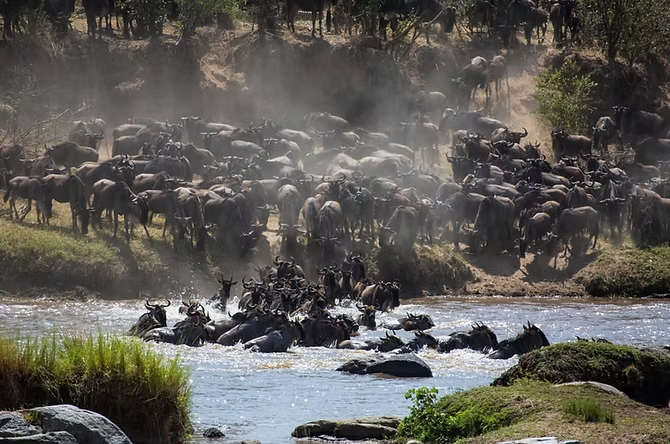
The Great Migration in East Africa
The Great Migration is one of the most spectacular wildlife events on Earth, involving more than a million wildebeest, together with large numbers of zebras and gazelles, moving across the plains of Tanzania and Kenya in search of fresh grass and water.

What is the Great Migration?
The Great Migration is a continuous annual movement, rather than a single event that happens on one particular date. The herds follow the seasonal availability of food and water, creating a roughly circular journey through the Serengeti ecosystem in Tanzania and the Maasai Mara ecosystem in Kenya.
The migration is driven primarily by rainfall. As the rains move across the region, fresh nutritious grass appears, encouraging the herds to move from one grazing area to another.
The migration generally involves:
- Over one million wildebeest
- Hundreds of thousands of zebras
- Large numbers of Thomson’s and Grant’s gazelles
- Lions, cheetahs, leopards and other predators
- Crocodiles waiting along some river crossings
- Hyenas and other scavengers following the herds
The Migration Cycle
Although the exact timing changes from year to year depending on rainfall, the migration follows a fairly predictable seasonal pattern.
January to March – Calving Season
The southern Serengeti and Ndutu area become particularly important during the calving season.
Large numbers of wildebeest gather on the short-grass plains, where females give birth to hundreds of thousands of calves over a relatively short period.
This is one of the best times to witness dramatic predator activity. Young calves attract lions, cheetahs, hyenas and other predators.
April to May – Moving North
As the southern plains become drier, the herds gradually begin moving northward through the Serengeti.
The April–May period coincides with Tanzania’s long rains, so the exact movement can vary considerably from one year to another.
This period can be quieter for visitors, but it offers excellent opportunities for travellers who want to experience the Serengeti with fewer crowds.
June to July – Western Corridor and River Crossings
As the herds move through the central and western Serengeti, the Grumeti River becomes an important feature of the journey.
The river crossings can provide spectacular wildlife viewing, although the migration does not operate like a fixed timetable. Herds may remain in an area for days or weeks before continuing.
July to October – Northern Serengeti and Maasai Mara
During the dry season, many herds reach northern Tanzania and eventually cross into Kenya’s Maasai Mara.
The famous Mara River crossings are among the most dramatic scenes associated with the Great Migration.

Thousands of animals may gather near the river before attempting to cross. The crossing itself can be chaotic, with animals rushing down steep riverbanks, entering the water and scrambling across while avoiding crocodiles and strong currents.
However, there is no guaranteed crossing date or location. The animals decide when and where to cross, making patience an important part of a migration safari.
November to December – Returning South
With the arrival of the short rains, the herds begin moving south again.
They travel back through the eastern and central Serengeti toward the southern plains, completing another stage of their annual cycle.
By December and into January, many animals are again concentrated around the southern Serengeti and Ndutu plains.
Why Is the Migration So Special?
The Great Migration is much more than a spectacular movement of animals. It is a natural cycle that connects an enormous ecosystem.
The movement of the herds creates opportunities for predators and scavengers, while the grazing animals help shape the grassland environment.
For safari travellers, almost every stage offers something different. You can witness huge herds stretching across the horizon, newborn calves taking their first steps, predators hunting, territorial battles between males and dramatic river crossings.
Where Is the Best Place to See the Great Migration?
There is no single “best” destination because the location of the herds changes throughout the year.
Southern Serengeti/Ndutu: Best known for the calving season, particularly around January–March.
Central Serengeti: Useful for following the migration as the herds move north.
Western Serengeti: Particularly associated with the Grumeti area and river crossings.
Northern Serengeti: One of the best areas for following the herds during their northern movement.
Maasai Mara: Famous for the dramatic Mara River crossings, generally during the July–October period.
The Great Migration and Self-Drive Safaris
For experienced travellers, a self-drive safari in Tanzania provides an exciting way to experience the migration. A 4×4 vehicle allows you to travel independently between different parts of the Serengeti and adjust your route according to wildlife conditions.
However, migration safaris require good planning. Road conditions, park regulations, accommodation availability and the constantly changing position of the herds all need to be considered.
A reliable 4×4 rental vehicle is particularly important because some Serengeti tracks can become challenging during or after rain.
For travellers combining Tanzania and Kenya, a carefully planned East African itinerary can also include destinations such as the Serengeti, Ngorongoro Conservation Area and Maasai Mara.
When Should You Visit?
The best time depends on what you want to see.
| Period | Migration Experience |
|---|---|
| January–March | Calving season and predator action |
| April–May | Herds moving north; greener landscapes |
| June–July | Western/Central Serengeti movement |
| July–October | Northern Serengeti and Maasai Mara |
| November–December | Herds moving south |
The most important thing to remember is that the migration follows rainfall, not the calendar. A trip planned around a particular month can provide excellent opportunities, but no responsible safari operator can guarantee that the herds will be at a specific location on a specific day.
Experience the Great Migration
The Great Migration is one of the defining wildlife experiences of East Africa. Whether you want to photograph enormous herds on the Serengeti plains, witness the excitement of calving season, follow predators during the dry season or wait patiently for a Mara River crossing, the migration offers a different experience throughout the year.
For travellers planning an independent adventure, combining Tanzania, Kenya and other East African destinations can create an unforgettable safari journey—with the flexibility to follow the wildlife rather than simply follow a fixed itinerary.